Best Zi Char Singapore: Top Stalls & Signature Dishes
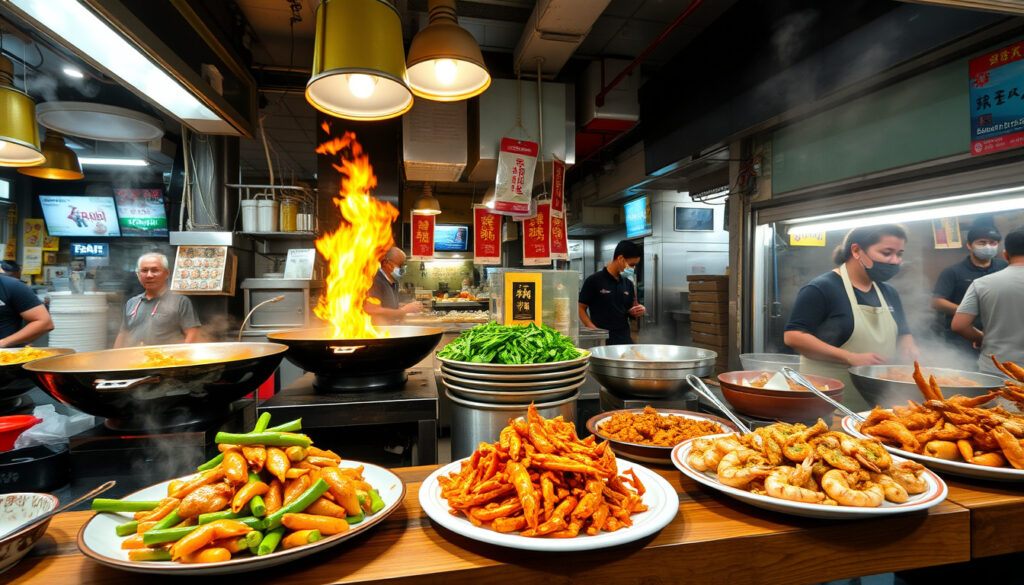
There’s a reason Singaporeans keep returning to coffee shop tables heaped with plates of sambal kang kong and butter prawns. Few cuisines capture the spirit of communal dining like zi char — a Hokkien term meaning “cook fry” that has become synonymous with wok hei mastery and family-run heritage. This guide takes you through the best zi char stalls in Singapore, from the legendary Keng Eng Kee Seafood (running since 1970) to hidden gems doing justice to that smoky breath of the wok.
Distinctive cooking method: Wok hei (breath of the wok) ·
Oldest stall in guide: Keng Eng Kee Seafood (since 1970) ·
Signature dish mentioned: Steamed fish at Zai Shun ·
Number of recommended stalls in top list: 7
Quick snapshot
- Keng Eng Kee Seafood started in 1970 (Daniel Food Diary)
- Zai Shun is top for steamed fish (ieatishootipost)
- Zi Char means “cook fry” in Hokkien (Ladyironchef)
- Whether any zi char stall currently holds a Michelin star
- Exact number of zi char stalls across Singapore
- Keng Eng Kee Seafood has been serving since 1970, making it one of the oldest continuously running zi char stalls (Daniel Food Diary)
- Zi char continues to evolve with modern variants like New Ubin Seafood’s US Ribeye and Fish Roe Masala (Daniel Food Diary)
Six key facts that define the landscape of Singapore’s best zi char, from the oldest stall to the signature technique that separates good from great.
| Fact | Detail |
|---|---|
| Number of stalls in top list | 7 |
| Oldest stall | Keng Eng Kee Seafood (1970) — Daniel Food Diary |
| Signature cooking method | Wok hei (breath of the wok) — Michelin Guide Singapore |
| Average price per dish | $8 – $20 (common range) |
| Popular dish | Sambal Kang Kong — ieatishootipost |
| Key technique | Heat wok until smoking, then add cold oil — Michelin Guide Singapore |
| Oldest rival stall | Kam Jia Zhuang Seafood Restaurant since 2003 — Daniel Food Diary |
What is Zi Char?
Zi char (also spelled zhi char, cze char, tze char, or zhu chao) refers to Chinese home-style dishes cooked to order, commonly served at humble eateries and coffee shops in Singapore. The term itself comes from Hokkien: zi (cook) and char (fry) — a literal description of the cooking action behind every dish (Ladyironchef).
Origin and meaning
The name reveals everything. Unlike restaurant Chinese food, zi char is street-smart and spontaneous. It emerged from Singapore’s hawker culture, where cooks with massive woks and fierce flames turn out plates in minutes. The spelling varies — “tze char” is a common romanisation of the same Hokkien dialect — but the cooking style is identical.
Cooking techniques and equipment
- Wok hei — the smoky “breath of the wok” — is the hallmark of an outstanding zi char restaurant (Michelin Guide Singapore).
- Intense heat from a commercial range is essential; home stoves cannot replicate it.
- The wok must be heated until it just begins to smoke before cold oil is added — any other order makes food stick and char (Michelin Guide Singapore).
- Overcrowding the wok lowers temperature and steams the food instead of frying it.
Wok hei is not a garnish — it is the entire taste difference between a $6 plate of hor fun and a $16 one. For a stall to earn “best zi char” status, that smoky kiss must land on every dish.
What are the signature dishes in zi char?
Five dishes appear on nearly every zi char table in Singapore. Here is what to look for and which stalls do them best.
Sambal Kang Kong
A stir-fry of water spinach in a fiery sambal belacan sauce. Two Chefs Eating Place at Sin Ming is widely praised for its version, where the wok hei locks in crunch and spice (Daniel Food Diary).
Chilli Crab
Singapore’s unofficial national dish. Many zi char stalls offer their take, but Keng Eng Kee Seafood and New Ubin Seafood are regularly cited for robust chilli crab that balances sweet, savoury, and heat (Daniel Food Diary).
Butter Prawns
Prawns wok-fried with butter, curry leaves, and a touch of chilli. A signature that tests a chef’s ability to coat without greasiness. Kok Sen Restaurant (Keong Saik Road) is a reliable choice (Daniel Food Diary).
Steamed Fish
For steamed fish, Zai Shun is the top recommendation from ieatishootipost — fresh fish, light soy dressing, and precise timing.
Oyster Omelette
Crispy-edged omelette studded with plump oysters, served with chilli. Many stalls offer it, but the best versions come from dedicated zi char kitchens that master the batter-to-oyster ratio.
What to order at zi char?
Ordering zi char is less like a restaurant meal and more like a potluck with a plan. The trick is to balance textures and flavours for the whole table.
Must-try classics
- Sambal Kang Kong — the vegetable dish that starts every meal.
- Butter Prawns — rich and fragrant, a crowd-pleaser.
- Chilli Crab or Black Pepper Crab — for the hands-on experience.
- Steamed Fish — light touch, lets the freshness speak.
- Fried Rice or Hor Fun — carb base to soak up sauces.
Ordering for groups
Zi char is designed for sharing. A common rule: one dish per person, plus rice. A party of four should order four dishes — usually one vegetable, one seafood, one meat, and one egg or tofu dish. Ban Leon Wah Hoe (Upper Thomson) has a loyal following precisely because its menu covers all these bases (Daniel Food Diary).
Vegetarian options
While zi char is seafood- and meat-heavy, many stalls will wok-fry vegetables upon request. Look for sambal long beans, stir-fried tofu, or ask the chef to omit meat from a vegetable dish. Some stalls now explicitly label vegetarian-friendly options on their menu board.
Vegetarian adaptability is limited. Most zi char stalls use pork lard or shrimp paste as a base flavour. Vegans and strict vegetarians should call ahead — especially at older stalls like Keng Eng Kee.
What’s the difference between zi char and tze char?
Short answer: nothing. Both terms refer to the exact same style of cooking. “Zi” and “Tze” are different romanisations of the same Hokkien word cook. No difference exists in menu, technique, or atmosphere (Ladyironchef).
Spelling variations
You will see both spellings on blog posts, review sites, and even stall signs. “Tze char” appears more frequently in older English-language media, while “zi char” has become the dominant form in recent years. Both are equally correct.
No difference in cuisine
Whether a stall calls itself “zi char” or “tze char”, the cooking method and dishes are identical. The distinction is purely orthographic. Use whichever feels natural, but know that locals understand both.
The implication: when searching for recommendations, try both spellings in your search bar. You will uncover more threads on Reddit and food blogs that way.
What makes zi char dining a unique experience?
Zi char is not just food — it is a social ritual built around three things: wok hei, communal sharing, and approachable prices.
Wok hei
The “breath of the wok” is a tangible flavour — smoky, slightly charred, and deeply savoury. The Michelin Guide calls it “the hallmark of an outstanding zi char restaurant” and notes that achieving it requires a commercial wok burner that home cooks cannot replicate (Michelin Guide Singapore). This is the secret that elevates a $10 plate of noodles to something unforgettable.
Communal dining
Zi char is meant to be shared. Plates arrive in succession, everyone grabs with chopsticks, and the conversation flows around the food. It is the Singaporean equivalent of a family-style Italian dinner — only louder, spicier, and draped in sambal.
Affordability and variety
Most zi char dishes range from $8 to $20 — far cheaper than a restaurant meal. A group of four can feast on five dishes and rice for under $80. This accessibility keeps the tradition alive across generations.
For a visitor or a young family, zi char offers the highest quality-per-dollar ratio in Singapore’s dining scene. The trade-off is the setting: no air-con, plastic tables, and sometimes a 20-minute wait. The reward is an authentic taste of the city’s culinary soul.
Comparison of top zi char stalls
The pattern across seven top stalls: each brings a distinct signature dish and a loyal following.
| Stall | Signature dish | Location | Price range (per dish) |
|---|---|---|---|
| Keng Eng Kee Seafood | Coffee Pork Ribs, Chilli Crab | Blk 124 Bukit Merah Lane 1 #01-136 (Daniel Food Diary) | $8–$20 |
| Zai Shun | Steamed Fish | Multiple outlets | $8–$20 |
| Two Chefs Eating Place | Sambal Kang Kong | Sin Ming area | $8–$20 |
| Ban Leon Wah Hoe | Variety (favoured for texture and spice) | Upper Thomson | $8–$20 |
| Fuman Seafood Zichar | Proper wok hei across menu | Hougang | $8–$20 |
| Kok Sen Restaurant | Butter Prawns, Hor Fun | 4 Keong Saik Road (Daniel Food Diary) | $10–$25 |
| New Ubin Seafood | Heart Attack Fried Rice, Chilli Crab | Metropolitan YMCA, 60 Stevens Road (Daniel Food Diary) | $12–$30 |
The pattern: veteran stalls like Keng Eng Kee anchor the list with decades of refinement, while New Ubin Seafood pushes boundaries at higher price points.
Upsides
- Wok hei flavour unmatched by home cooking
- Affordable for groups — average $15 per person
- Wide menu variety suits different tastes
- Authentic hawker atmosphere
Downsides
- No reservations — queue or wait
- Limited vegetarian/vegan options
- Ambience can be hot and noisy
- Inconsistent quality across different outlets
What is confirmed and what remains unclear
After reviewing multiple food blogs and the Michelin Guide, here is where the evidence stands.
Confirmed facts
- Zi Char means “cook fry” in Hokkien (Ladyironchef).
- Keng Eng Kee Seafood started in 1970 (Daniel Food Diary).
- Zai Shun is top for steamed fish (ieatishootipost).
- Wok hei is the “breath of the wok” and requires intense heat (Michelin Guide Singapore).
- New Ubin Seafood serves non-traditional dishes like US Ribeye and Fish Roe Masala (Daniel Food Diary).
What’s unclear
- Whether any zi char stall currently holds a Michelin star (the Michelin Guide Singapore lists many but does not specify star status for every stall).
- The exact number of zi char stalls operating in Singapore — no central registry exists.
What the experts say
“Zai Shun is the place to go if you want the best steamed fish in a zi char setting. They get the timing just right.”
— ieatishootipost (established Singapore food blog)
“Keng Eng Kee Seafood has been serving the Bukit Merah community since 1970, and their Coffee Pork Ribs are the stuff of legend.”
— Daniel Food Diary (trusted Singapore food guide)
Summary
The best zi char in Singapore is not a single stall but a category defined by wok hei, family recipes, and communal tables. Keng Eng Kee Seafood remains the benchmark for longevity and signature dishes, while Zai Shun and Two Chefs Eating Place prove that newer contenders can match the old guard. For the casual diner in Singapore, the choice is clear: bring a group, order four dishes, and let the wok do the talking — or miss out on the city’s most authentic culinary experience.
For those craving classic Singapore zi char, Sum Kee Food, a beloved zi char spot in Telok Blangah offers an equally authentic taste of home-style cooking.
Frequently asked questions
What is the price range at zi char stalls?
Most dishes cost between $8 and $20. A meal for four with rice typically totals $50–$80.
Can I make reservations at zi char stalls?
Most coffee-shop zi char stalls do not accept reservations. Popular spots like Keng Eng Kee require you to queue, especially on weekends.
Is zi char suitable for vegetarians?
With advance notice, some stalls can prepare vegetable dishes without meat or shrimp paste. Options are limited, so call ahead.
What drinks are recommended with zi char?
Iced lemon tea, sugarcane juice, or a cold beer pair well with the spicy, smoky flavours.
How many people usually share zi char dishes?
Dishes are family-style. A rule of thumb: one dish per person, plus rice. Four people ordering four dishes is standard.
Are zi char stalls open for lunch?
Many stalls open for lunch (11 am–2 pm) and dinner (5 pm–9 pm), but check individual hours. Some are dinner-only.
What is the difference between zi char and cai fan?
Zi char dishes are cooked to order. Cai fan (economic rice) is pre-cooked and served by the scoop. The quality and freshness differ significantly.
More related posts
 Food Court Near Me – Philadelphia Maps, Hours & Locations
 Jacob Ballas Children’s Garden: Visitor Guide & Tips
 Best Resort in Bintan: Family & All-Inclusive Picks
 Lee Hsien Loong’s Sons: Facts About Li Hongyi and Li Yipeng
 CDAC School E-Vouchers: Clarifying What’s Actually Available
 Kegel Exercises for Men: Benefits and 4-3-2 Method
 Tiffany and Co Necklace – 2025 Prices, Styles and Authenticity Guide
 CPF Full Retirement Sum 2025-2026: Amount, Withdrawal & Payout