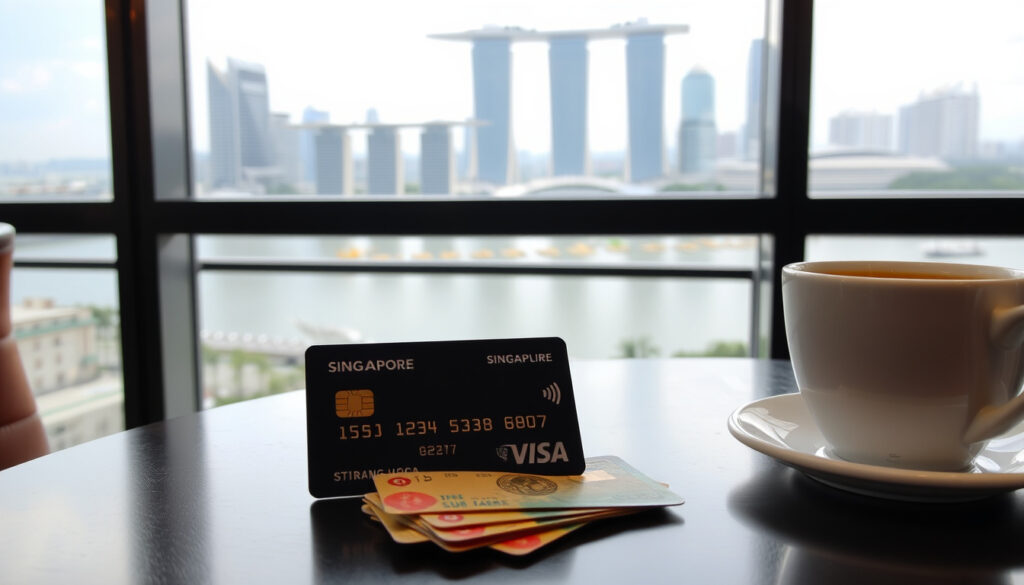
Trust Cashback Card Review: Is It Worth It in Singapore
The Trust Cashback Card promises up to 15% cashback on your chosen category, but quarterly caps and minimum spend requirements mean the headline rate rarely applies in full. This practical guide breaks down the mechanics, trade-offs, and how the card compares with Trust Link for Singaporean spenders.
Cashback rate: Up to 15% on selected category Annual fee: None Foreign transaction fee: None Quarterly cashback cap: S$250 Minimum spend: S$500 per quarter (for bonus) Interest rate: 18.9% – 29.9% p.a.
Key Features
- Up to 15% cashback on a selected category — Trust Bank Singapore official site
- No annual fee — The Kopi Notes
- No foreign transaction fee — SuiteSmile
- S$250 quarterly cap — Google Play listing
- Minimum spend S$500 per quarter for bonus categories — MoneySmart
Pros
- High cashback potential in chosen category — up to 15% — Trust Bank
- No annual fee or foreign transaction fees — The Kopi Notes, SuiteSmile
- Good for overseas spending (no FX fees) — SingSaver
- Simple rewards system without points or tiers — MoneySmart
Cons
- Quarterly cap of S$250 limits heavy spenders — MoneySmart
- Cash advance fees and high interest (18.9%-29.9% p.a.) — Trust Bank product terms
- Category exclusions (insurance, education, government) reduce overall value — you.co guide
- Requires active category management each quarter — Trust Bank
Key Specs
- Card type: Cashback credit card — Trust Bank
- Issuer: Trust Bank Singapore — Trust Bank official site
- Cashback rate: 1% uncapped base + up to 15% bonus — The Kopi Notes
- Interest rate: 18.9% – 29.9% p.a. — Product terms
- Cashback credit: Statement credit after quarter end — MoneySmart
Before we dive in, here is a quick snapshot of the card’s specs:
| Attribute | Value | Source |
|---|---|---|
| Card type | Cashback credit card | Trust Bank |
| Issuer | Trust Bank Singapore | Trust Bank official site |
| Cashback rate | Up to 15% on selected category; 1% uncapped on all other spending | The Kopi Notes |
| Annual fee | None | The Kopi Notes |
| Foreign transaction fee | None | SuiteSmile |
| Interest rate | 18.9% – 29.9% p.a. | Product terms |
| Quarterly cap | S$250 | Google Play |
| Minimum spend for bonus | S$500 per quarter | MoneySmart |
| Cashback credit | Statement credit after quarter end | MoneySmart |
Is a trust cashback card worth it?
The answer hinges on your spending habits. The card excels when you can meet the S$500 quarterly threshold in your chosen category and avoid interest charges. The cashback rate is high, but the quarterly cap and exclusions mean it is not a universal winner.
Upsides
- Up to 15% cashback in selected category
- No annual fee
- No foreign transaction fee
- Uncapped 1% base cashback on all other spending
Downsides
- Quarterly cap of S$250 limits high spenders
- Cash advance fees and high interest
- Category exclusions (insurance, education, government)
- Requires active quarterly category selection
TL;DR: The Trust Cashback Card rewards disciplined spenders who concentrate purchases in one category per quarter, but casual users may find the cap and exclusions erode the headline rate.
What are the pros and cons?
The pros: no annual fee, no foreign transaction fee, and up to 15% cashback on a chosen category. The cons: a quarterly cap of S$250, minimum spend of S$500 per quarter for bonus rates, and exclusions for insurance, education, and government payments. MoneySmart’s reviewer calls the sign‑up experience “really great,” but notes that the card “requires you to track your spending” to maximize returns.
“I use the Trust Cashback Card mostly for overseas spending because of the zero foreign transaction fee. The base 1% is decent, but hitting the S$500 quarterly threshold for the bonus category is easy if you plan ahead.”
“This card is absolutely essential for travel. No FX fees and the 1% base cashback on everything else beats most travel cards.”
How does it compare to other cashback cards?
Compared to cards like the UOB One or OCBC Frank, the Trust Cashback Card offers a simpler structure but a lower effective cashback rate once you exceed S$250 in quarterly earnings. For high spenders, the cap becomes a ceiling.
| Card | Max Cashback | Annual Fee | Foreign Fee | Quarterly Cap |
|---|---|---|---|---|
| Trust Cashback | Up to 15% | None | None | S$250 |
| UOB One | Up to 5% | None (waivable) | 3% | No cap |
| OCBC Frank | Up to 6% | None | 3% | No cap |
The comparison shows that while Trust offers a higher headline rate, the cap makes it less suitable for those spending more than S$2,500 per quarter in a single category.
How does a trust cashback credit card work?
You earn 1% uncapped cashback on all eligible spending. Once you spend at least S$500 in a quarter, you unlock bonus cashback of up to 15% on a category you select. The card lets you choose one preferred category each quarter: dining, groceries, shopping, or travel.
How to select a cashback category?
Within the Trust Bank app, you can set your preferred category at the start of each quarter. The choice is locked until the next quarter. Trust Bank’s site explains that “your preferred category is where you get the bonus cashback, up to 15%, when you meet the minimum spend.”
How is cashback credited?
Cashback is credited as a statement credit within 30 days after the quarter ends. The interest rate is reviewed every six months, and cash advances do not earn cashback. Product terms confirm that cashback is not earned on “cash advance transactions, balance transfers, fees, or interest charges.”
What is the difference between Trust Link and Trust Cashback cards?
Trust Link is a debit card linked to a Trust Savings Account. It does not earn cashback. Trust Cashback is a credit card that earns cashback and allows you to borrow up to a credit limit. Both cards have no foreign transaction fees, but Trust Link charges no interest because it deducts directly from your account balance. Trust Cashback, by contrast, charges interest on unpaid balances.
Trust Link vs Trust Cashback: key differences
Trust Cashback is a credit card; Trust Link is a debit card. Trust Cashback offers cashback; Trust Link does not. Trust Link has no interest charges but is limited to your account balance. Both have no foreign transaction fees. ATM withdrawals: Trust Cashback treats them as cash advances (fee + interest), while Trust Link is free if you have sufficient balance.
Which card is better for overseas spending?
For overseas spending, Trust Cashback wins because you earn 1% cashback on foreign transactions and still pay no foreign exchange fees. Trust Link gives you the same FX‑free benefit but no cashback. SingSaver notes the card is “a game‑changer for frequent travellers” thanks to the zero‑FX feature.
“The sign‑up process was smooth and the app is very intuitive. Cashback tracking is clear, but you have to be disciplined about paying the full balance to avoid interest eating into your rewards.”
What are the downsides of cashback cards?
Cashback cards encourage spending to earn rewards. The Trust Cashback Card has several limitations: high interest rates (18.9%-29.9% p.a.), cash advance fees, quarterly caps, exclusions, and the need to manage category selection. Investopedia warns that “cashback cards can lead to overspending if you’re chasing rewards.”
Are there hidden fees?
No annual fee and no foreign transaction fee are clear. But cash advance fees are 6% or S$15, whichever is higher. Late payment fees apply. Interest accrues from the transaction date on cash advances. Trust Bank’s product terms detail all charges.
What are the limitations of the Trust Cashback Card?
The quarterly cap of S$250 is a hard ceiling. If you spend S$2,500 in a quarter at 15%, you hit the cap. Spending more earns no bonus. Exclusions like insurance, education, government, and certain utilities mean some big‑ticket purchases earn only the base 1%. you.co’s guide lists “insurance premiums, school fees, and government payments” as excluded.
Is there a catch with cashback?
The main catch is that cashback is funded by interchange fees and interest on unpaid balances. Banks profit from the merchants you shop at and from cardholders who carry a balance. Credit Karma explains that “interchange fees are typically 1–3% of each transaction, and that’s where the cashback money comes from.”
How do banks profit from cashback?
Trust Bank earns merchant fees every time you use the card. It also collects interest from cardholders who revolve debt. The cashback is an incentive to drive spending volume. Bankrate notes that “issuers make the bulk of their profit from interest and fees, not from interchange.”
What to watch out for with the Trust Cashback Card?
Overspending to chase the 15% bonus is a real risk. The quarterly minimum spend of S$500 may tempt you to buy things you don’t need. Category changes every quarter may not align with your actual spending. And the high interest rate penalises anyone who doesn’t pay in full. Reddit users caution: “Only get this card if you’re disciplined enough to pay the statement balance every month.”
rewards.link.sg, thekopinotes.com, liveyoungandwell.com, singsaver.com.sg
Frequently Asked Questions
What is the interest rate on the Trust Cashback Card?
The standard interest rate is between 18.9% and 29.9% per annum, reviewed every six months. Check your terms for your specific rate.
Can I use the Trust Cashback Card at grocery stores?
Yes, groceries are one of the available categories. If you select groceries as your preferred category, you can earn bonus cashback up to 15% after meeting the S$500 quarterly spend.
Does the Trust Cashback Card offer balance transfers?
No, the Trust Cashback Card does not currently offer balance transfer promotions. Cash advances are available but attract fees and immediate interest.
How do I check my cashback balance?
You can view your cashback balance and quarterly progress in the Trust Bank mobile app. Cashback is updated monthly and credited after each quarter.
Is the Trust Cashback Card a Visa or Mastercard?
It is a Visa card, issued by Trust Bank Singapore. It is accepted worldwide at any merchant that accepts Visa.
What happens if I miss a payment?
A late payment fee of S$50 applies, and interest will accrue on the outstanding balance from the transaction date. Missing payments may also affect your credit score.
Can I have both Trust Link and Trust Cashback cards?
Yes, you can hold both cards. They are separate products – Trust Link is a debit card, Trust Cashback is a credit card. You manage them through the same Trust Bank app.
Editorial verdict: The Trust Cashback Card delivers strong cashback for disciplined, moderate spenders who can concentrate purchases in one category per quarter. Its quarterly cap and exclusions make it less appealing for high spenders or those who prefer flexibility. For travelers and FairPrice shoppers, the combination of no FX fees and up to 15% rebate on groceries or dining can be a real win—but only if you avoid interest charges.
Related reading: CPF Full Retirement Sum 2025-2026: Amount, Withdrawal & Payout and DBS SGX Share Price: Fair Value, Dividend & 2026 Target
More related posts
 First REIT Share Price: Target, History, and Why It Dropped
 i Love PDF Merge: Merge PDFs, JPGs, & Word Files Free
 Pop Toy Show 2025: Singapore Dates, Tickets, Location & More
 Han Hui Hui Election 2025: Who Is She and What Happened in 2015
 Power Automation Pte Ltd: Salary, Services & Careers
 Bao Er Cafe Photos: Hokkien Mee, Kaya Toast & Outlet Guide
 Is Stomach Flu Contagious? Timeline & When to Isolate