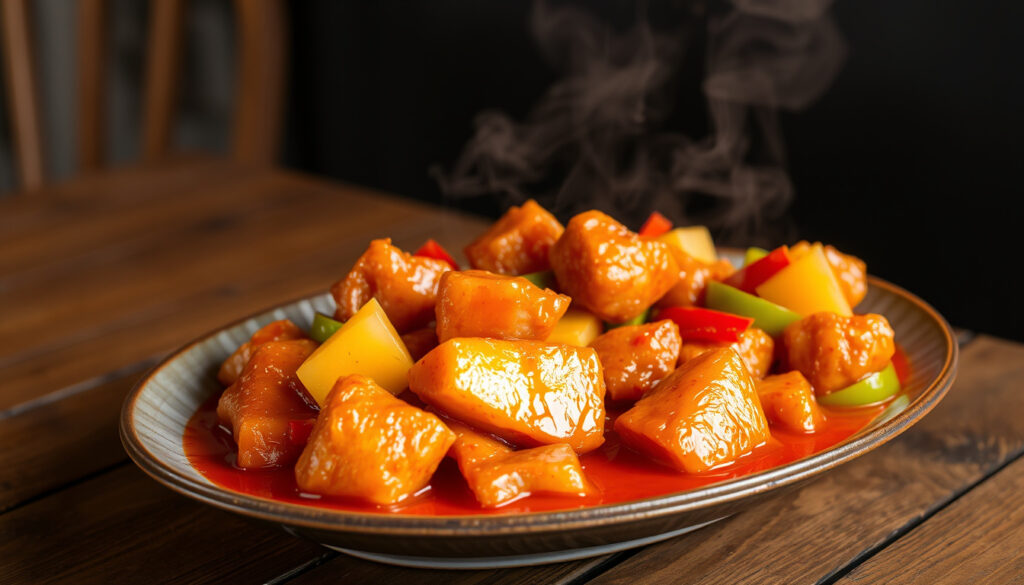
Sweet and Sour Pork Recipe: Crispy Coating and Perfect Sauce
Anyone who has tried to recreate that glossy, crunchy sweet and sour pork from their favorite Chinese takeout knows the frustration: the pork turns soggy within minutes, the sauce lacks punch, and the balance feels off. This guide breaks down the science behind achieving that signature crunch and perfect sweet-sour balance at home, using tested techniques from experienced home cooks. You’ll learn which pork cut to pick, why a double fry matters, and how to build a sauce that clings without turning everything mushy.
Best pork cut: Pork shoulder or loin · Coating: Cornstarch-based batter · Signature sauce ingredients: Vinegar, ketchup, sugar, soy sauce
Quick snapshot
- Sweet and sour pork is a Cantonese dish (RecipeTin Eats)
- Coating typically uses cornstarch (Pups with Chopsticks)
- Double frying improves crispiness (RecipeTin Eats)
- Exact historical origin of the dish (Made With Lau frames it as a family recipe)
- Whether Peking pork is a direct variant or a separate dish (common culinary debate) (Made With Lau)
- First fry at 180°C/350°F for 3 minutes, second fry at 200°C/390°F for 1.5 minutes (RecipeTin Eats)
- Pork should reach internal temp of 165°F/74°C (Shuangy’s Kitchensink)
- Serve immediately after coating with sauce to maintain crunch (Pups with Chopsticks)
- Reheat in oven or air fryer to restore crispiness (general best practice) (Pups with Chopsticks)
The pattern is clear: ingredient choices and precise cooking sequences determine the outcome.
| Attribute | Detail | Source |
|---|---|---|
| Origin | Cantonese cuisine | RecipeTin Eats |
| Cooking method | Deep-fry then stir-fry | RecipeTin Eats |
| Key flavor | Sweet and sour balance | Pups with Chopsticks |
| Preferred pork cut | Shoulder or loin | RecipeTin Eats |
| Coating base | Cornstarch (sometimes potato starch) | Pups with Chopsticks |
| Sauce base | Vinegar, ketchup, sugar, soy sauce | Made With Lau |
| Double fry temps | 180°C then 200°C | RecipeTin Eats |
| Internal temp safety | 165°F (74°C) | Shuangy’s Kitchensink |
These eight specs form the foundation of the recipe. The implication: mastery comes from controlling each variable.
What are the ingredients of sweet and sour pork?
Best pork cut
Most experienced home cooks recommend pork shoulder or loin. The popular food blog RecipeTin Eats specifically calls for “economical pork shoulder and scotch pork” rather than tenderloin, because shoulder stays juicy through the double fry. Yellow Bliss Road uses pork tenderloin in a pan-fried version, but the consensus is that shoulder offers more flavor and moisture.
Vegetables
- Bell peppers (typically red, green, or both)
- Onions (white or yellow)
- Pineapple chunks (fresh or canned; adds natural sweetness)
CJ Eats Recipes includes all three and stir-fries them with the sauce for about one minute before adding the crispy pork.
Sauce ingredients
A classic sauce combines vinegar (usually white or rice), ketchup, sugar (white or brown), and soy sauce. The family-run cooking channel Made With Lau emphasizes making the sauce from scratch rather than using packet mixes, noting that the balance of sweet and sour is what defines the dish. Pups with Chopsticks builds it with tomato paste, white vinegar, water, sugar, and soy sauce, thickened with a cornstarch slurry.
How to cook sweet and sour pork?
Preparation
Cut the pork into bite-sized pieces (about 1-inch cubes). Yellow Bliss Road recommends marinating the pork for 20 minutes in a mixture of soy sauce, rice wine, and a pinch of salt. This step adds flavor and helps the coating adhere.
Cooking the pork
The double-fry technique is the most reliable method for crispy results. RecipeTin Eats describes the first fry (3 minutes at 180°C/350°F) as mainly cooking the meat through, while the second fry (1.5 minutes at 200°C/390°F) delivers deep golden crunch. For a lighter option, Shuangy’s Kitchensink offers a no-deep-frying version that pan-fries the pork strips in a single layer until golden and crispy, taking care not to overcrowd the pan.
Making the sauce
Combine the sauce ingredients (vinegar, ketchup, sugar, soy sauce) in a small bowl. Heat a wok or skillet, add a splash of oil, and pour in the sauce. Bring to a simmer, then thicken with a cornstarch slurry (1 tablespoon cornstarch mixed with 2 tablespoons water). Pups with Chopsticks advises adding the crispy pork to the sauce only briefly — just enough to coat — then turning off the heat to prevent the coating from absorbing moisture.
Combining
Stir-fry the vegetables and pineapple in a hot wok for 1 minute, pour in the thickened sauce, and toss in the fried pork. Toss everything together for about 30 seconds, then serve immediately.
Double frying produces the crispest result but uses more oil and time. For cooks who want a quicker weeknight meal, pan-frying (as shown by Shuangy’s Kitchensink) saves oil and cleanup, though the crunch won’t last as long once sauced.
The catch: the technique you choose directly determines how long the dish stays crunchy.
What is the coating on sweet and sour pork?
Cornstarch batter
The most common coating is a simple cornstarch dredge or a thin cornstarch-water batter. Pups with Chopsticks notes that potato starch can be substituted for an extra-crispy result. CJ Eats Recipes explains that combining flour and cornstarch produces a crispier batter than flour alone because cornstarch helps prevent gluten development, which would make the coating tough.
Egg wash
Some recipes add an egg wash after the dry starch dredge to create a thicker, puffier crust. RecipeTin Eats uses a double-dredge method: first coat the pork in egg, then in cornstarch, then repeat — a technique they credit for “maximum crispiness.”
Dry dredge
A simpler approach is to toss the marinated pork pieces directly in cornstarch (or a 50/50 cornstarch-flour mix) and shake off any excess. This produces a lighter, lacier crust that stays crunchy longer when fried.
The coating is the first barrier between the pork and the sauce. A flour-heavy crust absorbs sauce and goes limp; a starch-based coating (cornstarch, potato starch, or a blend) resists sogginess. Home cooks aiming for takeout-level crunch should prioritize starch over flour.
What is the secret to a good sweet and sour?
Balance of sweet and sour
The hallmark of the dish is the harmony between sweetness and acidity. RecipeTin Eats recommends a 1:1 ratio of sugar to vinegar by volume, though many home cooks adjust based on personal preference. Made With Lau uses brown sugar for a deeper flavor and adjusts the tang with white vinegar.
Ingredients for sauce
- Ketchup – provides color, mild sweetness, and a hint of tomato tang
- Vinegar – rice vinegar or white distilled vinegar for clean acidity
- Sugar – white granulated or brown sugar for caramel notes
- Soy sauce – a small amount adds umami depth without darkening the color
- Cornstarch slurry – thickens the sauce so it clings to each piece
Cooking the sauce
The sauce should be simmered until slightly thickened before adding the pork. Pups with Chopsticks stresses that the pork should be added at the very end and never left to sit in the sauce. The heat should be turned off immediately after tossing to prevent the coating from absorbing moisture and becoming soft.
Is peking pork the same as sweet and sour pork?
Differences in sauce
Though both dishes share a Cantonese heritage, Peking pork typically uses a sauce that includes plum sauce or hoisin, giving it a darker, fruitier flavor compared to the bright orange-red sweet and sour sauce. Sweet and sour pork relies on vinegar and ketchup for its distinctive tang.
Differences in preparation
Sweet and sour pork is always battered and deep-fried for a crispy exterior. Peking pork can be braised or roasted, and the coating is often thinner. RecipeTin Eats confirms that authentic sweet and sour pork requires a double-fry, whereas Peking pork does not.
Regional variations
In Hong Kong and southern China, sweet and sour pork is a staple of Cantonese banquet menus. Peking pork is more associated with northern Chinese cuisine (named after the capital). The two are distinct dishes, though some Western Chinese restaurants blur the line.
Deep-frying produces the crunchiest result, but pan-frying saves time and oil.
| Attribute | Deep-fry (traditional) | Pan-fry (lighter) | Source |
|---|---|---|---|
| Oil needed | ~4 cups (enough to submerge) | 2–3 tablespoons | RecipeTin Eats / Shuangy’s Kitchensink |
| Texture | Very crispy, long-lasting | Golden and crispy, less sturdy | RecipeTin Eats / Shuangy’s Kitchensink |
| Cook time | ~10 minutes (two batches) | ~8 minutes (one batch, but may need two rounds) | RecipeTin Eats / Shuangy’s Kitchensink |
| Best for | Special dinners, meal prep (reheats better) | Quick weeknight dinners | General consensus |
The pattern: investment in technique pays off in texture.
Step-by-step guide to perfect crispy sweet and sour pork
- Prepare the pork: Cut pork shoulder into 1-inch cubes. Marinate with 1 tbsp soy sauce, 1 tbsp rice wine, and a pinch of salt for 20 minutes (Yellow Bliss Road).
- Make the coating: In a bowl, combine 1/2 cup cornstarch with 1/4 cup all-purpose flour (or use all cornstarch). For a double-dredge, beat 2 eggs and dip the pork first in egg, then in the starch mixture; repeat (RecipeTin Eats).
- First fry: Heat oil to 180°C/350°F. Fry pork in batches for 3 minutes. Drain on paper towels.
- Second fry: Increase oil temperature to 200°C/390°F. Fry each batch for 1.5 minutes until deep golden brown. Drain.
- Prepare sauce: In a small bowl, mix 1/4 cup ketchup, 3 tbsp vinegar, 3 tbsp sugar, 1 tbsp soy sauce, and 1/2 cup water. In a separate bowl, stir 1 tbsp cornstarch with 2 tbsp water for slurry.
- Cook vegetables: In a wok, stir-fry sliced bell pepper, onion, and pineapple chunks for 1 minute. Pour in the sauce and bring to a simmer. Add the cornstarch slurry and stir until thickened.
- Combine and serve: Add the crispy pork to the wok, toss quickly to coat (about 30 seconds), and turn off the heat. Serve immediately on steamed rice.
Confirmed facts
- Sweet and sour pork is a Cantonese dish (RecipeTin Eats)
- Coating typically uses cornstarch (Pups with Chopsticks)
- Double frying improves crispiness (RecipeTin Eats)
- Adding pork to sauce only briefly prevents sogginess (Pups with Chopsticks)
What’s unclear
- Exact historical origin – Made With Lau presents it as a family recipe, not documented history
- Whether Peking pork is a direct variant or a separate dish (common culinary debate)
Quotes from the experts
“The double-dredge is the secret to crispy pork. First coat in egg, then cornflour, then repeat – it creates a thick crust that stays crunchy.”
— RecipeTin Eats, food blog (source)
“Add the crispy pork to the sauce only briefly – just enough to coat – then turn off the heat. If you let it sit, the coating will absorb moisture and go soft.”
— Pups with Chopsticks, cooking blog (source)
The science is clear: a starch-based coating, careful temperature control during frying, and minimal sauce contact time are the three pillars of restaurant-quality sweet and sour pork. For home cooks in Singapore and beyond, the choice between deep-frying and pan-frying comes down to how much crunch you’re willing to trade for convenience. Those who invest in the double-fry technique will be rewarded with pork that stays crispy even after a few minutes under the sauce – exactly what you want from a dish that has been a Cantonese favorite for decades.
For a traditional take, try this Cantonese-style sweet and sour pork recipe that uses the double-fry method for extra crunch.
Frequently asked questions
Can I make sweet and sour pork ahead of time?
It’s best to fry the pork and make the sauce separately, then combine just before serving. You can store the fried pork and sauce in the fridge for up to 2 days, but reheat the pork in an oven or air fryer at 180°C for 5 minutes to restore crispness before tossing with reheated sauce.
How to store leftovers?
Place leftover sweet and sour pork in an airtight container and refrigerate for up to 3 days. Reheat in a skillet over medium heat, adding a splash of water if the sauce has thickened too much.
Can I freeze sweet and sour pork?
Yes, but the coating will lose its crispness. Freeze the fried pork (without sauce) in a single layer, then transfer to a freezer bag for up to 2 months. To serve, reheat in an air fryer and make fresh sauce.
What can I substitute for pineapple?
Substitute with apple chunks, mango, or even canned lychees for a similar sweet-tart flavor. If you prefer no fruit, increase the sugar slightly and add a tablespoon of pineapple juice for acidity.
How to make it spicy?
Add 1–2 teaspoons of sambal oelek, Sriracha, or dried red pepper flakes to the sauce while simmering. You can also toss in fresh sliced chili peppers when stir-frying the vegetables.
Is sweet and sour pork authentic Chinese?
Yes, it originated in Cantonese cuisine (southern China). The version served in Western Chinese restaurants has been adapted to local tastes, but the core elements – battered pork, sweet-sour sauce – are authentic to Hong Kong and Guangdong province.
More related posts
 Nagoya Hill Shopping Mall: Worth Visiting? Shops, Food & Tips
 What is Passwordless Login? How It Works & Why More Secure
 East Point Mall Food: Directory, Halal & Bubble Tea Guide
 Ben Yeo Fish Head Steamboat: What Happened & Where to Eat
 Tata Capital Share Price – Live NSE BSE Updates and Analysis
 SATS Share Price Forum: Analyst Targets & Discussions
 Blossom (Chinese TV Series): Plot, Cast, Ending & Where to Watch
 How to Install IPA Files Directly on iPhone (2025 Guide)