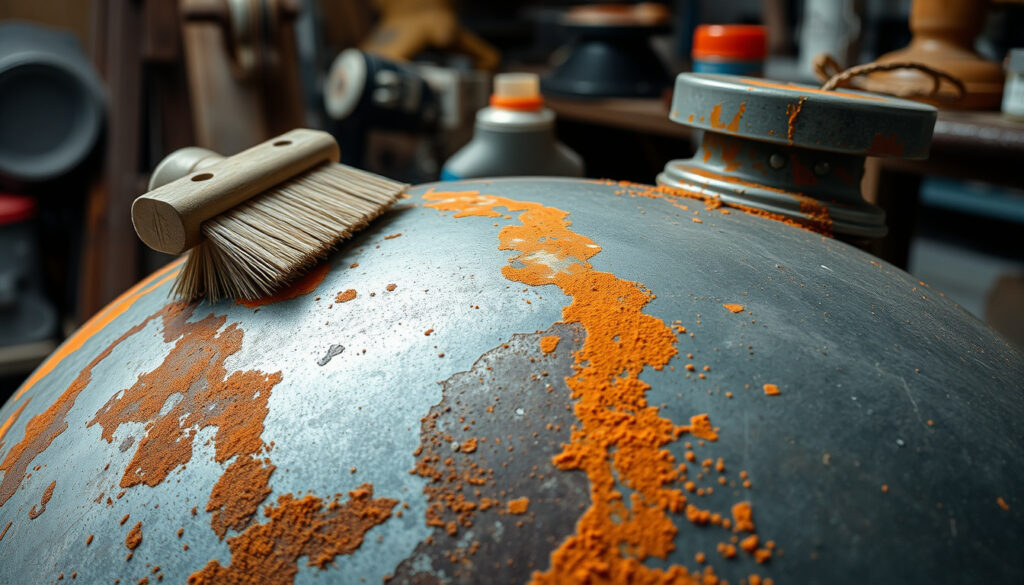
How to Remove Rust: Best Methods Tested
You’ve spotted it: that orange-brown crust on a favourite tool, a garden gate, or the frame of an old bicycle. Rust is stubborn, but it’s not invincible. Whether you reach for a kitchen staple like white vinegar or a dedicated chemical remover, the method you choose can make the difference between a clean surface and a scratched one. Here’s what actually works, based on comparative tests from Apartment Therapy (home improvement resource) and guidance from industry experts.
Average time for vinegar soak: 12 hours to a few days ·
Common rust removers tested by Apartment Therapy: 5 methods ·
WD-40 primary use: Not a rust remover but can loosen rusted parts
Quick snapshot
- White vinegar (acetic acid) dissolves rust via acid reaction (Apartment Therapy)
- Evapo-Rust is a chelating agent that removes rust in minutes (CRC Industries)
- WD-40 is a penetrating oil, not a rust remover (Bob Vila)
- Whether 30% vinegar is safe for all metals without damage (HD Chemicals)
- Long-term efficacy of homemade solutions vs. commercial removers (HowStuffWorks)
- Vinegar soak: 12+ hours to days (Apartment Therapy)
- Chemical removers like Evapo-Rust: 10 minutes to overnight (CRC Industries)
- Apply rust-inhibitive primer or paint to prevent recurrence (InterNACHI)
- For large objects, consider mechanical removal or chemical gels (Bob Vila)
Five methods tested, one clear trade-off: household solutions cost less but demand patience, while chemical removers deliver speed at a premium.
| Label | Value |
|---|---|
| Most common household rust remover | White vinegar (acetic acid) |
| Fastest chemical remover (minutes) | Evapo-Rust or similar non-toxic removers (CRC Industries) |
| WD-40 role | Penetrating oil, not a rust remover (Bob Vila) |
| Best for heavy rust | Naval Jelly (phosphoric acid based) (InterNACHI) |
| Acid types used in commercial removers | Phosphoric, sulfuric, hydrochloric, oxalic (InterNACHI) |
| Mechanical removal cost | Wire brush: least expensive (InterNACHI) |
| Recommended soak time for oxalic acid | 20 minutes (1:10 ratio with water) (HD Chemicals) |
| Post-removal protection | Rust-inhibitive primer or paint (InterNACHI) |
What Removes Rust Quickly?
Fast chemical rust removers
- Evapo-Rust (chelating agent) removes rust in minutes on steel and iron (CRC Industries)
- Oxalic acid (1:10 with water) works in about 20 minutes (HD Chemicals)
- Phosphoric acid based gels (Naval Jelly) tackle heavy rust quickly (InterNACHI)
Homemade rust removal speed
- White vinegar soak: 12 hours to a few days (Apartment Therapy)
- Baking soda paste: 1 hour to overnight (HowStuffWorks)
- Lemon and salt: 30-minute dwell time (Apartment Therapy)
The pattern: speed comes at a cost — chemical products are pricier and require handling precautions, while vinegar is cheap but slow. For most DIYers, the trade-off leans toward vinegar for small items and chemical removers for large or heavy rust.
Does WD-40 Remove Rust Stains?
What WD-40 actually does to rust
- WD-40 is a penetrating oil, not a rust remover (Bob Vila)
- It can loosen rusted parts by displacing moisture and breaking bond, but does not dissolve rust (CRC Industries)
- With scrubbing, WD-40 can help remove surface rust stains (Bob Vila)
When to use WD-40 on rusted objects
- Use on rusted bolts, nuts, and hinges to loosen them before removal (Bob Vila)
- Not effective for active rust removal on metal surfaces (Bob Vila)
- Best used as a pre-treatment before mechanical removal (Bob Vila)
WD-40 is often marketed as a rust solution, but its real strength is as a penetrant. For rust removal, you need an acid or chelating agent — not a lubricant.
The implication: don’t expect WD-40 to dissolve rust. Its role is to make mechanical removal easier, not to replace it.
Can Vinegar Remove Rust?
How vinegar rust removal works
- White vinegar contains acetic acid that reacts with iron oxide (rust) to form soluble compounds (Apartment Therapy)
- Soaking is required for 12 hours to days, depending on rust thickness (Apartment Therapy)
- Baking soda neutralizes the acid after soaking (HowStuffWorks)
Best vinegar type and concentration
- Household white vinegar (5% acetic acid) is standard (Apartment Therapy)
- 30% vinegar (higher acetic acid) is more aggressive but may damage some metals (HD Chemicals)
- Never use on chrome or soft metals without testing (Bob Vila)
Step-by-step vinegar rust removal
- Submerge the rusted item fully in white vinegar. For large items, apply vinegar-soaked paper towels.
- Let it soak 12–24 hours (check every few hours). For heavy rust, up to a few days.
- Scrub with a soft brush or fine steel wool (0000 grit) to remove loosened rust.
- Rinse with water and neutralize with a baking soda paste (1 part baking soda, 2 parts water).
- Dry thoroughly and apply a protective coating (InterNACHI).
Vinegar is cheap, non-toxic, and effective for light to moderate rust on steel and iron. But it’s slow and can pit metal if left too long. Set a timer.
The trade-off: vinegar gives you control and safety at the cost of time. For one-off tools, it’s ideal. For a rusted gate, consider a faster chemical option.
What Is the Best Homemade Rust Remover?
Vinegar and salt method
- Salt (sodium chloride) accelerates the acid reaction when mixed with vinegar (Apartment Therapy)
- Mix 1 cup vinegar with 2 tablespoons salt; soak item for 12–24 hours (Apartment Therapy)
- Rinse and neutralize with baking soda (HowStuffWorks)
Baking soda paste
- Mix baking soda with water to form a thick paste (HowStuffWorks)
- Apply to rusted area and let sit for 1 hour or overnight (Apartment Therapy)
- Scrub with a brush or fine steel wool (Apartment Therapy)
Lemon and salt scrub
- Sprinkle salt on the rusted area, then squeeze lemon juice over it (Apartment Therapy)
- Let sit for 30 minutes, then scrub with the lemon rind or a brush (Apartment Therapy)
Citric acid soak
- Citric acid (often sold as a powder) is a mild alternative to vinegar (Apartment Therapy)
- Dissolve 2 tablespoons per liter of water; soak for 12–24 hours (Apartment Therapy)
The pattern: homemade methods all rely on acid or abrasion. The best choice depends on what you have on hand and how patient you are.
How to Remove Rust from Metal Surfaces Without Scratching
Using fine steel wool or abrasive pads
- Use fine grit (0000) steel wool to avoid scratching (Bob Vila)
- For stainless steel, use a non-metallic abrasive pad (HowStuffWorks)
- Never use a wire brush on soft metals like aluminum or chrome (Bob Vila)
Chemical rust removers that are gentle
- Evapo-Rust is a chelating agent that dissolves rust without abrasion (CRC Industries)
- Oxalic acid solutions (e.g., Bar Keepers Friend) are gentle on stainless steel (HowStuffWorks)
- Soak-type removers are non-abrasive and safe for delicate surfaces (CRC Industries)
Preventing scratches on stainless steel
- Always scrub in the direction of the grain (HowStuffWorks)
- Test any method on a hidden area first (Bob Vila)
- Avoid abrasive powders or steel wool on glossy finishes (Bob Vila)
The implication: for scratch-prone metals, chemical removers are safer than mechanical methods. The extra cost of a product like Evapo-Rust buys you peace of mind.
Comparison: Household vs. Chemical Rust Removers
Five methods, one clear pattern: cost and safety trade off against speed and convenience. Here’s how they stack up.
| Method | Speed | Cost | Best for |
|---|---|---|---|
| White vinegar soak | 12+ hours to days | Very low (~$3/gallon) | Small tools, light to moderate rust |
| Baking soda paste | 1 hour to overnight | Very low (~$1/box) | Light surface rust, stainless steel |
| Lemon + salt | 30 minutes | Low (~$1) | Small items, light rust |
| Evapo-Rust (chemical) | 10 minutes to overnight | Moderate (~$15/quart) | Steel, iron, non-abrasive removal |
| Naval Jelly (phosphoric acid) | 5–15 minutes | Moderate (~$10/pint) | Heavy rust, large surfaces |
The pattern: if you’re on a budget and have time, household methods work. If you need fast results on heavy rust, chemical removers are worth the investment.
Step-by-Step Rust Removal Guide
Follow these steps for a safe, effective rust removal process.
- Identify the metal type. Not all metals react well to acids. Avoid vinegar on chrome, aluminum, or soft metals.
- Choose your method. For light rust on small items, use vinegar. For heavy rust or large items, use a chemical remover.
- Prepare the item. Clean off dirt and grease. Disassemble if possible.
- Apply the remover. Soak small items; apply gel or paste to large surfaces.
- Wait. Follow recommended dwell times. Check periodically.
- Scrub gently. Use fine steel wool (0000) or a soft brush. Rinse thoroughly.
- Neutralize. For acid-based removers, apply baking soda paste to stop the reaction.
- Dry and protect. Apply a rust-inhibitive primer or paint (InterNACHI).
What’s Confirmed and What’s Unclear
Confirmed facts
- Vinegar dissolves rust via acid reaction (Apartment Therapy)
- WD-40 does not actively remove rust (Bob Vila)
- Evapo-Rust is a chelating agent that removes rust in minutes (CRC Industries)
What’s unclear
- Whether 30% vinegar is safe for all metals without damage (HD Chemicals)
- Long-term efficacy of homemade solutions vs. commercial removers (HowStuffWorks)
Expert Perspectives
“We tested five methods on rusty tools and rated the vinegar soak as the most effective overall — it’s cheap, safe, and works if you have the patience.”
— Apartment Therapy (home improvement resource)
“For heavy rust, a phosphoric acid based gel like Naval Jelly can dissolve rust in minutes, but it requires gloves and ventilation.”
— InterNACHI (home inspection authority)
“White vinegar soak for 12 hours to days is our recommended first step for rusty tools, followed by a baking soda rinse to neutralize.”
— Woodies.ie (DIY retailer guide)
Summary
Rust removal isn’t a one-size-fits-all job. Household methods like vinegar and baking soda are cheap and safe but slow, while chemical removers like Evapo-Rust and Naval Jelly offer speed at a higher cost. The key is matching the method to the metal and the rust severity. For the DIYer with a rusted wrench, a vinegar soak is a no-brainer. For the homeowner with a rusted gate, a chemical gel might save a weekend. The choice is yours, but inaction isn’t free: rust spreads. Homeowners who delay removal risk permanent damage, so pick a method and start soaking — or face replacing the item.
workingbyhand.wordpress.com, youtube.com, youtube.com, wikihow.com, hometosight.com, htpaa.org.au
Frequently asked questions
Can I use vinegar on rusted chrome?
Vinegar can damage chrome’s protective layer. Use a dedicated chrome-safe rust remover instead.
Does baking soda remove rust?
Yes, for light surface rust. Apply as a paste, let sit for an hour, then scrub.
How long does it take for vinegar to remove rust?
Typically 12 hours to a few days, depending on rust thickness.
Is WD-40 good for loosening rusted bolts?
Yes, WD-40 penetrates and loosens rusted bolts, but it does not dissolve rust.
What is the best rust remover for tools?
For light rust, white vinegar is cheap and effective. For heavy rust, Evapo-Rust or Naval Jelly work faster.
Can I use lemon juice instead of vinegar?
Yes, lemon juice (citric acid) also works but is milder. It’s best for small items and light rust.
Will vinegar damage metal if left too long?
Yes, prolonged exposure can pit or etch metal. Check every 12 hours and remove the item as soon as rust is gone.
More related posts
 Jane Lee Sumo Salad: Death, Fraud Claims & Probe
 Best Budget Mechanical Pencils for Students and Writers
 How to Install IPA Files Directly on iPhone (2025 Guide)
 Jollibee Changi City Point Closed: Where to Eat Now
 How to Stop Diarrhoea Fast: Remedies & When to See a Doctor
 Burger King Marina Square – Location Hours Menu Guide
 Maybank Credit Card Singapore: Eligibility, Apply & Benefits
 250 SGD to INR: Singapore Dollars to Indian Rupees Today