How to Reduce Cholesterol: 7-Day Diet & Lifestyle Plan
You’ve probably heard that high cholesterol is a silent risk, but few people realize how quickly small dietary shifts can start moving the needle. About 86 million U.S. adults have high cholesterol, yet many of the most effective strategies—like adding soluble fiber or swapping cooking fats—are simpler than you’d think.
Adults in the U.S. with high cholesterol: 86 million (CDC) ·
LDL reduction from 10 g soluble fiber daily: 5–10% ·
Lifestyle changes can lower LDL by: 20–30%
Quick snapshot
- Saturated fat raises LDL cholesterol (NHS (UK health authority)).
- Exercise raises HDL and lowers triglycerides (NHS).
- Soluble fiber lowers LDL by binding bile acids (MedlinePlus (NIH resource)).
- Whether vitamin D supplementation directly affects cholesterol levels (NIH (National Institutes of Health)).
- The degree to which acute anxiety raises LDL versus total cholesterol. (NIH (National Institutes of Health))
- Optimal time of day for cholesterol measurement due to diurnal variation. (NIH (National Institutes of Health))
- 0–2 weeks: dietary changes start lowering LDL (Heart UK (cholesterol charity)).
- 1–3 months: significant LDL reduction from diet and exercise. (Heart UK (cholesterol charity))
- 6 months: full effect of lifestyle; consider medication if target not reached. (Heart UK (cholesterol charity))
- Start with a 7-day meal plan (Nourish (registered dietitian resource)).
- Check LDL after 3 months and adjust. (Nourish (registered dietitian resource))
- Discuss statins with your doctor if LDL stays above 160 mg/dL. (Nourish (registered dietitian resource))
The table below shows the standard clinical targets used to interpret a lipid panel. Each number represents a threshold that guides both lifestyle and medication decisions.
| Label | Value |
|---|---|
| Total cholesterol (desirable) | <200 mg/dL |
| LDL cholesterol (ideal) | <100 mg/dL |
| HDL cholesterol (protective) | ≥60 mg/dL |
| Triglycerides (normal) | <150 mg/dL |
| LDL reduction with statins (typical) | 30–50% |
How do I get my cholesterol down quickly?
Dietary changes for rapid reduction
- Increase soluble fiber: oats, barley, beans, apples, and psyllium. The NHLBI (U.S. National Heart, Lung, and Blood Institute) recommends 10–25 g of soluble fiber daily. Within 2–4 weeks, LDL can drop by 5–10%.
- Replace saturated fats with unsaturated fats: olive oil, avocados, nuts, and seeds. The Mayo Clinic (leading medical center) notes that cutting saturated fat to under 7% of calories can reduce LDL by 8–10%.
- Add plant stanols and sterols: fortified margarines and yogurts can block cholesterol absorption. A daily intake of 2 g lowers LDL by about 8–10% according to Heart UK.
Exercise and lifestyle adjustments
- Adults should aim for at least 150 minutes of moderate-intensity activity per week, per the NHS. Aerobic exercise raises HDL and lowers triglycerides.
- Quit smoking: within a year, your risk of heart disease drops by half. The NHS emphasizes that stopping smoking is one of the key ways to improve cholesterol.
- Limit alcohol to no more than 14 units per week, advises the NHS.
When to consider medication
- If LDL remains above 160 mg/dL after 3–6 months of lifestyle changes, doctors may prescribe statins. Statins typically reduce LDL by 30–50% (Mayo Clinic).
- Family history of early heart disease or signs of familial hypercholesterolemia (affecting about 1 in 250 people, per CDC (U.S. public health agency)) may require earlier medication.
The implication: most people can see measurable LDL changes within two weeks by focusing on fiber and fat swaps, but full results require consistent effort over months.
What are the 6 worst foods for cholesterol?
Foods high in saturated fat
- Red meat (beef, lamb, pork) and processed meats like sausages and bacon. The NHS advises cutting down on meat pies, sausages, and fatty meat.
- Full-fat dairy: butter, cream, ghee, and cheese. The NHLBI TLC diet recommends keeping saturated fat below 7% of total calories.
- Coconut oil and palm oil: despite being plant-based, they are high in saturated fat. The NHS specifically lists coconut oil among foods to limit.
Foods high in trans fat
- Partially hydrogenated oils found in some margarines, baked goods, and fried fast food. Trans fat both raises LDL and lowers HDL (American Heart Association).
- Commercially fried foods and packaged snacks.
Red meat and processed meats
- Processed meats (bacon, salami, hot dogs) increase cardiovascular risk beyond their cholesterol content. The NHS recommends eating less of these.
Cutting out these foods entirely can feel restrictive, but even partial swaps—like replacing butter with olive oil—can lower LDL by 8–10% within weeks, as shown by Mayo Clinic data. The catch: people who try to eliminate everything at once often abandon the diet before seeing results.
Which drink can reduce cholesterol?
Green tea and its catechins
- Green tea consumption may lower LDL by 2–3% in 4 weeks, according to a meta-analysis in the Journal of the American Dietetic Association. The catechins in green tea are believed to reduce cholesterol absorption.
Soy milk and plant sterols
- Soy protein with added plant sterols can reduce LDL by 5–11%. The FDA (U.S. Food and Drug Administration) recognizes a health claim for soy protein’s cholesterol-lowering effect.
Tomato juice and lycopene
- Unsweetened tomato juice is rich in lycopene, an antioxidant linked to modest LDL improvement. A study from Brigham and Women’s Hospital suggests lycopene can reduce LDL oxidation.
- Pomegranate juice also shows promise, but watch for added sugar.
For someone who drinks soda or sugary coffee daily, swapping to green tea or unsweetened soy milk can cut both sugar and cholesterol absorption—a double benefit that adds up to a 5–10% LDL reduction over a month.
The pattern: none of these drinks work as a standalone fix. They complement a broader diet shift rather than replacing it.
What are the main causes of high cholesterol?
Dietary factors
- High intake of saturated and trans fats is the primary dietary cause. The NHS states that eating too much fatty food, especially saturated fat, raises cholesterol.
- Dietary cholesterol itself (e.g., from eggs) has less impact than saturated fat, but the NHLBI TLC diet still recommends limiting to under 200 mg/day.
Lack of physical activity
- Physical inactivity lowers HDL and increases LDL particle number. The NHS recommends at least 150 minutes of moderate activity per week.
Genetic predisposition
- Familial hypercholesterolemia affects about 1 in 250 people, causing very high LDL from birth (CDC). If you have a family history of early heart attacks, get tested.
The catch: diet and inactivity are modifiable for most people, but genetic forms of high cholesterol require medication regardless of lifestyle changes.
What flushes cholesterol out of your body?
Soluble fiber and bile acid binding
- Soluble fiber binds to bile acids in the gut, forcing the liver to use more cholesterol to replace them. The MedlinePlus guide explains that this naturally lowers blood cholesterol.
- Good sources: oats, barley, beans, lentils, apples, carrots, and psyllium husk.
Plant stanols and sterols
- These compounds block cholesterol absorption in the gut. The Heart UK 7-day meal plan includes fortified margarine with plant sterols.
Hydration and kidney function
- Adequate water intake supports kidney filtration but does not directly flush cholesterol. The misconception that “flushing” works ignores the fact that cholesterol is removed via bile, not urine.
While fiber and sterols effectively remove cholesterol through the digestive system, they don’t work overnight. Consistency over weeks is what matters. People who expect a quick fix often give up before seeing results.
A Step-by-Step Plan to Lower Cholesterol
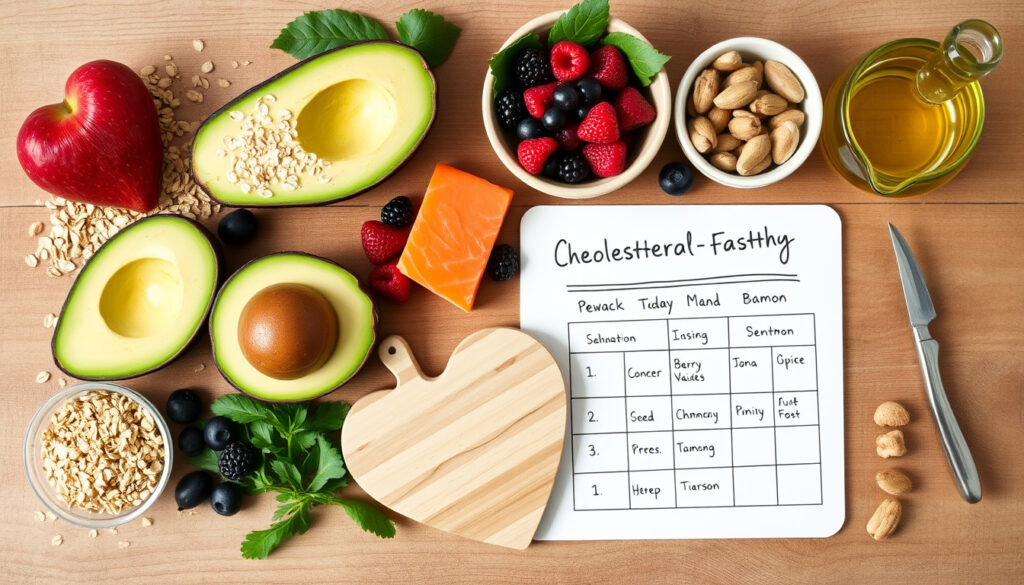
Based on the NHLBI TLC diet and Heart UK guidance, here’s a 7-day meal plan structure:
- Day 1–2: Start with oat-based breakfasts (blueberries, walnuts, ground flaxseed). Lunch: lentil soup with spinach and whole-grain bread. Dinner: grilled salmon, quinoa, broccoli.
- Day 3–4: Add plant sterol-fortified margarine. Swap red meat for skinless poultry or tofu. Snack on almonds and apple slices.
- Day 5–7: Increase soluble fiber with barley and beans. Use olive oil for cooking. Avoid butter, cheese, and fried foods.
For a full downloadable plan, see the Heart UK 7-day planner or the Nourish dietitian-created plan.
Timeline: What to Expect When Lowering Cholesterol
- 0–2 weeks: Soluble fiber begins lowering LDL; dietary changes start to show effect (Mayo Clinic).
- 1–3 months: Significant LDL reduction from sustainable diet and exercise; HDL starts to rise (NHS).
- 6 months: Full effect of lifestyle modifications; discuss medication if goal not reached (NHLBI).
The pattern: early changes are small but real, and the biggest gains come after 3 months of consistency. For people with LDL above 190 mg/dL, medication may be necessary from the start.
What We Know and What’s Still Unclear
Confirmed facts
- Saturated fat raises LDL cholesterol (NHS).
- Exercise raises HDL and lowers triglycerides (NHS).
- Soluble fiber lowers LDL by binding bile acids (MedlinePlus).
- Statins reduce LDL by 30–50% (Mayo Clinic).
What’s unclear
- Whether vitamin D supplementation directly affects cholesterol levels (NIH).
- The degree to which acute anxiety raises LDL versus total cholesterol.
- Optimal time of day for cholesterol measurement due to diurnal variation.
Expert Perspectives
“Swapping saturated fats for unsaturated fats can make a big difference to your cholesterol level.”
“A few simple changes can lower your cholesterol and reduce your risk of heart disease.”
— Mayo Clinic (U.S. medical center)
“Eating less fatty food, exercising more, and stopping smoking are key ways to lower cholesterol.”
— NHS (UK national health service)
For Americans living with high cholesterol, the choice is clear: start with the 7-day food plan recommended by dietitians, pair it with 30 minutes of daily walking, and check your numbers in 3 months. If LDL hasn’t budged, that’s when a conversation with your doctor about statins becomes essential—not a sign of failure, but a smart next step.
collaborateforhealthyweight.org, timesofindia.indiatimes.com, zayacare.com, eatingwell.com, welltech.com, eatingwell.com
Frequently asked questions
Is 6.3 too high for cholesterol?
Yes. A total cholesterol of 6.3 mmol/L (about 244 mg/dL) is above the desirable level of <200 mg/dL. The NHS advises that levels above 240 mg/dL (6.2 mmol/L) double the risk of heart disease.
What are 10 warning signs of high cholesterol?
High cholesterol often has no symptoms, but signs can include: chest pain (angina), xanthomas (fatty deposits under skin), arcus senilis (gray ring around cornea), shortness of breath, fatty lumps on elbows or knees, numbness in legs, high blood pressure, erectile dysfunction, stroke symptoms, and family history of early heart disease. The CDC notes that most people don’t know they have it until a blood test.
What are the facial signs of high cholesterol?
Xanthomas (small, yellowish fatty bumps) can appear on the eyelids or around the nose. Arcus senilis (a gray-white ring around the cornea) is another sign. The Mayo Clinic says these are more common in older adults but can indicate familial hypercholesterolemia in younger people.
Does high cholesterol affect sleep?
There is some evidence that high cholesterol may be linked to sleep apnea, which in turn worsens cholesterol. The NIH has studied the relationship, but direct causation is not established.
What time of day is cholesterol highest?
Cholesterol levels show diurnal variation, typically peaking in the morning. The NIH notes that fasting levels are most consistent for diagnosis.
Should I stop taking vitamin D if I have high cholesterol?
No. Current evidence does not show that vitamin D supplements significantly affect cholesterol levels (NIH). Talk to your doctor before stopping any supplement.
Does anxiety raise cholesterol?
Chronic stress and anxiety may increase LDL and total cholesterol, possibly through hormonal changes. The American Heart Association notes that stress management is part of heart-healthy living.
More related posts
 Garnier Vitamin C Serum Guide: Benefits, How to Apply, and More
 Thomson-East Coast Line: Stations, Schedule & 2026 Plans
 Latest Arsenal Transfer News – Summer 2024 Signings and Rumours
 Car Rental Johor Bahru: Compare Rates & Providers
 Go-to-Market Strategy – Components Framework and Steps
 Compare Credit Card Interest Rates in Ireland: Best APRs 2025
 Dust Mite Vacuum Cleaner Singapore – Top Models for 2025
 Free VPN for iPhone: Which Ones Are Actually Safe in 2026