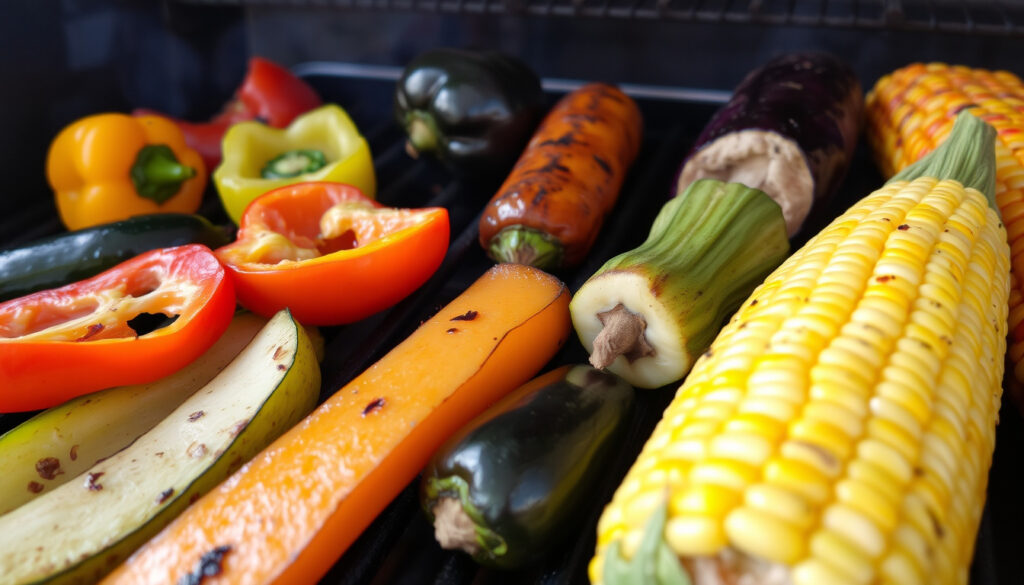
How to Grill Vegetables: Best Methods, Times, and Common Mistakes
Anyone who has ever pulled a tray of sad, steamed vegetables off the grill knows the disappointment. The difference between those gray slices and the caramelized, slightly charred beauties at a great cookout comes down to a handful of specific techniques.
Prep time: 10-15 minutes ·
Grill time: 8-25 minutes depending on vegetable ·
Ideal grill temperature: 400-450°F (medium-high) ·
Best oil for grilling veggies: Avocado or olive oil ·
Minimum vegetables required for a platter: 4-5 types for variety
Quick snapshot
- Oiling vegetables before grilling prevents sticking (Kingsford (charcoal & grilling company))
- Medium-high heat (400-450°F) works for most vegetables (Joyful Healthy Eats (recipe blog))
- Zucchini and squash take 8-12 minutes total (Commissaries (military grocery service))
- The claim that eating two specific vegetables together is harmful has no established nutritional basis
- Optimal resting time after grilling varies by vegetable density without consensus
- Total grill time across all vegetables: 2-30 minutes depending on density and cut size
- Master direct heat control first, then experiment with indirect zones for denser vegetables
Here is how the key factors break down.
| Factor | Key value |
|---|---|
| Grill temperature | 400-450°F (medium-high) |
| Ideal oil smoke point | 400-520°F (avocado, grapeseed) |
| Common mistake | Overcrowding leads to steaming, not grilling |
| Popular variation | Grilled vegetables in foil for softer texture |
What is the best way to grill vegetables?
The method that delivers consistent char without turning vegetables into mush follows a four-step sequence. Each step addresses a frequent failure point.
Preheat and clean the grill
- Set your gas or charcoal grill to medium-high heat, around 400-450°F. Joyful Healthy Eats (recipe blog) recommends a direct-heat side and an indirect-heat side so you can shift vegetables if they brown too fast.
- Clean the cooking grate with a wire brush, then oil it. Serious Eats (culinary science site) stresses that a clean, oiled grate is non-negotiable for even charring and release.
Cut vegetables into uniform sizes
- Cut bell peppers into flat planks rather than rings — flat surfaces get better contact with the grates.
- Slice zucchini and eggplant lengthwise into ½-inch slabs. Onions become thick rounds held together by root ends.
- Uniform size ensures even cooking across the batch. The trade-off: you spend an extra 3 minutes of prep time, but you save unevenly cooked pieces.
Oil and season properly
- Brush both sides of each vegetable with oil — olive, avocado, or grapeseed work well according to Joyful Healthy Eats.
- Season simply: salt, black pepper, and a pinch of garlic powder. Avoid sugary marinades that burn before the vegetable cooks through.
Grill over direct medium-high heat
- Place vegetables directly over the heat source. Do not overcrowd — The Mediterranean Dish (mediterranean recipe site) emphasizes grilling in batches to manage different cooking speeds.
- Flip every 2-4 minutes using long-handled tongs. Cook until grill marks appear and the vegetable yields slightly when pressed.
Home cooks who skip the preheat or crowd the grate lose char and gain steam. The single biggest lever for caramelization is direct heat contact — no amount of marinade compensates for a cool grate.
How long does it take to grill raw vegetables?
Seven vegetable categories, three time brackets. Every minute matters: over-cook asparagus by two minutes and it turns to string; under-cook potatoes and they stay raw in the center.
Quick-grilling vegetables (5-8 minutes)
- Asparagus: 4-6 minutes total, rolled once (Joyful Healthy Eats; also corroborated by Commissaries (military grocery service))
- Cherry tomatoes: 4-6 minutes on a grill basket or skewer
- Romaine lettuce: 2-3 minutes, cut side down (Joyful Healthy Eats)
Medium-grilling vegetables (10-15 minutes)
- Zucchini and yellow squash: 8-12 minutes for ½-inch slices, flipped once or twice
- Bell peppers: 8-12 minutes — flat planks take the upper end, strips the lower (Kingsford (charcoal & grilling company) recommends flipping every 2 minutes for 8-9 minutes total)
- Eggplant: 5-7 minutes total for ½-inch rounds (Joyful Healthy Eats)
- Onions: 8-10 minutes for ½-inch rounds — Commissaries suggests 3-5 minutes per side
Long-grilling vegetables (20-25 minutes)
- Corn on the cob: 15-20 minutes — husk-on takes longer, turning every 2-3 minutes (Kingsford cites 10-13 minutes for husked corn, 15 minutes for husk-on)
- Potatoes (halved, parboiled, or foil-wrapped): 20-25 minutes — foil-wrapped around 25-30 minutes
- Carrots: 20-25 minutes, halved lengthwise
The pattern: density and water content determine time. Dense, low-moisture vegetables (potatoes, carrots) need long, gentler heat. High-moisture vegetables (zucchini, tomatoes) cook fast and risk turning to mush the moment they exceed their window.
A vegetable platter with mixed types requires staggered grilling or separate batches. Dumping everything on the grill at once guarantees that one vegetable is perfect while another is ruined.
Do you put oil on vegetables before grilling?
Yes — and the oil choice, quantity, and application method make the difference between char and stick.
Why oiling before grilling is essential
- Oil prevents sticking by creating a barrier between the vegetable surface and the hot metal. Kingsford (charcoal & grilling company) states to lightly coat vegetables with vegetable or olive oil.
- Oil also facilitates caramelization — the Maillard reaction that produces the desired browning and flavor.
Which oil has the highest smoke point
- Avocado oil: smoke point ~520°F — ideal for medium-high grilling at 400-450°F
- Grapeseed oil: smoke point ~420°F — neutral flavor, good alternative
- Olive oil: smoke point ~375-410°F — acceptable but can smoke if grill runs hot
- Joyful Healthy Eats recommends avocado, olive, or grapeseed oil for the brush-before-grilling step.
How to oil vegetables evenly
- Use a pastry brush or spray bottle — pour-and-toss methods often leave dry spots.
- Apply oil to both sides of each piece. One light coat per side is sufficient; pooling oil causes flare-ups.
When to skip oil (e.g., grilling in foil)
- Foil packets trap steam, so oil is optional — but a light coat still prevents sticking to the foil.
- For direct-grilled vegetables, however, skipping oil means sticking and poor char.
The catch: oil with a smoke point below your grill temperature burns, creating acrid smoke and bitter flavor. For standard medium-high grills (400-450°F), avocado or grapeseed oil gives you a safety margin of 70-120°F.
What are some common mistakes to avoid when grilling vegetables?
Four errors account for the majority of soggy, disappointing grilled vegetables. Each is preventable.
Cutting pieces too small
- Thin slices fall through grates, burn quickly, or dry out before taking on smoke flavor.
- Minimum thickness: ½ inch for zucchini, eggplant, and onions. The trade-off: thicker pieces need longer cook times but deliver better texture.
Using too much or too little oil
- Too much oil causes flare-ups and greasy results. Too little leads to sticking.
- The target: a thin, even sheen visible on the surface, not pooling at the bottom of the bowl.
Grilling on a dirty or cool grate
- Residue from previous cooks transfers flavors and prevents clean release.
- A grate below 350°F won’t sear — vegetables simply steam against the metal.
Overcrowding the grill
- When vegetables touch each other, steam gets trapped between them. The result: gray, soft surfaces instead of browning.
- Leave at least ¼ inch between pieces. Grill in batches if necessary.
The implication: each mistake compounds. A dirty grate + overcrowding + too-small cuts = guaranteed soggy vegetables. Fix these four before worrying about marinades or rubs.
How to grill vegetables in foil and other methods
The right method depends on the vegetable and the texture you want. Here is how the four main approaches compare.
Foil packet method
- Place seasoned vegetables in the center of a large sheet of heavy-duty foil. Fold edges to seal.
- Grill for 15-25 minutes depending on vegetable density. Foil packets prevent charring and simplify cleanup — ideal for potatoes, carrots, and mixed medleys.
Grill basket method
- A perforated metal basket holds small pieces (cherry tomatoes, sliced mushrooms, diced peppers) that would fall through standard grates.
- Shake the basket every 2-3 minutes for even cooking.
Skewer method
- Thread uniform pieces onto metal or soaked wooden skewers. Metal skewers conduct heat and cook faster.
- Best for firm vegetables that hold shape: bell peppers, onions, zucchini, cherry tomatoes.
Direct grilling without a basket
- The gold standard for most large vegetables (zucchini slabs, corn, eggplant, bell pepper planks). Direct contact with the grate produces the best char.
Indoor alternatives: grill pan or broiler
- A cast-iron grill pan over medium-high heat replicates outdoor results when weather or space limits grilling.
- The broiler on high produces similar char in 3-5 minutes per side, but you lose the smoky flavor.
The trade-off: foil and basket methods sacrifice char for convenience and safety. Direct grilling gives superior texture but requires attention and timing precision.
The claim that eating two specific vegetables together is harmful has no established nutritional basis — avoid skipping pairs out of fear. Cook what tastes good together.
Expert tips from grill professionals
“Marinate vegetables in oil, salt, pepper, and garlic before grilling — it adds flavor and prevents sticking.”
— RecipeTin Eats (recipe writer)
“Clean and oil the cooking grate before heating — that step is essential for even charring and release.”
— Serious Eats (culinary scientist)
“Grill in batches to manage different cooking speeds — don’t mix tomatoes and potatoes on the same grate.”
— The Mediterranean Dish (blog author)
Related reading: **Best Steak in Singapore: Top Steakhouses & Cuts Guide**
facebook.com, todaysdietitian.com, youtube.com, vomfassusa.com, naturallyella.com, nexgrill.com, bradleysmoker.com, reddit.com, giadzy.com
For those aiming to achieve restaurant-quality results at home, you may also enjoy our guide on how to grill vegetables with perfect char for healthy and flavorful meals.
Frequently asked questions
What is the best temperature to grill vegetables?
Medium-high heat, around 400-450°F. Most vegetables char well at this range without burning before the interior cooks.
Should I oil the grill grates or the vegetables?
Oil the vegetables directly. Oiling the grates alone leads to sticking because the vegetable surface contacts dry metal first. Brush both sides with oil, then place them on a preheated, clean grate.
How do I prevent vegetables from sticking to the grill?
Three steps: preheat the grill to medium-high, clean and oil the grate, and brush the vegetables with oil. All three are necessary — skipping one causes sticking.
Can I grill frozen vegetables directly?
Not recommended for direct grilling — frozen vegetables release water that prevents browning and causes steam. Thaw and pat dry first, or use the foil packet method.
What vegetables should not be grilled?
Very delicate vegetables like leafy greens (except romaine) and soft herbs wilt too quickly. Vegetables with extremely high water content like cucumber and celery turn mushy. The myth about two specific vegetables being harmful together has no established nutritional basis — grill whatever pairs well in flavor.
Is it better to grill vegetables with the skin on or off?
Leave the skin on for most vegetables: zucchini, eggplant, bell peppers, and asparagus hold their structure better with skin intact. Peel carrots and potatoes for more even cooking.
How do I store leftover grilled vegetables?
Refrigerate in an airtight container for up to 4 days. Reheat in a hot skillet or under the broiler to restore texture — microwaving makes them soggy.
For home cooks who want caramelized, non-soggy vegetables every time, the decision is clear: master direct heat control at 400-450°F, cut pieces to at least ½ inch, oil both sides with a high-smoke-point oil, and never crowd the grate. Follow those four rules, and the vegetables speak for themselves.
More related posts
 HPC Builders Pte Ltd: Profile, CEO, and Reviews
 Best Time to Visit Hong Kong: Month-by-Month Guide
 SGD to LKR Today: Rate, Salary & Strength
 Dog Friendly Restaurants Singapore – Where to Dine with Your Dog
 ECP Roadblock: Doctor’s Car Reversal to Evade Police
 What is a Runtime Environment? Definition & Key Differences
 OCBC Premier VOYAGE Card: Benefits, Fees & Lounge Access
 Gp Clinic Near Me – Locate Open Clinics in Singapore