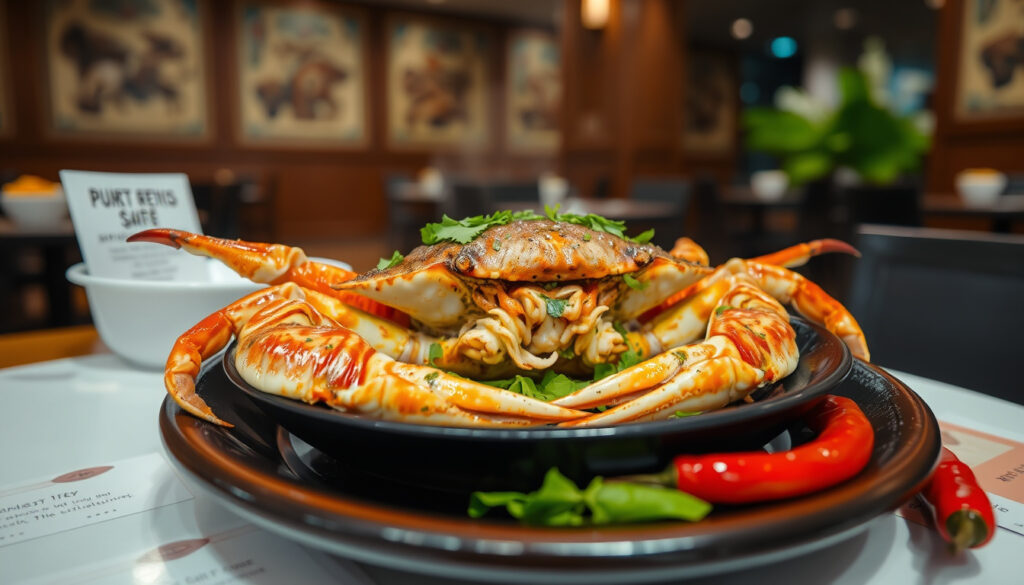
Raw Marinated Crab Singapore: Safety, Restaurants & Ethics
Anyone who has watched a Korean drama while spooning rice and staring at a soy-soaked crab knows the pull of ganjang gejang — but in Singapore, that pull lands on local ground. Raw marinated crab here sits where Korean soy-marinated crab meets the Teochew table, served from Tanjong Pagar to Clarke Quay at prices from an $18 lunch set to a $68 plate.
Marination time at Daejim: 3–4 days · Soy sauce crab at Myeong in Jib: $68 a la carte · Spicy marinated crab at Myeong in Jib: $60 a la carte · Pohang Korean raw crab lunch set: $18 · Swiss ban on boiling lobsters alive: 2018
Quick snapshot
- Marinated crab is raw — and the Singapore Food Agency (national regulator) treats ready-to-eat raw marinated seafood as high-risk.
- District Sixtyfive (Singapore food blog) lists Myeong in Jib’s soy sauce crab at $68 and spicy crab at $60.
- Daejim’s crabs are marinated 3–4 days, per Eatbook (Singapore food publication).
- Pohang Seafood & Butchery lists a Korean marinated raw crab lunch set at $18. (Singapore Food Agency (national regulator))
- Switzerland banned boiling lobsters alive in 2018. (Singapore Food Agency (national regulator))
- Whether Costco Singapore currently stocks raw marinated crab.
- Which restaurants serving the dish hold halal certification.
- The exact slaughter method each kitchen uses before the marinade.
- 31 Aug 2022 — Eatbook (Singapore food publication) documents Daejim’s 3–4 day marinade.
- 5 Mar 2025 — The Ordinary Katalog (Singapore food blog) publishes a first ganjang gejang visit to Go Gi Jip.
- 2018 — Swissinfo (Swiss public broadcaster) reports Switzerland banning boiling lobsters alive.
- Expect the Tanjong Pagar cluster around Go Gi Jip to keep growing as first-timers post reviews.
- Before ordering delivery, confirm the kitchen is licensed for ready-to-eat raw seafood — home-based sellers can’t legally make it.
- If you need halal, ask the restaurant directly; certification shows up as a search demand, not a confirmed menu item.
Key facts to know first
Eight data points, one pattern: every version of raw marinated crab in Singapore arrives without a heat step, so price and licensing do the safety talking.
| Fact | Detail |
|---|---|
| Dish name | Ganjang gejang — soy-marinated raw crab, described by r/SingaporeFoodie (Reddit community) as raw crab in a seasoned soy sauce that is itself cooked. |
| Price range in top reviews | $18 lunch set to $68 a la carte (District Sixtyfive (food blog review); Google Maps business listing). |
| Marination time at Daejim | 3–4 days (Eatbook (Singapore food publication)). |
| Restaurant linked to Tanjong Pagar | Go Gi Jip, the first-timer pick reviewed by The Ordinary Katalog (Singapore food blog) on 5 Mar 2025. |
| Animal welfare reference | Switzerland banned boiling lobsters alive in 2018 (Swissinfo, Swiss public broadcaster). |
| SFA risk status | Ready-to-eat raw marinated seafood is high-risk because it gets no heat treatment; store below 4°C (Singapore Food Agency (regulator)). |
| Home-business rule | Home-based food businesses cannot sell ready-to-eat raw seafood (Singapore Food Agency (home-based business rules)). |
| Local Teochew counterpart | Marinated raw roe crab made from live female crabs in seasoned brine (Fu Yuan Teochew Dining (Clarke Quay restaurant)). |
Are marinated crabs raw?
Yes. The word “marinated” describes a flavour soak, not a cooking step. The Singapore Food Agency (Singapore’s food-safety regulator) classifies ready-to-eat raw marinated seafood as high-risk precisely because it receives no heat treatment to remove microbiological contaminants.
- Definition: ganjang gejang is the Korean name for raw crab marinated in soy sauce; the marinade seasons and slightly cures, but never cooks.
- Singapore community take: r/SingaporeFoodie (Reddit community) describes authentic ganjang gejang as raw crab in a soy sauce that has been cooked with other seasonings.
- Local counterpart: Fu Yuan Teochew Dining (Clarke Quay restaurant) describes Teochew marinated raw roe crab as a dish prepared from live female crabs with seasoned brine.
What is ganjang gejang?
- Ganjang means soy sauce; gejang means marinated crab. The dish is served raw, with the crab’s roe intact.
- The soy sauce is seasoned, and often cooked with garlic, ginger, chilli and onion, before the raw crab is submerged in it.
- In Singapore, Reddit’s r/SingaporeFoodie community reinforces the point: the sauce is cooked, the crab is not.
That distinction matters because the marinade itself is not a safety step. The Singapore Food Agency warns that soy-sauce marination has some antimicrobial properties but is not a substitute for cooking and does not reliably prevent foodborne illness.
So yes — marinated crabs are raw, even when they taste deeply savoury and lightly cured by the soy, salt and acid balance.
The implication: any “raw marinated crab Singapore” guide that treats the marinade as a safety treatment is missing the regulator’s core warning.
What is Teochew marinated crab?
- Teochew marinated crab is a Chinese-style raw preparation found in Singapore, closer to a seasoned brine or wine cure than a soy marinade.
- Fu Yuan Teochew Dining (Clarke Quay restaurant) serves a chilled drunken yellow roe crab made from fresh crab and Hua Diao wine sauce, and describes its marinated raw roe crab as a Teochew dish from live female crabs.
- Fu Yuan’s marinated raw roe crab is available by advance order, according to the restaurant’s own guide to Teochew foods.
Korean ganjang gejang and Teochew marinated crab share a critical trait: the animal is raw, the marinade flavours the shell and meat, and the kitchen’s cold-chain discipline determines whether you end up with umami or a hospital trip.
How do people eat raw marinated crab?
Raw marinated crab is eaten by hand, with rice, and in an order that saves the best for last.
What is sotbap?
- The classic Korean move: crack the crab, suck the meat and roe from the shell, then stir the leftover roe and marinade into warm rice.
- That rice-scraping ritual is called sotbap — literally rice mixed into the sauce — and it is the dish’s final, non-negotiable act.
- Singapore reviewers describe the dish as best ordered with rice; the sauce is built for it.
The crab is usually cracked by hand; the meat and roe are sucked directly from the shell, and the shell’s leftover sauce becomes the next bite’s seasoning.
Are there soy sauce and spicy versions?
- Myeong in Jib serves soy sauce marinated crab at $68 a la carte and spicy marinated crab at $60, according to District Sixtyfive (Singapore food blog).
- District Sixtyfive’s review describes the soy sauce version as fresh-flavoured and clearly built for rice.
- Daejim, best known as a Korean BBQ spot, offers marinated crab as a prepared option — its crabs soak for 3–4 days.
Order rice first. The $68 soy sauce crab at Myeong in Jib is designed to be eaten with rice and finished as sotbap — the rice is not a side dish, it’s the second half of the crab.
For first-timers, the sit-down order usually goes: soy sauce crab, rice, maybe the spicy version on the side, and then the sotbap finale.
Why this matters: the price spread — $18 to $68 — is also a quality filter. A raw crab handled with a proper cold chain is worth the higher price; the cheap version may be cutting corners on the part you can’t see.
Is it healthy to eat raw marinated crab?
No more than other raw shellfish, and less than cooked crab. The health case against raw marinated crab is specific, published, and comes from Singapore’s own regulator.
What are the risks of eating raw crab?
- Raw marinated seafood can carry bacteria such as Salmonella and Vibrio, parasites including roundworms and tapeworms, and viruses including norovirus and hepatitis A, according to the Singapore Food Agency (regulator).
- The SFA advises seeking medical attention if diarrhoea or vomiting occurs after eating raw marinated seafood.
- People who are pregnant, infants, children, older adults, or who have weakened immune systems should avoid the dish as a precaution.
Those warnings come with a clear mechanism: raw crab receives no heat step, so the organisms that cooking usually kills arrive at the table intact. The SFA’s guidance is blunt — marination is not a reliable safety treatment.
The Singapore context makes this more than a generic warning: long delivery routes in tropical heat make the cold-chain rule harder to keep, which is exactly why the regulator pairs its risk warning with storage and sourcing rules.
What to avoid when eating crab?
- Avoid the gills — the “dead man’s fingers” — plus the stomach sac and mouth parts; they hold grit, bacteria and enzymes you don’t want.
- Avoid any crab that smells off, and any marinated crab that has sat at room temperature. SFA recommends keeping it below 4°C and eating it immediately once refrigerated storage ends.
- Don’t assume the soy sauce sanitises anything: the SFA says soy-sauce marination has some antimicrobial properties but is not a substitute for cooking.
- Avoid ordering from unverified home kitchens; in Singapore, home-based food businesses cannot legally sell ready-to-eat raw seafood.
If you are in a higher-risk group, the SFA’s own recommendation is to cook seafood thoroughly before eating it.
A cheap “homemade ganjang gejang” delivery from a social media page is the highest-risk version of this dish in Singapore, because home-based kitchens sit outside the licensing system for ready-to-eat raw seafood.
The implication: raw marinated crab is a luxury dish that behaves like sushi-grade risk — the safety sits entirely in sourcing, cold chain, and speed, not in the marinade.
What is the famous crab in Singapore?
Singapore’s crab identity starts with chili crab — the sweet-savoury flagship that visitors queue for. Raw marinated crab is the newer conversation, and it is growing quickly.
Where can I find the best raw marinated crab in Singapore?
- Top search results for “raw marinated crab Singapore” keep naming four places: Myeong in Jib, Go Gi Jip, Daejim, and Pohang Seafood & Butchery.
- Go Gi Jip, linked to Tanjong Pagar in search results, is the pick for first-time ganjang gejang eaters.
- Pohang Seafood & Butchery, at Aperia Mall, lists a Korean marinated raw crab lunch set at $18 (via Google Maps business listing).
“Best” depends on style: Myeong in Jib for a composed soy sauce or spicy plate, Go Gi Jip for the classic first experience, Daejim for the 3–4 day umami marinade, and Pohang for a cheaper daytime bowl of rice and crab.
Which restaurants in Singapore serve raw marinated crab?
- The Ordinary Katalog (Singapore food blog) published a first ganjang gejang visit to Go Gi Jip on 5 Mar 2025, pointing to its popularity among first-timers.
- Myeong in Jib: soy sauce crab $68, spicy crab $60, per the District Sixtyfive review.
- Daejim: Korean BBQ restaurant whose owner told Eatbook the crabs are marinated 3–4 days for a distinct umami taste.
Nearby, Fu Yuan Teochew Dining (Clarke Quay restaurant) is the most visible name for the Teochew side — its marinated raw roe crab is made from live female crabs and available by advance order.
If you’re mapping a food crawl around the Tanjong Pagar cluster, our Tanjong Pagar dining guide covers the hawker and Korean options in the same neighbourhood.
Is boiling crab alive inhumane?
It is the question that follows every raw crab dish, and it now has legal answers in Europe, though not in Singapore.
Do crabs feel pain the way humans do?
- The UK’s Animal Welfare (Sentience) Act (official UK legislation database) recognises decapod crustaceans — crabs and lobsters — as sentient for animal-welfare policy.
- The science is contested but consequential: if crabs can experience distress, boiling them while conscious becomes a welfare problem, not just a technique problem.
That recognition does not settle the “pain like humans” question, but it shifted the default: regulators now treat crabs as animals that can suffer rather than as seafood that cannot.
What country banned boiling lobsters alive?
- Switzerland banned boiling lobsters alive in 2018 (Swissinfo, Swiss public broadcaster), requiring them to be stunned before death.
- Other jurisdictions have since added guidance on slaughter methods for crustaceans.
How to cook a crab humanely?
- Humane approaches focus on stunning or chilling the animal before death, then processing quickly — not dropping a live crab into boiling water.
- For raw marinated crab, the question flips: the crab is killed during preparation and never cooked, so the “boiling alive” issue is avoided, but the kill method is still a live ethical choice the kitchen makes.
What is the most humane way to euthanize a crab?
- The general direction of published welfare guidance is to stun or chill first, then kill fast — electrical stunning, cold stunning, or rapid mechanical destruction of the nerve centres.
- Boiling while the animal is conscious is widely treated as inhumane under these newer frameworks.
Raw crab lets diners skip the boiling question, but it doesn’t skip the kill: the dish’s ethics now sit in the kitchen’s slaughter step, where Singapore’s food-safety rules focus on cold chain rather than consciousness.
The implication for Singapore: don’t assume a raw marinated crab was humanely handled. The visible policy debate is European; the local enforcement focus is microbiological, so “humane” is a question you have to ask the restaurant yourself.
Does Costco sell raw marinated crab?
The Costco question keeps showing up in search, and the honest answer is: don’t count on it.
Where can I buy raw marinated crab in Singapore?
- Costco’s inventory is regional and seasonal; a raw marinated crab product is not confirmed as a standard Singapore stock item.
- In Singapore, the dish is bought through Korean restaurants, specialty Korean grocers, and licensed food businesses — not through warehouse-club freezer aisles.
- SFA-licensed restaurants are the safest purchase point because the regulator’s rules demand cold-chain facilities and segregated processes for ready-to-eat raw seafood.
Is raw marinated crab available for delivery in Singapore?
- Search demand for “raw marinated crab Singapore delivery” is strong, and restaurant delivery is the common route.
- SFA rules are strict on who can sell: home-based food businesses are prohibited from selling ready-to-eat raw seafood (SFA home-based business rules).
- If delivery is the plan, eat the crab immediately after it arrives and keep it below 4°C until then.
That final rule is the one people skip. A raw marinated crab that spends an hour in a delivery bag, then another 20 minutes in the sun while you find chopsticks, is exactly the scenario the SFA’s cold-chain guidance is designed to prevent.
For cooked seafood nearby, our Albert Centre Market & Food Centre guide lists hawker options where the heat step is already handled.
The catch: “delivery” and “raw marinated crab” can coexist safely only when the kitchen is licensed, the bag stays cold, and the plate is eaten fast — any one broken link changes the risk profile.
Ganjang gejang vs Teochew marinated crab: the real difference
Six lines, one pattern: the marinade changes, the raw crab does not.
| Point of comparison | Korean ganjang gejang | Teochew marinated crab |
|---|---|---|
| Origin | Korean soy-marinated crab, popularised through Korean dining culture | Teochew-Chinese raw crab tradition, served in Singapore’s Teochew restaurants |
| Marinade | Soy sauce (ganjang) with garlic, ginger, chilli, onion; the sauce may be cooked before soaking | Seasoned brine, often with Hua Diao wine |
| Crab preparation | Raw crab marinated whole, roe intact | Raw crab, often female with roe, dressed in brine |
| Typical price in Singapore | $60–$68 a la carte at Myeong in Jib; $18 lunch set at Pohang | Advance order at Fu Yuan Teochew Dining |
| Safety profile | Raw — SFA high-risk category | Raw — SFA high-risk category |
| How it’s eaten | Crack, suck, then sotbap rice with leftover roe and sauce | Chilled appetiser, often with rice or porridge |
The pattern: both versions are raw, both need the same SFA cold-chain discipline, and the difference is cultural identity — soy-forward Korea versus wine-and-brine Teochew.
How to eat raw marinated crab safely in Singapore
Six steps, one goal: make sure the only thing raw about the dish is the crab.
- Check the kitchen is licensed. Ready-to-eat raw marinated seafood is a high-risk category; buy only from SFA-approved food businesses, never from home-based sellers.
- Judge your own risk. Pregnant, under five, over 65, or immunocompromised? The SFA’s precaution is to skip raw marinated seafood entirely.
- Keep it cold. The crab should be stored below 4°C from preparation to the moment you eat.
- Eat immediately. Once the plate leaves the fridge, the clock starts; no lingering at the table, no re-refrigerating leftovers.
- Stay clean. Remove the gills and inedible parts, separate raw crab from cooked dishes, and use clean utensils.
- Watch for symptoms. Diarrhoea or vomiting after the meal means medical attention, not a nap.
Those steps are exactly what separates a $68 restaurant plate from a risky bargain. The marinade does the flavour; the cold chain does the safety.
Confirmed vs still unclear
Two lists, honest split: the core facts are verified, the edge questions aren’t.
Confirmed
- Marinated crab is raw; ganjang gejang means soy-marinated crab.
- Myeong in Jib’s prices: $68 soy sauce, $60 spicy.
- Daejim marinates its crabs 3–4 days.
- Pohang’s lunch set is $18.
- Switzerland banned boiling lobsters alive in 2018.
Unclear
- Costco Singapore’s current raw marinated crab stock.
- Halal certification status at each named restaurant.
- The exact humane slaughter method used before each marinade.
- Which Teochew restaurants beyond Fu Yuan offer raw roe crab without advance notice.
- Whether each delivery platform kitchen’s SFA licensing is current and listed.
The honest takeaway: the confirmed list is all you need to decide where to go; the unclear list is all you need to decide who to ask before you order.
What reviewers and regulars say
Three voices, three verdicts — the owner, the reviewer, and the eaters who know the dish.
Daejim’s owner told Eatbook the crabs sit in the marinade for three to four days, which is what builds their distinct, deeper umami taste.
— Daejim owner, via Eatbook (Singapore food publication)
District Sixtyfive’s review of Myeong in Jib describes the soy sauce crab as fresh-flavoured and notes the a la carte menu’s pricing — $68 for soy sauce, $60 for spicy.
— District Sixtyfive’s Myeong in Jib review
The r/SingaporeFoodie thread clarifies the definition: authentic ganjang gejang is raw crab in soy sauce, but the soy sauce itself has been cooked with seasonings.
— r/SingaporeFoodie, Reddit
The three quotes line up into one usable rule: trust the kitchen that names its process, the reviewer who verifies price and freshness, and the community that corrects the “cooked crab” misunderstanding before it spreads.
The practical takeaway
Raw marinated crab in Singapore is a bold, cold, genuinely good dish when it comes from a licensed kitchen with a working cold chain — and a genuinely bad gamble when it doesn’t. The Korean ganjang gejang wave gives the scene momentum, the Teochew version gives it history, and the SFA gives it a clear rulebook: buy from approved sources, keep it under 4°C, eat it fast, and if you are pregnant, very young, elderly or immunocompromised, let the cooked dishes lead the order. For the Singapore diner, the choice is clear: pick a named restaurant with a verifiable kitchen, ask the halal and slaughter questions before you book, and treat any unlicensed “homemade raw crab delivery” as the one plate you skip — or you are paying $18 for the wrong kind of risk.
sfa.gov.sg, fuyuandining.sg, fuyuandining.sg, eatbook.sg, sfa.gov.sg, sfa.gov.sg, getgo.sg
Frequently asked questions
Straight answers to the questions that come up around raw marinated crab in Singapore.
How long after killing a crab can you eat it?
As short as the cold chain allows. SFA guidance for raw marinated seafood is to keep it below 4°C and eat it immediately once it comes out of refrigeration; there is no safe “one hour at room temperature” window in that rule.
Is crab healthier than lobster?
Nutritionally they are close: both are lean, high-protein shellfish. The bigger difference for this dish is risk — raw crab carries the same bacteria, parasite and virus risks as other raw shellfish, so the safety ranking matters more than the calorie comparison.
Why can crabs be killed before cooking?
Because welfare rules in several jurisdictions now require stunning before death. Switzerland’s 2018 ban on boiling lobsters alive is the most cited example, and the UK’s sentience law recognises decapod crustaceans as capable of feeling distress.
How are crabs killed before eating?
Common approaches involve chilling, electrical stunning, or fast mechanical stunning before processing. For raw marinated crab specifically, the crab is killed during preparation and then soaked in the marinade — it never goes through a cooking step.
Are there halal raw marinated crab restaurants in Singapore?
In the reviews and listings examined for this guide, no restaurant states halal certification upfront. Halal is one of the strongest related search terms for “raw marinated crab Singapore,” so the demand is there — confirm certification with the restaurant directly before ordering.
More related posts
 Coin Deposit Machine Near Me: SuperValu, Tesco, & Bank Options
 The Sixth Avenue Residences: Prices, Reviews, Sale & Rent
 Istana Open House 2026 – Dates, Fees and Visitor Guide
 Private Driving Instructor List: Find RSA-Approved ADIs
 Sweet and Sour Pork Recipe: Crispy Coating and Perfect Sauce
 Johnnie Walker Black Label vs Red Label & Jack Daniel’s
 Best Ways to Support Local Businesses: A Complete Guide
 Tamil Yogi Movie Download 2025: Risks & Legal Alternatives