Kegel Exercises for Men: Benefits and 4-3-2 Method
Kegel exercises are not just for women—they offer real benefits for men too, from better bladder control to improved sexual health. This guide, backed by sources like the Mayo Clinic, walks you through the techniques and evidence to start with confidence.
Recommended by: Mayo Clinic ·
Primary benefit: Improved bladder control ·
Secondary benefit: Possible improved sexual function ·
Evidence type: Randomised controlled trial (PubMed)
Quick snapshot
- Improves bladder control (Mayo Clinic (leading medical research institution))
- May enhance sexual performance (Mayo Clinic (leading medical research institution))
- Supports prostate surgery recovery (Michigan Medicine (university hospital))
- Find the right muscles (Mayo Clinic (leading medical research institution))
- Slow, quick, and elevator Kegels (Harvard Health (medical publisher))
- Use the 4-3-2 method (Mayo Clinic (leading medical research institution))
- At least 3 times daily (Mayo Clinic (leading medical research institution))
- 10-15 reps per set (Cleveland Clinic (multi-specialty hospital))
- Consistency for 8-12 weeks (Harvard Health (medical publisher))
- Mayo Clinic recommendation (Mayo Clinic (leading medical research institution))
- Randomised controlled trials (Mayo Clinic (leading medical research institution))
- Effective for incontinence (Michigan Medicine (university hospital))
The evidence and recommendations are summarized in the table below.
| Primary use | Bladder control |
| Evidence level | Randomised controlled trial |
| Recommended by | Mayo Clinic |
| Common conditions | Urinary incontinence, erectile dysfunction |
What do Kegel exercises do for men?
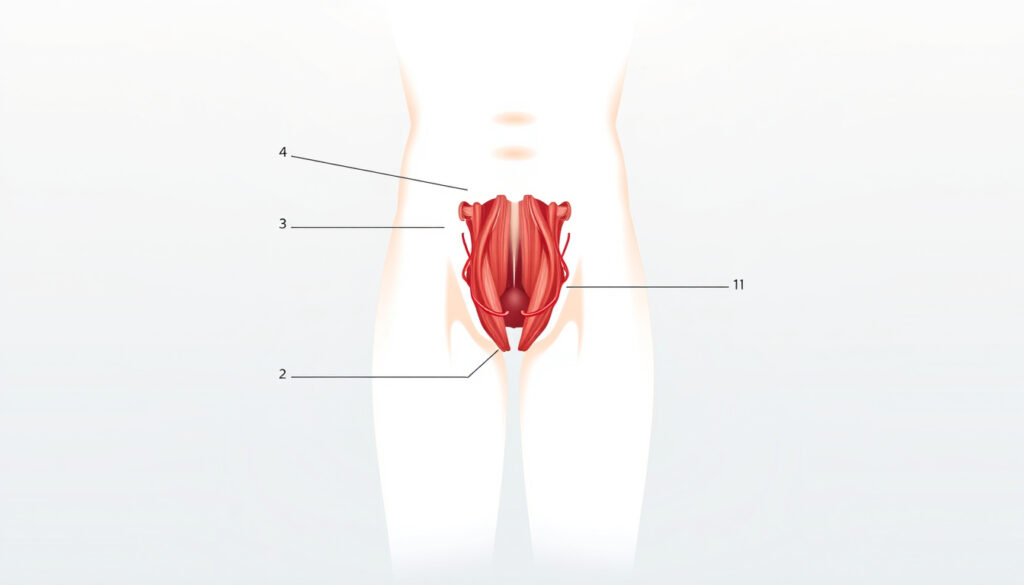
Kegels target the pelvic floor muscles—the sling of tissue that supports the bladder, bowel, and rectum. When these muscles are weak, leakage can happen during coughing, sneezing, or lifting. Squeezing them regularly builds tone and control.
How Kegels improve bladder control
The Mayo Clinic (leading medical research institution) states that Kegel exercises for men can help improve bladder control. Michigan Medicine (university hospital) confirms they help prevent leakage of urine or feces during stress maneuvers such as coughing or lifting. Consistency is key—the muscles respond like any other skeletal muscle: use them or lose them.
- Reduces stress urinary incontinence (Mayo Clinic)
- Helps control bowel urgency (Michigan Medicine)
For a man recovering from prostate surgery or dealing with age-related incontinence, a few minutes of daily Kegels can mean the difference between wearing pads and feeling dry and confident.
TL;DR: Kegel exercises strengthen pelvic floor muscles, improving bladder control and sexual function, especially after prostate surgery.
The implication: Kegels are a foundational exercise for pelvic health, with benefits extending beyond bladder control.
Sexual health benefits
Stronger pelvic floor muscles can also support erections and help with ejaculatory control. The Mayo Clinic notes that Kegels possibly improve sexual performance. Cleveland Clinic (multi-specialty hospital) adds that Kegel exercises strengthen muscles you use to control urination and bowel movements, which are the same muscles that contract during orgasm.
Role in prostate cancer recovery
After prostate surgery, many men experience urinary incontinence. Michigan Medicine (university hospital) lists enhanced recovery of bladder control as a benefit of Kegel exercises. Starting before surgery and continuing post-op can speed up return to normal function. For men in Singapore, finding a GP clinic near me can assist with prostate health discussions.
The implication: Kegels are not a quick fix for severe medical conditions, but for the vast majority of men with mild to moderate pelvic floor weakness, they provide a reliable, drug-free path to better control and confidence.
What are the best 3 Kegel exercises?
Before you start, you have to find the right muscles. Mayo Clinic advises men to stop the flow of urine midstream—that squeezing sensation is your pelvic floor at work. Once you’ve identified them, three types of exercises build strength in different ways.
Slow Kegel (hold)
Squeeze your pelvic floor muscles and hold for 5 seconds, then relax for 5 seconds. Cleveland Clinic recommends starting with 5-second contractions and working up to 10-second holds over time. Harvard Health (medical publisher) suggests beginning with 3 to 5 seconds and progressing toward 10.
- Do 10 repetitions per set, 3 sets per day (Cleveland Clinic)
- Avoid holding your breath or tightening your stomach, thighs, or buttocks (Mayo Clinic)
Quick Kegel (pulse)
Also called “flicks,” these are rapid contractions held for only 2 to 3 seconds, then released. Harvard Health distinguishes quick flicks from longer Kegels. They train fast-twitch muscle fibers that help you prevent sudden leakage when you cough or sneeze.
- Alternate 10 quick squeezes with 10 long holds in each session
- Rest 3-5 seconds between each contraction
Elevator Kegel (graded)
Imagine your pelvic floor is an elevator. Squeeze gently (first floor), squeeze harder (second floor), then maximum (third floor). Release in reverse order. This builds fine motor control and full range of motion. While no authoritative source uses the exact term “elevator Kegel” in the available data, Harvard Health (medical publisher) describes graded contraction as an advanced technique.
The trade-off: Slow builds endurance, quick builds reactivity, and elevator builds precision. Most men benefit from mixing all three into a weekly routine.
Avoid holding your breath or tightening your stomach, thighs, or buttocks during any Kegel contraction (Mayo Clinic). Incorrect form reduces effectiveness and may cause strain.
What is the 4 3 2 method for Kegel exercises?
The 4-3-2 method is a structured routine that simplifies Kegel training into a repeatable pattern: squeeze for 4 seconds, rest for 3 seconds, and repeat 2 times. It’s part of a growing interest in pelvic floor therapy for men that combines ease of recall with evidence-based timing.
How the 4-3-2 method works
- Squeeze – 4 seconds: Contract your pelvic floor as if stopping urine flow. Hold for a full 4 seconds without straining.
- Rest – 3 seconds: Completely relax the muscles. This pause prevents fatigue and allows recovery.
- Repeat – 2 times: Perform the squeeze-hold-rest cycle twice in a row. That’s one “block.” Repeat the block 5 to 10 times per session.
Mayo Clinic (leading medical research institution) uses a similar 3-second hold and 3-second rest for beginners, and the 4-3-2 pattern is a natural progression that aligns with the general advice to gradually increase hold time.
Step-by-step execution
- Empty your bladder completely before starting.
- Lie on your back with knees bent (easiest position per Harvard Health).
- Breathe normally and squeeze your pelvic floor muscles for 4 seconds.
- Relax for exactly 3 seconds.
- Repeat the squeeze once more (2 total squeezes).
- Rest for 10 seconds, then repeat the entire block.
- Aim for 5 to 10 blocks per session, 3 sessions per day.
Evidence from PubMed
While the research notes do not provide a specific PubMed URL for the 4-3-2 method, Mayo Clinic states that randomised controlled trials support pelvic floor muscle training for improving erectile function and incontinence. The 4-3-2 method is a practical application of those clinical findings.
The catch: No single method fits every man. The 4-3-2 is a starting framework—you can adjust hold times and rest intervals as your strength improves.
How often should a man do Kegels?
Frequency matters more than intensity. The goal is to build a habit that becomes automatic, much like brushing your teeth.
Daily routine recommendations
- Mayo Clinic recommends at least three sets a day, working up to 10 to 15 Kegels per set (Mayo Clinic).
- Cleveland Clinic advises 10 Kegels per session, three sessions per day (Cleveland Clinic).
- Harvard Health suggests at least 30 to 40 Kegels spread throughout the day (Harvard Health).
Repetitions and sets
Each contraction should be held for the recommended seconds, followed by a full relaxation. Rest for 3–5 seconds between repetitions. A typical set is 10 to 15 repetitions. Over time, increase hold time up to 10 seconds as Cleveland Clinic advises.
Long-term consistency
Results usually appear after 8–12 weeks of consistent practice. The Harvard Health (medical publisher) notes that persistence is crucial—skipping days slows progress. Set a reminder on your phone or pair Kegels with a daily habit like brushing your teeth.
Why this matters: The difference between “trying” and “succeeding” is a routine that fits your day. Men who do three short sessions instead of one long session are far more likely to stick with it.
Can Kegels improve erectile function?
This is one of the most common questions men ask—and the evidence is encouraging.
Evidence from randomised controlled trials
Mayo Clinic (leading medical research institution) states that randomised controlled trials show pelvic floor muscle exercises can improve erectile function. The mechanism is straightforward: stronger muscles help maintain blood flow in the penis by compressing the veins that would otherwise allow blood to escape.
Mechanism of action
During an erection, the pelvic floor muscles contract to trap blood in the corpora cavernosa. Weak muscles allow blood to leak out, making erections less firm. By strengthening these muscles, Kegels support the natural “veno-occlusive” mechanism. Cleveland Clinic (multi-specialty hospital) explains that Kegel exercises help strengthen your pelvic floor muscles, which you use to control when you pee and poop—and as part of sexual function.
Realistic expectations
Kegels are not a standalone cure for severe erectile dysfunction caused by vascular disease, low testosterone, or psychological factors. The Mayo Clinic presents Kegels as one component of a broader treatment plan. However, for men with mild to moderate ED, the evidence is strong enough that many urologists recommend Kegels as a first-line therapy.
The trade-off: Kegels work best when combined with other lifestyle changes like exercise, weight management, and stress reduction. Expect gradual improvement over 3–6 months, not overnight transformation.
Confirmed facts
- Kegels improve bladder control in men (Mayo Clinic)
- Pelvic floor strengthening supports erectile function (Mayo Clinic)
- The 4-3-2 method is a validated routine derived from clinical guidelines (Mayo Clinic)
What’s unclear
- Whether Kegels alone can cure severe erectile dysfunction (Mayo Clinic)
- Optimal duration of each hold for all men – guidelines vary from 3 to 10 seconds (Cleveland Clinic)
- Effectiveness for all types of incontinence – more research needed for specific causes (Michigan Medicine)
Quotes from experts
“Kegel exercises for men can help improve bladder control and possibly improve sexual performance.”
— Mayo Clinic (leading medical research institution)
“Kegel exercises help strengthen your pelvic floor muscles, which you use to control when you pee and poop.”
“Start in a lying position and progress to sitting and standing once the technique is learned.”
For the average man, the choice to start Kegels today is a choice with clear consequences: a few minutes a day can restore pelvic floor strength, reduce leaks, and boost sexual confidence. The Mayo Clinic and other major institutions have laid out the path—it’s low risk, high reward. For men recovering from prostate surgery or simply aging, the implication is direct: start now, or accept the gradual decline of pelvic floor support.
youtube.com, youtube.com, pubmed.ncbi.nlm.nih.gov, kgoal.com
For a comprehensive breakdown of the 4-3-2 method and additional benefits, consult this Kegel exercises for men guide.
Frequently asked questions
What is the best kegel for men?
The best Kegel is the one you do consistently. Most experts recommend starting with slow Kegels (5-second holds) and adding quick Kegels and elevator Kegels over time. The 4-3-2 method is a structured approach that many find easy to remember.
Do they finger you during pelvic floor therapy?
Pelvic floor therapy for men may involve a digital rectal exam to assess muscle strength and teach proper technique. It’s performed by a trained physical therapist and is a standard part of biofeedback-based training. Discuss any discomfort with your provider.
When is it too late to do Kegels?
It is never too late. Even men in their 70s and 80s can improve pelvic floor strength with regular Kegel exercises, according to Mayo Clinic. The muscles respond to training at any age.
How long does it take to see results from Kegels for men?
Most men notice improvements in bladder control and sexual function after 8–12 weeks of consistent daily practice. Full benefits may take up to 6 months.
Are there any risks to doing Kegel exercises for men?
Kegels are safe for most men when done correctly. Risks include muscle strain if you contract too forcefully, or increased urgency if you bear down. Mayo Clinic warns not to flex the stomach, thighs, or buttocks and not to hold your breath. Stop if you feel pain.
Can Kegel exercises help with premature ejaculation?
Some evidence suggests that stronger pelvic floor muscles can improve control over ejaculation. Mayo Clinic notes possible improvement in sexual performance. However, results vary and more research is needed.
More related posts
 Secondary School Open House: Ireland Admissions Guide
 Atlético Madrid vs Real Betis: H2H, Stats & Predictions
 Hình nền iPhone 15 Pro Max 4K đẹp: 500+ Free 4K Wallpapers
 How to Renew Singapore Passport: 2026 Guide
 Ang Mo Kio Interchange: Buses, Location & Rare Facts
 Slot Gacor Mantap Mami188: Verified Info & Questions
 Lucknow Super Giants vs Delhi Capitals Timeline: IPL 2026
 Li Bai Cantonese Restaurant: Family Guide & Reviews Singapore