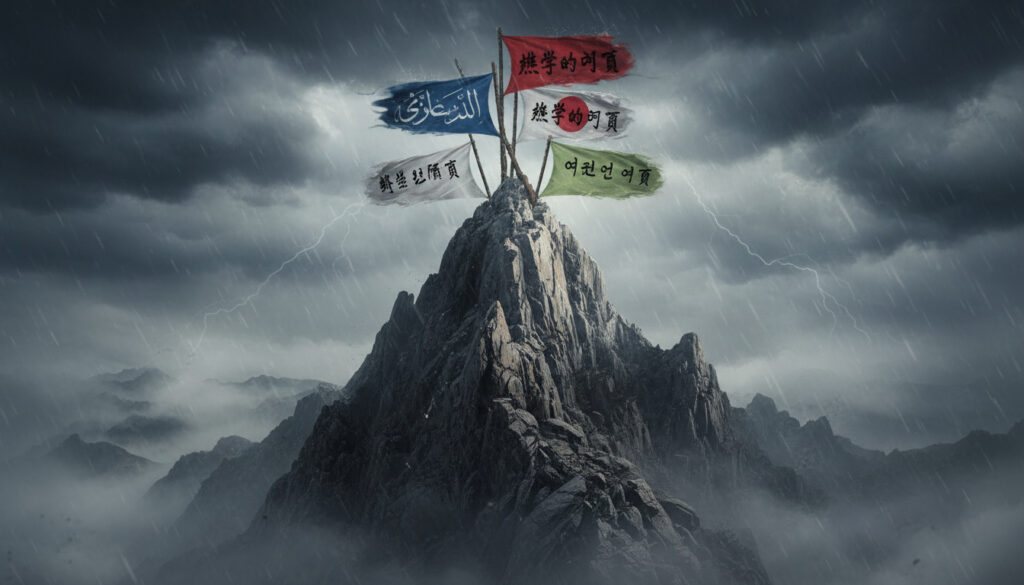
Hardest Language to Learn – FSI’s Top Challenges for English Speakers
The Foreign Service Institute consistently ranks Mandarin Chinese, Arabic, Japanese, Korean, and Cantonese as the most formidable linguistic challenges for native English speakers. These languages demand approximately 2,200 hours of intensive classroom instruction—nearly four times longer than Spanish or French—to achieve professional working proficiency.
Determining the single hardest language depends heavily on the learner’s native tongue. For English speakers, difficulty stems from linguistic distance: unfamiliar tonal systems, non-alphabetic scripts, and grammatical structures bearing no resemblance to Germanic or Romance languages. The Foreign Service Institute categories provide empirical benchmarks derived from decades of diplomat training, though individual aptitude varies significantly.
This analysis examines official difficulty rankings, isolates the specific factors that create linguistic barriers, and compares the unique obstacles presented by Category V languages against challenging European counterparts.
What Is the Hardest Language to Learn for English Speakers?
| Top Hardest | Key Factor | FSI Category | Study Approach |
|---|---|---|---|
| Mandarin Chinese | Tones & Characters | Super-Hard (88 weeks) | Focus on Pinyin First |
- Empirical Basis: FSI rankings derive from measured classroom hours required for State Department personnel to reach S-3/R-3 professional proficiency.
- Category V Core: Arabic, Mandarin, Japanese, Korean, and Cantonese form the consistently recognized hardest group across all FSI assessments.
- Time Differential: Category V languages require 88 weeks (2,200 hours) compared to 24 weeks (600 hours) for Category I languages like Spanish or Italian.
- Asterisk Notation: Japanese and Korean frequently receive additional difficulty markers within Category V due to complex honorific systems and context-dependent grammar.
- European Exceptions: Hungarian and Finnish rank in Category IV (44 weeks), making them the hardest European languages despite using Latin scripts.
- No Official “Top 10”: The FSI publishes category groupings rather than ordinal rankings, though linguists consistently identify the same ten languages as most challenging.
- Relative Difficulty: Prior exposure to tonal languages or character-based writing can reduce perceived difficulty for individual learners.
| Language | FSI Weeks | Main Challenges | Similarity to English |
|---|---|---|---|
| Mandarin Chinese | 88 | 4 tones + neutral, hanzi characters | None |
More related posts
 SGD to LKR Today: Rate, Salary & Strength
 UOB Foreign Currency Fixed Deposit: Rates & Minimum Deposit
 Things to Do in Vienna: Top Attractions, Tips & 3-Day Itinerary
 Lee Hsien Loong’s Sons: Facts About Li Hongyi and Li Yipeng
 Gelang Patah Bus Terminal: Fares, Routes & Timetables
 The Sixth Avenue Residences: Prices, Reviews, Sale & Rent
 Salvo by Pasta Fresca: Menu, Reviews & Closure Status
 1 Singapore Dollar in Indian Rupees Today: SGD to INR Rate