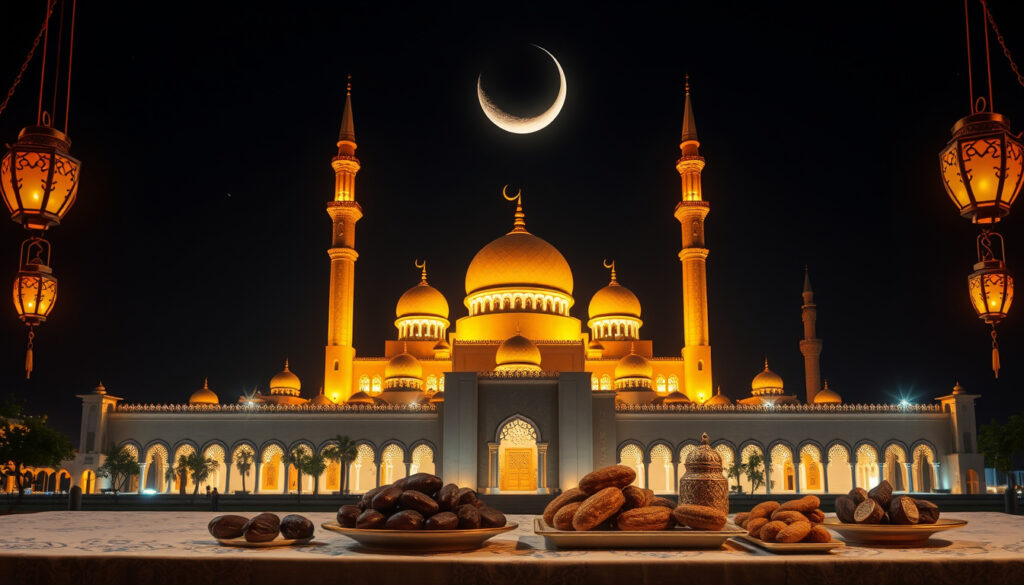
Eid al-Fitr 2026: Date, Meaning, and How to Celebrate
Few holidays pull off the shift from intense spiritual discipline to open celebration as quickly as Eid al-Fitr. In 2026, Gulf News reports that most of the Middle East has fixed the day as Friday, March 20, while some countries will celebrate a day later depending on the moon.
Expected date (most regions): March 20, 2026 (Friday) ·
Duration: 1 day (beginning of 3-day celebration in some countries) ·
Commemorates: End of Ramadan, the holy month of fasting ·
Key ritual: Special communal prayer (Salat al-Eid) ·
Charity: Zakat al-Fitr (obligatory alms) before prayer
Quick snapshot
- Saudi Arabia, the UAE, Kuwait, Qatar, Bahrain, and Egypt announced Friday, March 20, 2026, as the first day of Eid (Gulf News (UAE daily))
- Egypt’s Dar Al-Ifta confirmed March 20 as the first day of Shawwal (Ahram Online (Egyptian daily))
- The Fiqh Council of North America set Friday, March 20, for the United States (per Muslim Network (community broadcaster))
- Time and Date’s 2026 tally: 74 countries on March 20, 15 on March 21, and 3 on March 19 (Time and Date (holiday database))
- India and South Africa observed Saturday, March 21, while Gulf states observed Friday (The Times of India (national daily))
- The Shawwal crescent was not sighted on Thursday evening in Saudi Arabia and Qatar, so Ramadan completed its 30th day and Eid began Friday (The Times of India (national daily))
- After the Eid prayer and Zakat al-Fitr, families move into food, gifts, and visiting — the celebration runs for a day or more in most cultures (Time and Date (US holiday page)).
- For 2026, confirm the date with your local mosque; most regions settled on Friday, March 20 (Royal News (regional news agency)).
Most of what people get wrong about Eid comes down to a few basics; this table settles them in one pass.
| Detail | Value |
|---|---|
| Meaning | Festival of Breaking the Fast |
| Observed by | Muslims worldwide |
| Type | Islamic holiday |
| Expected 2026 Date | March 20 (Friday) in most regions |
| Related to | End of Ramadan |
| Key Rite | Eid prayer (Salat al-Eid) |
| Obligatory Charity | Zakat al-Fitr |
What is Eid al-Fitr and why is it celebrated?
Eid al-Fitr — pronounced roughly “eed al-FIT-ter” — closes out Ramadan, the month when Muslims fast from dawn to sunset. The name translates as “Festival of Breaking the Fast,” and it is one of the two major annual festivals in Islam (Time and Date (US holiday page)).
Meaning of Eid al-Fitr
- “Eid” means festival or feast; “al-Fitr” refers to breaking the fast.
- A day of thanks for completing a month of fasting.
- A community holiday: prayer, charity, food, and family come first.
Unlike a private spiritual milestone, Eid is built to be shared. The rituals push outward, from the individual to the family to the whole neighborhood.
Religious significance in Islam
- One of the two major holidays of the Islamic year, alongside Eid al-Adha.
- A religious and social duty: Muslims gather for a special communal prayer.
- A charitable duty: Zakat al-Fitr is required before the prayer so people in need can share the feast.
Prayer, charity, greeting — three acts, one idea: the end of Ramadan is not a personal achievement but a collective one.
Relationship to Ramadan
- Ramadan lasts 29 or 30 days; Eid begins on the first day of the next month, Shawwal.
- The transition is marked by sighting the new crescent moon.
- Fasting ends with the sunset of the last day of Ramadan; the Eid feast follows the next morning.
The link is deliberately tight: one month of restraint, then a day of permitted abundance. The discipline is what gives the feast its meaning.
The pattern: Eid is designed as both a release valve and a social contract. The fast ends privately, but the holiday only works when everyone, including the poorest neighbor, gets a seat at the table.
When exactly is Eid al-Fitr in 2026?
For most regions, the answer is Friday, March 20, 2026 — the date the UAE, Saudi Arabia, Kuwait, Qatar, Bahrain, and Egypt publicly announced after the Shawwal crescent was not sighted on Thursday evening (The Times of India (national daily)). Egypt’s Dar Al-Ifta backed it as the start of Shawwal.
Expected date for 2026
A single global “Eid day” doesn’t exist. One family in the Gulf is already celebrating while a community a few time zones away is still waiting for a crescent that hasn’t appeared. Both are following the same rules.
- Turkey and Australia also confirmed Friday, March 20 (Gulf News (UAE daily))
- The Fiqh Council of North America declared March 20 for the United States.
- The European Council for Fatwa and Research described the timing as “confirmed astronomically and religiously,” according to Royal News.
The short version: March 20 is the strong default for 2026, with a March 21 minority.
How the date is determined by moon sighting
- The Islamic calendar is lunar: each month starts when the new crescent becomes visible.
- If the crescent isn’t spotted, the current month simply completes 30 days.
- Local sighting conditions, geography, and official calculation rules are why dates can differ by a day.
This isn’t disorganization; it’s the system working as designed. The community that sees the moon first sets the pace for its region.
Regional variations
- Gulf states and most of the Middle East: Friday, March 20, 2026.
- Indonesia and Singapore: Saturday, March 21, per local visibility constraints.
- India and South Africa also fell on Saturday; the crescent wasn’t visible locally on Thursday evening.
The practical rule: trust your local mosque’s announcement, not a global calendar app.
How is Eid al-Fitr celebrated?
The day follows a rhythm that has stayed consistent across centuries and continents: prayer first, charity before prayer, then food, gifts, and family.
Eid prayer (Salat al-Eid)
- A special communal prayer held in the morning, at a mosque or open prayer ground.
- Worshippers gather early, often in new or best clothes, and greet each other after the prayer.
- In many places, the prayer is followed by a short sermon.
If you’re a non-Muslim guest: the prayer is the spiritual core, so arrive when the host suggests, not before dawn.
Zakat al-Fitr (obligatory charity)
- An obligatory donation given before the Eid prayer so that people in need can celebrate the same day.
- Usually paid as a set amount of staple food, or its cash equivalent, for each household member.
The timing is the point: charity lands before the feast, not after, so the whole community is at the table together.
Festive meals and gatherings
- Families share the first daytime meal after a month of fasting.
- Neighbors, friends, and extended family visit; doors are open wider than usual.
- Gifts for children, including money in many households, are part of the day.
None of this is legally compulsory, but in practice the social pull to show up — and to be seen showing up — is strong.
Gift-giving and greetings
- Exchanging gifts is common, especially for children.
- “Eid Mubarak” is the standard greeting across most of the Muslim world; more on that below.
Why this matters: Eid converts a private act — fasting — into a public reset. The prayer is the proof; the meal is the invitation.
What is forbidden during Eid al-Fitr?
The list is short, which surprises most people. Eid is a day of permission, not restriction.
Fasting on Eid day
- Fasting on the day of Eid is forbidden for Muslims under Islamic teachings.
- Eid marks the end of the fast; a deliberate fast on this day contradicts the holiday’s purpose.
Think of it as Thanksgiving with the opposite rule: for once, you’re supposed to eat.
If a Muslim family you know isn’t fasting on Eid morning, that’s not a lapse — it’s the rule. The bigger the spread of food, the more the day reads as it should.
Etiquette and respectful behavior
- Beyond fasting, there are no sweeping prohibitions unique to Eid; ordinary Islamic ethics apply.
- Modesty, generosity, and kindness carry the day; arguments and grudges are the real spoilers.
- For guests: don’t show up empty-handed, don’t refuse food, and don’t turn the meal into a debate.
If you act in a mosque the way you would in any house of worship — shoes off where asked, phone away, respectful clothes — you’re already ahead.
The upshot: Eid’s prohibitions are almost purely positive: don’t fast, do share. The only behavior most hosts actually frown on is treating the day like an ordinary Tuesday.
Can non-Muslims celebrate or join Eid?
Short answer: yes. Muslims widely welcome friends, neighbors, and colleagues of other faiths to share the celebration.
Interfaith participation
- Non-Muslims are welcome to join Eid meals and gatherings if invited.
- For the prayer itself, ask first: some mosques welcome guests, others prefer Muslims only.
- Many public Eid events — park festivals, school celebrations, workplace gatherings — are designed for everyone.
The line is simple: follow the host’s lead, and let your presence be a compliment, not a conversion project.
Respectful gift-giving
- A gift is appropriate, especially for children.
- Safe picks: sweets, dates, flowers, or a card with “Eid Mubarak.”
- Avoid religious-specific items, like a Qur’an or prayer rug, unless you know they’d be welcomed.
A box of dates or pastries says “I paid attention” without saying anything risky.
Appropriate greetings
- “Eid Mubarak” works from anyone, Muslim or not.
- “Happy Eid” is perfectly fine in English.
- A brief note to Muslim colleagues is generally well received.
The pattern: Most Muslims aren’t asking outsiders to perform the religion; they’re asking neighbors to show up. That’s the whole ethic of the holiday.
How to wish someone a happy Eid (Eid Mubarak)
“Eid Mubarak” is the global default: it means “Blessed Eid” and works in nearly every country with a Muslim community.
Meaning of Eid Mubarak
- “Eid” means festival; “Mubarak” means blessed.
- It’s a warm, light greeting — closer to “Happy holidays” than a theological statement.
- You can say it in person, write it in a card, send it by text, or drop it into an email.
Alternatives: “Happy Eid” and beyond
- “Happy Eid” is acceptable in English and increasingly common.
- Other languages have their own versions, such as “Bayramınız mübarek olsun” in Turkish.
You don’t need to nail a foreign phrase — a natural “Eid Mubarak” in English already does the job.
Simple messages you can send
- “Eid Mubarak to you and your family!”
- “Wishing you a peaceful and joyful Eid.”
- “May your Eid be filled with good food and better company.”
For a colleague, one line is enough: “Eid Mubarak — hope you have a wonderful celebration with your family.”
What this means: The greeting is a door-opener. One correct phrase signals respect, and the bar for “correct” is much lower than most people fear.
What foods are traditionally eaten during Eid?
Ramadan ends with a month of dawn-to-dusk fasting, so Eid food is festive, rich, and wildly regional. The one constant: there’s a lot of it.
Regional specialties
- South Asia: biryani, samosas, and date-based sweets.
- Middle East and Turkey: sweet pastries like baklava, plus lamb and rice dishes.
- Almost everywhere: dates, which bookend the Ramadan fast all month and carry straight into Eid.
These are the dishes that take serious time and effort — exactly the cooking a fasting month doesn’t allow.
Sweets and desserts
- Sweets are so central that Eid al-Fitr is nicknamed the “Sweet Festival” in some places.
- Desserts come out early, often before the main meal, and for every visitor who walks in.
- Cookies, puddings, cakes, and syrup-soaked pastries dominate the table.
Festive meals
- The first daytime meal after Ramadan is usually a big family lunch or post-prayer brunch.
- Leftovers are part of the plan: homes cook enough to feed guests who arrive unannounced.
- Sharing food with neighbors and people in need is part of the celebration.
The trade-off: The richer the table, the longer the cleanup — but in Eid logic, an overloaded table is the point. You’re not just feeding your family; you’re proving the fast mattered.
Eid al-Fitr vs Eid al-Adha: what’s the difference?
Both are major Islamic festivals and both open with a communal prayer, but they commemorate different moments and land at different points in the year. That distinction matters for travel plans, work leave, and gifts.
| Aspect | Eid al-Fitr | Eid al-Adha |
|---|---|---|
| What it marks | The end of Ramadan, the fasting month | The later feast tied to the Hajj pilgrimage season |
| When | 1 Shawwal — expected March 20, 2026 in most regions | 10 Dhu al-Hijjah, roughly two lunar months later |
| Main practices | Eid prayer, Zakat al-Fitr, family meals, gifts | Eid prayer, charitable offering, community meals |
| Other names | Festival of Breaking the Fast; the “Sweet Festival” | Festival of Sacrifice |
The trade-off: Eid al-Fitr sneaks up on the Gregorian calendar because Ramadan moves earlier each year; Eid al-Adha at least has the Hajj season as an anchor, but its date shifts just as much.
How to celebrate or join Eid respectfully: a step-by-step guide
Whether you’re Muslim or just a well-meaning guest, the sequence is simple. Follow these steps and you won’t ruffle anyone.
- Confirm the date locally. The global calendar is only a hint: most regions celebrate Friday, March 20, 2026; some observe Saturday, March 21. Your mosque or council announcement has the final word.
- Give Zakat al-Fitr before the Eid prayer. If you’re Muslim and financially able, this obligatory charity is meant to reach those in need before the feast begins.
- Attend the Eid prayer, or time your visit around it. The morning prayer is the centerpiece; guests joining a Muslim family should arrive after the prayer, not during it.
- Greet everyone with “Eid Mubarak.” It works from Muslims and non-Muslims alike and beats an awkward “so, uh, happy holiday?”
- Eat, give, and visit. Share a meal, hand sweets to children, and call on family and neighbors. The more tables, the better.
- If you’re a non-Muslim guest: bring something edible, follow the host’s lead, and don’t overthink it. A box of dates or pastries is a safe, appreciated gesture.
Zakat al-Fitr is timed before the prayer on purpose: the feast isn’t complete until the neighbor who can’t afford it is covered. Get the order right and the rest of the day takes care of itself.
The pattern: The discipline of Ramadan ends with a feast that includes everyone, proving the fast mattered.
Timeline: how Eid al-Fitr 2026 lands
The 2026 cycle follows the lunar calendar exactly as designed, with the suspense concentrated in one evening.
| Period | What happens |
|---|---|
| Ramadan (month) | Fasting from dawn to sunset, extra prayers, and nightly community meals. |
| Last evening of Ramadan | Sighting committees scan for the Shawwal crescent; Egypt confirmed its date followed the official sighting (Ahram Online (Egyptian daily)). |
| 1 Shawwal — March 20, 2026 (most regions) | Eid day: communal prayer, Zakat al-Fitr, festive meals, and family visits. |
| Following days | Celebrations continue in many countries — sweets, guests, and extended hospitality. |
The pattern: The entire schedule hangs on one evening’s sky check. That fragility is exactly why the date makes headlines every single year.
What’s confirmed and what’s still unclear about Eid al-Fitr
A quick reality check on the claims floating around: some are settled, some depend on where you live, and some are less universal than social media suggests.
Confirmed facts
- Eid al-Fitr marks the end of Ramadan and is one of the two major Islamic holidays (Time and Date (US holiday page)).
- Gulf states and Egypt fixed Eid on Friday, March 20, 2026 (Muslim Network (community broadcaster)).
What’s unclear
- Whether your country observes March 20 or 21 depends on local moon sighting and official rulings — no single global date exists.
- Fasting on Eid day is forbidden under Islamic teachings — this is a general rule, but local confirmation may vary.
- Zakat al-Fitr is obligatory before the Eid prayer.
- Regional customs vary widely: a dish, a greeting, or a tradition that’s standard in one country can be unfamiliar in another.
- Non-Muslim etiquette is gentler than many people assume — but it still varies by family and mosque.
- Future Eid dates can only be estimated, not locked in, until the crescents are actually observed.
The pattern: The confirmed list is short because Eid is a simple holiday at heart; the unclear list is longer because the moon refuses to be scheduled.
Voices on the 2026 date split
The announcements produced a rare moment of institutional clarity. These three statements capture how the date was settled.
“Friday, March 20, would be the first day of Shawwal and Eid al-Fitr.”
— Egypt’s Dar Al-Ifta, as reported by Ahram Online (Egyptian daily)
“Thursday would complete Ramadan and Friday would be Eid.”
— Qatar’s Ministry of Endowments and Islamic Affairs, as reported by The Times of India (national daily)
“Eid al-Fitr 1447 would be Friday, March 20, 2026, confirmed astronomically and religiously.”
— European Council for Fatwa and Research, as reported by Royal News (regional news agency)
Why this matters: When religious bodies and national governments land on the same date within the same week, the remaining uncertainty is local, not doctrinal. Check the nearest mosque, then relax.
The takeaway
The 2026 split is the clearest reminder yet that Eid isn’t a fixed square on a calendar — it’s a local call made by communities watching the sky. For Muslim families, that means trusting a reliable local authority over the loudest social media post. For non-Muslim colleagues, hosts, and neighbors, the choice is clear: learn one greeting, honor the date, and bring something sweet — or spend another year watching the celebration from the outside.
english.ahram.org.eg, timesofindia.indiatimes.com, timesofindia.indiatimes.com, timesofindia.indiatimes.com, english.ahram.org.eg
Frequently asked questions
What is the significance of Eid al-Fitr in Islam?
It marks the end of Ramadan, the fasting month, and is one of the two major Islamic holidays. The day brings Muslims together for a communal prayer, obligatory charity, and festive meals, turning a personal month of discipline into a shared celebration.
How long does Eid al-Fitr last?
Eid al-Fitr itself is one day — the first of Shawwal. Many countries extend the celebration to three days, with public holidays and family visits continuing after the opening prayer.
What is the proper way to perform the Eid prayer?
The Eid prayer is a short communal prayer, led by an imam and held in the morning at a mosque or open prayer ground. The specific format follows local practice, so the nearest mosque is the best guide.
What is Zakat al-Fitr and when is it due?
It’s an obligatory charitable donation given before the Eid prayer so that families in need can join the celebration. It’s usually paid as a set quantity of staple food, or its cash equivalent, per household member.
Why does the date of Eid change every year?
The Islamic calendar is lunar, with months beginning at the new crescent. Because a lunar year is shorter than a solar one, Eid moves earlier on the Gregorian calendar each year.
Can I send Eid wishes to my Muslim colleagues?
Yes. A simple “Eid Mubarak” or “Happy Eid” in a message or in person is welcome. You don’t need to be Muslim to offer the greeting — sincerity does the work.
What is the difference between Eid al-Fitr and Eid al-Adha?
Eid al-Fitr ends Ramadan with prayer, charity, and feasting. Eid al-Adha, about two lunar months later, is tied to the Hajj season and centers on a charitable offering. Both begin with a communal Eid prayer.
More related posts
 Lakers vs Utah Jazz Match Player Stats: April 12, 2026
 How to Reduce Cholesterol: 7-Day Diet & Lifestyle Plan
 Secondary School Open House: Ireland Admissions Guide
 Gardens by the Bay Dinosaur: Jurassic World Dates & More
 The Beginning After the End Manga: 206+ Chapters, Status & Guide
 Things to Do in Vienna: Top Attractions, Tips & 3-Day Itinerary
 How to Renew Singapore Passport: 2026 Guide
 Is Tomorrow a Public Holiday in Singapore? [2026 Calendar]