How to Stop Diarrhoea Fast: Remedies & When to See a Doctor
Few things derail a day faster than a sudden bout of diarrhoea. You are probably here because you want the discomfort to stop, and you want clear, practical guidance without the guesswork.
Global diarrhoea deaths (under 5)
370,000 per year (WHO)
Average episode length
2–4 days (NHS)
ORS effectiveness
54% reduction in mortality (Rehydration Project)
Common cause
Viral or bacterial infection (CDC)
Global diarrhoea deaths (under 5): 370,000 per year (WHO) · Average episode length: 2–4 days (NHS) · ORS effectiveness: 54% reduction in mortality (Rehydration Project) · Common cause: Viral or bacterial infection (CDC)
Key Facts at a Glance
The table below pulls together the essential numbers and recommendations that shape how diarrhoea is managed, from mortality statistics to practical self-care steps.
| Fact | Value |
|---|---|
| Deaths caused by diarrhoea annually worldwide | Approximately 1.6 million people, with 370,000 being children under five (WHO) |
| Average duration of acute diarrhoea | 2–4 days, resolving without treatment in most healthy adults (NHS) |
| Dehydration risk in infants vs adults | Infants and young children are at significantly higher risk due to smaller fluid reserves and faster fluid turnover (NHS) |
| Reduction in diarrhoea mortality with oral rehydration salts | 54% reduction seen in clinical trials (Rehydration Project) |
| Loperamide (Imodium) suitability | Safe for acute non-infectious diarrhoea when no fever or blood is present (NHS) |
| Bismuth subsalicylate (Pepto-Bismol) | May reduce stool frequency and shorten duration of mild traveller’s diarrhoea (CDC) |
| High-sugar drinks like Coke | Can worsen diarrhoea due to osmotic effect pulling water into the bowel (Rehydration Project) |
| Hydration recommendation | Oral rehydration solution (ORS) is preferred over plain water to replace electrolytes (NHS) |
| BRAT diet status | No longer strictly recommended by experts; regular, bland food is acceptable (The Guardian) |
| Peppermint oil for IBS-related diarrhoea | Shown in some studies to reduce symptoms of diarrhoea-predominant IBS (NHS) |
| Probiotics for diarrhoea | May shorten episode duration, especially for antibiotic-associated or infectious diarrhoea (WHO) |
| Key warning sign requiring medical review | Blood in stool, high fever, or signs of severe dehydration (NHS) |
The pattern: While most cases resolve with simple hydration and rest, the choice of remedy matters — and what many people default to (sugary drinks, restrictive diets) can sometimes slow recovery.
What Stops Diarrhoea Fast?
The fastest way to stop diarrhoea depends on the cause and severity. For typical acute cases, the priority is replacing fluids and electrolytes, not suppressing symptoms right away. The NHS (UK national health service) advises that most adults recover without needing specific medication, but if you do want to slow things down, loperamide is the most commonly recommended option for short-term relief.
Follow these steps for the most effective self-care approach:
- Start hydration immediately. Sip oral rehydration solution (ORS) or clear fluids throughout the day. ORS is more effective than water alone because it replaces sodium, potassium, and glucose lost during the episode (Rehydration Project).
- Consider loperamide cautiously. Only use if there is no fever, no blood in the stool, and no recent antibiotic use. Avoid it if you suspect a bacterial infection like Salmonella or Campylobacter.
- Rest your gut. Stick to bland, easy-to-digest foods like plain rice, boiled potatoes, crackers, or pasta. Avoid fatty, spicy, or high-fibre foods that could irritate the gut.
- Avoid sugar-heavy drinks. Drinks like Coke or fruit juices can worsen diarrhoea due to an osmotic effect that pulls water into the bowel (Rehydration Project).
- Monitor your symptoms. If diarrhoea lasts longer than three days, or you develop a high fever or bloody stool, stop home remedies and consult a healthcare professional.
A caveat: if your diarrhoea is accompanied by a fever above 38.5°C, blood in the stool, or lasts longer than three days, you should not use loperamide. Avoid anti-diarrhoeal medication if you suspect a bacterial infection, as NHS food poisoning guidance points out that these medicines can keep the infection in your gut longer.
What Drink Calms Diarrhoea?
Hydration is the single most important intervention for diarrhoea. The earlier you start replacing fluids, the lower your risk of complications. The NHS (UK national health service) recommends drinking plenty of fluids, ideally ORS or plain water, but warns against certain beverages that can worsen the condition.
- Caffeinated drinks – coffee, tea, and energy drinks can increase bowel contractions and worsen dehydration (NHS).
- High-sugar soft drinks – as noted in the NHS evidence, drinks like Coke can worsen diarrhoea because the sugar pulls water into the bowel via osmosis.
- Alcohol – alcohol is a diuretic and can accelerate fluid loss, so it should be completely avoided during an episode (NHS).
On the flip side, Rehydration Project (non-profit for diarrhoea treatment) notes that ORS is the gold-standard drink because it contains the exact balance of salts and glucose your intestine needs to absorb water. A practical tip from East of England Community Health and Care NHS (regional UK health authority) is to drink small, frequent sips rather than gulping a large volume at once, as this tends to be better tolerated.
If you are caring for a baby, the NHS advises that you should not weaken formula milk — a common misconception that can actually reduce the baby’s electrolyte intake. Continue feeding normally and add ORS between feeds if dehydration is a concern.
The trade-off is clear: sugar-heavy drinks might seem like a quick energy fix, but they actively prolong diarrhoea by drawing water into the gut. ORS is the smarter choice because it works with your body’s natural absorption mechanisms.
Diet: Does the BRAT Diet Still Hold Up?
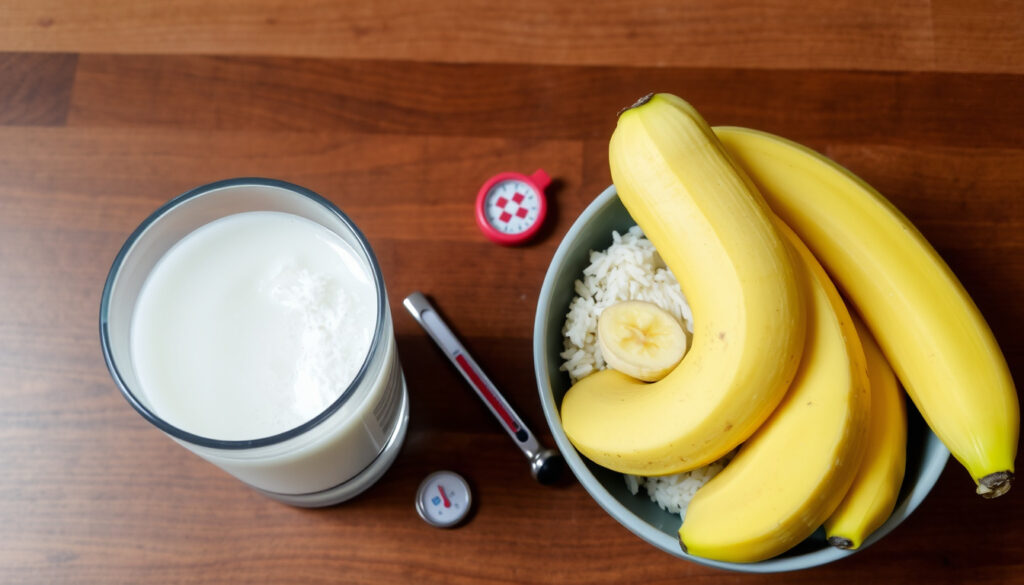
The BRAT diet — bananas, rice, applesauce, toast — is a household name for treating diarrhoea. But modern guidance has shifted. In an update reported by The Guardian (UK newspaper covering health and wellness), experts now say there is no need for a strict liquid diet or the formerly recommended BRAT approach.
Instead, dietary guidance is more flexible. The NHS suggests that once the worst is over, you can eat bland, easy-to-digest foods such as plain rice, boiled potatoes, crackers, or pasta. What’s important is to avoid fatty, spicy, or high-fibre foods that could irritate the gut.
A helpful nuance comes from Cornell University Health Services (US university health centre), which still mentions saltines or other crackers as a gentle option to replace lost sodium. This isn’t a contradiction — the BRAT diet isn’t harmful, it’s just unnecessarily restrictive when most people can handle a wider range of foods sooner.
Over-the-Counter Medications: What’s Worth Taking?
If you are miserable and need to get through a meeting or a flight, OTC medications can help. But they need to be chosen with care, because the wrong one can backfire.
- Loperamide (Imodium) – Slows gut motility, reducing stool frequency. It is effective for short-term, non-infectious diarrhoea but should be avoided if you have a fever or blood in the stool (NHS).
- Bismuth subsalicylate (Pepto-Bismol) – Reduces inflammation and fluid secretion in the gut. It may shorten the duration of mild traveller’s diarrhoea and can relieve cramping (CDC).
Notably, the NHS says loperamide is effective for acute non-infectious diarrhoea, but the US Centers for Disease Control and Prevention (CDC) provides a counterpoint: in cases where the cause is bacterial (such as E. coli food poisoning), antimotility agents can prolong the illness by preventing your body from flushing out the pathogen.
For a middle ground, the World Health Organization (WHO) recommends a decision-making framework: if there is no fever, no blood, and you have not recently taken antibiotics, loperamide is generally safe for up to 48 hours. If any red-flag signs appear, stop the medication and rehydrate instead.
Loperamide buys you convenience, but it buys it by pausing a natural defence mechanism. For mild cases this is fine; for infections, it can turn a short illness into a longer one.
Natural Remedies: Do They Actually Help?
The desire to reach for something natural is understandable, and some options have real — though modest — evidence behind them. It is worth knowing which ones have traction and which are more folk than fact.
Peppermint oil – A review of studies shows that peppermint oil capsules may relieve IBS-related diarrhoea by relaxing gut muscles and reducing cramping. If your diarrhoea is part of an irritable bowel pattern, this can be a useful addition (NHS).
Probiotics – Live cultures like Lactobacillus rhamnosus GG and Saccharomyces boulardii can shorten the duration of infectious diarrhoea by about 24 hours. The effect is strongest when started early (WHO).
Ginger tea – Ginger has anti-inflammatory properties that may ease nausea and cramping, though it is not a direct antidiarrhoeal.
Chamomile tea – Often cited as a calmative for the gut, but no large-scale trial confirms a meaningful effect on stool frequency.
A word of caution: NHS notes that herbal remedies can interact with prescription medications, so if you are taking anything for heart, blood pressure, or diabetes, check with a pharmacist first.
When to See a Doctor: Red Flags You Shouldn’t Ignore
Most diarrhoea is self-limiting, but there are situations where home care is not enough. Recognising the warning signs early can prevent a trip to the emergency room.
| Warning Sign | Why It Matters |
|---|---|
| Blood or mucus in the stool | Suggests an invasive bacterial infection like Shigella or Campylobacter, which may need antibiotics (NHS) |
| High fever (above 38.5°C) | Indicates systemic infection rather than simple gastroenteritis (CDC) |
| Signs of severe dehydration (dizziness, dark urine, dry mouth, sunken eyes) | Requires IV fluids if ORS cannot be kept down (NHS) |
| Diarrhoea lasting more than 7 days | May point to parasitic infection, IBD, or malabsorption disorder (WHO) |
| Recent antibiotic use | Could signal C. difficile infection, which needs specific treatment (CDC) |
| In infants: no wet nappy for 6+ hours | Rapid dehydration risk; needs urgent medical assessment (NHS) |
For children under 5, the WHO (United Nations public health agency) states that diarrhoea remains a leading cause of death, but prompt ORS use can prevent nearly all of these fatalities. If your child is lethargic, has sunken eyes, or is not drinking, seek medical attention immediately.
What looks like a simple stomach bug can sometimes be something more — the cost of waiting an extra day is more severe dehydration and unnecessary suffering.
How Long Does Diarrhoea Usually Last?
Acute diarrhoea in adults typically resolves within 2 to 4 days without specific treatment (NHS). In children, the episode may be shorter, but they are at higher risk for complications from fluid loss. If diarrhoea persists beyond 48 hours in a child or 7 days in an adult, medical guidance is recommended to rule out underlying causes.
Related reading: How to Reduce Cholesterol: 7-Day Diet & Lifestyle Plan · Brown Rice vs White Rice: Which Is Healthier? Comparison
oregonclinic.com, medicalnewstoday.com, doctorinmyhome.com, uhsussex.nhs.uk, medicalnewstoday.com, webmd.com, nhs.uk, dchft.nhs.uk
Frequently Asked Questions
Is it safe to take Imodium (loperamide) for diarrhoea?
Yes, but only if you meet specific criteria — no fever, no blood in the stool, and not taken within 4 weeks of antibiotic use. The NHS recommends it for acute non-infectious diarrhoea, but the CDC advises against it for suspected bacterial infections like Salmonella.
How quickly does oral rehydration solution (ORS) work?
ORS starts replenishing fluids and electrolytes within 20–30 minutes. A 54% reduction in diarrhoea-related mortality is seen when ORS is used consistently, according to WHO data. You should notice improved energy and reduced dizziness within a few hours.
Can I drink Coke or other soft drinks when I have diarrhoea?
No — high-sugar soft drinks like Coke can make diarrhoea worse. The sugar acts osmotically, pulling additional water into the bowel, which increases stool volume and prolongs symptoms. Stick to ORS, plain water, or broth.
Which specific probiotic strains are best for diarrhoea?
Research supports Lactobacillus rhamnosus GG and Saccharomyces boulardii for reducing the duration of infectious and antibiotic-associated diarrhoea. Starting them early in the episode provides the greatest benefit (WHO).
What does the modern approach to eating after diarrhoea look like?
Experts now recommend a bland but varied diet rather than the old BRAT approach. Focus on easy-to-digest foods like boiled potatoes, plain pasta, and crackers, while avoiding fatty, spicy, or high-fibre options. The key is reintroducing nutrients without irritating the gut (NHS).
What should I do if my baby has diarrhoea and I’m worried about dehydration?
Do not dilute formula milk — that is a myth. Continue normal feeding and give ORS between feeds. Watch for wet nappies: if your baby has not urinated in 6+ hours, has sunken eyes, or is unusually lethargic, see a paediatrician immediately.
What’s Next
With the right approach — ORS, bland food, and careful use of OTC medication — most cases resolve within three days. The real risk is dehydration, particularly for young children. Acting early with proper hydration allows most people to avoid urgent care and return to normal life.
More related posts
 Valley Point Shopping Centre Guide: Shops, Parking & MRT
 Goodie Bags for Kids: Ideas, Alternatives & Fillers
 ECP Roadblock: Doctor’s Car Reversal to Evade Police
 First Pride Hotel Bangkok: Location and Distance to Platinum Mall
 Is Stomach Flu Contagious? Timeline & When to Isolate
 Pop Toy Show 2025: Singapore Dates, Tickets, Location & More
 DBS Salary Credit Promotion 2025: S$250 Cash Reward & Eligibility
 Singapore First Aid Training Centre Reviews: Costs & Courses