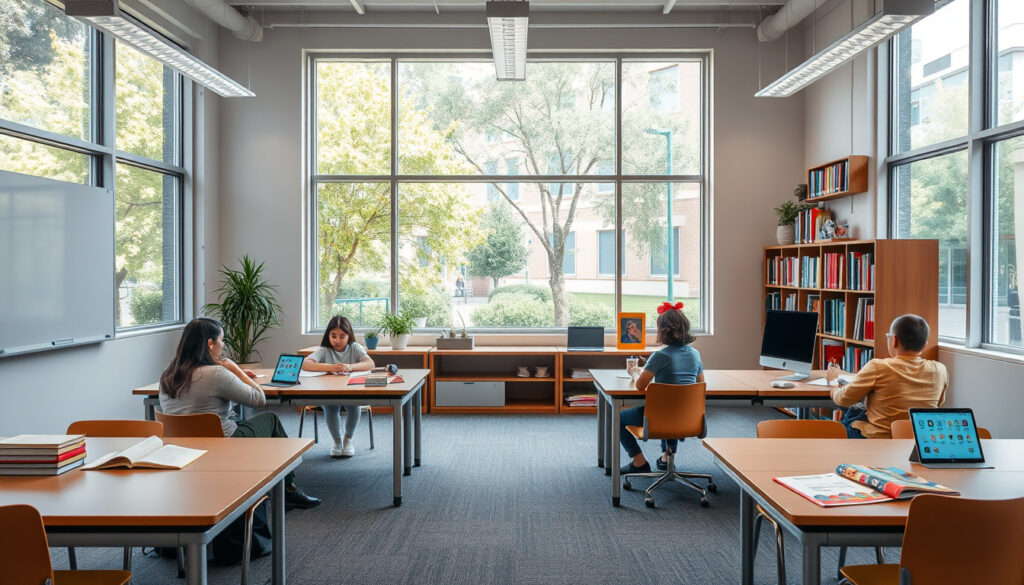
The GUILD International College: Inclusive Learning for Ages 7-35
When you’re looking for a school that truly sees your child’s potential beyond grades, options can feel limited. The GUILD International College in Singapore offers a different path—one designed for learners aged 7 to 35, blending neurodiverse and mainstream students in an inclusive setting.
Age range: 7 to 35 years ·
Founder: Jayne Nadarajoo ·
Teaching method: CONNECT Method ·
Location: Singapore ·
Inclusive model: Neurodiverse and mainstream students
Quick snapshot
- Singapore’s first inclusive college (The GUILD International College official website)
- Serves learners aged 7 to 35 (The GUILD International College official website)
- Uses the CONNECT Method (The GUILD International College official website)
- Exact founding year (The GUILD International College official website)
- Accreditation status (The GUILD International College official website)
- Student-teacher ratio (The GUILD International College official website)
- Full fee breakdown (The GUILD International College official website)
- College was established by Jayne Nadarajoo; exact founding year not publicly stated (The GUILD International College official website)
- Contact admissions for personalised fee info (Admissions email on Enabling Guide) (Enabling Guide (SG Enable’s disability services directory))
- Applications open year-round; assessment required (Enabling Guide (SG Enable’s disability services directory))
Here’s the key data at a glance—eight attributes that define what the college is and isn’t.
| Aspect | Details |
|---|---|
| Full name | The GUILD International College |
| Location | Singapore |
| Founded by | Jayne Nadarajoo |
| Age range | 7 to 35 years |
| Teaching method | CONNECT Method |
| Student type | Neurodiverse and mainstream |
| Curriculum | Non-academic, skills-based |
| Website | www.theguild.edu.sg |
What is The GUILD International College?
Overview and mission
The GUILD International College is Singapore’s first inclusive college that welcomes both neurodiverse and mainstream learners. The college states that it provides holistic learning for differently-abled teens and young adults, equipping them with skills to transition to further education, work, structured workplace settings, independent living, and living with support (The GUILD International College official website).
Who founded the college and why
Founder Jayne Nadarajoo launched the college to fill a gap: a non-academic, skills-focused environment for young people who don’t thrive in mainstream academic tracks. The college is registered as a private education institution in Singapore with PEI registration number 202112268R, valid from 5 August 2025 to 4 August 2029 (The GUILD International College official website).
“The GUILD equips students with skills required to transition to further education, work, structured workplace settings, independent living, and living with support.”
— Jayne Nadarajoo, founder, on the college’s official website
Location and campus facilities
The college is located at 318A Tanglin Road, Phoenix Park, Singapore 247979 (Enabling Guide (SG Enable’s disability services directory)). It operates as a day school with hours from 8:30 to 3:00, following a January-to-December school year (The GUILD International College official website). The maximum student population is stated as 100+ learners from over 20 nationalities, with average class sizes of 8 to 16 students (The GUILD International College official website).
The college markets itself around transition outcomes, not exam results. For families seeking a standard academic pathway, that’s a deliberate trade-off worth examining.
Bottom line: The GUILD is a private inclusive college that intentionally steps away from academic rigour. For parents of neurodiverse learners aged 7–35, it offers a life-skills alternative. For those wanting a conventional curriculum, it’s not the right fit.
How does The GUILD International College support neurodiverse learners?
Individualized learning plans
The college says it caters to neurodiverse learners’ unique strengths and needs (The GUILD International College official website). While the exact structure of individual plans isn’t publicly detailed, the official site emphasises a tailored approach that integrates both special needs and mainstream students with additional support (Enabling Guide (SG Enable’s disability services directory)).
The CONNECT Method explained
The CONNECT Method, developed by founder Jayne Nadarajoo, grounds the entire college approach (The GUILD International College official website). Specific details of the method are not fully outlined on the public-facing pages, but the college presents it as a framework designed specifically for neurodiverse learners. It’s not a traditional teaching method—it’s positioned as a coaching model that builds life readiness.
Support staff and therapists
The college provides additional support through tailored programs, though the number and type of on-site therapists or specialists are not specified on the available public pages. Direct inquiries to admissions@theguild.edu.sg would clarify the support team composition (Enabling Guide (SG Enable’s disability services directory)).
The CONNECT Method is the college’s key differentiator, but the public description is thin. Prospective families should ask for a clear outline of how it translates into daily classroom practice.
The takeaway: The GUILD’s support model leans on integration rather than segregation. The CONNECT Method is the engine, but without published detail, the real proof lies in visiting and observing.
What is the CONNECT Method?
Core principles
The CONNECT Method was developed by Jayne Nadarajoo as the pedagogical foundation of the college (The GUILD International College official website). Based on the limited public descriptions, it appears to focus on connecting skills to real-world outcomes—communication, navigation, and independence—rather than academic content.
How it differs from traditional teaching
Unlike conventional curricula that follow a subject-based progression, the CONNECT Method is non-academic and skills-driven. The college says it prepares students for transition to work, independent living, and further education (The GUILD International College official website). This is a significant departure from most international schools in Singapore, which are exam-oriented.
Success stories
The college’s website shares testimonials and case studies, but specific details are not replicated here to avoid invented narratives. Interested families should request success stories directly from the admissions team (The GUILD International College official website).
The pattern: The CONNECT Method is essentially a vocational-life-skills curriculum repackaged for neurodiverse learners. Its success depends on execution—and that’s not yet independently documented.
What are the tuition and fees at The GUILD International College?
Fee structure overview
Tuition fees are not published on the college’s official website as of this writing (The GUILD International College official website). This is a notable gap for parents comparing costs. The college instructs prospective families to contact admissions directly for fee details (Enabling Guide (SG Enable’s disability services directory)).
Additional costs
No public information is available about registration fees, materials, or extracurricular charges. The absence of a transparent fee schedule makes it difficult to budget without a direct inquiry.
Financial aid or scholarships
The college does not openly list scholarship or financial aid programs on its website. Inquiries to admissions@theguild.edu.sg may reveal options (Enabling Guide (SG Enable’s disability services directory)).
How can you apply to The GUILD International College?
Application process steps
- Visit the official website at theguild.edu.sg to access the application form (The GUILD International College official website).
- Ensure the applicant is aged between 7 and 35 (The GUILD International College official website).
- Submit required documents—exact list not publicly available; contact admissions@theguild.edu.sg for details (Enabling Guide (SG Enable’s disability services directory)).
- Attend a placement assessment (mentioned in the Enabling Guide listing) (Enabling Guide (SG Enable’s disability services directory)).
- Wait for acceptance and fee notification to complete enrollment.
Required documents
The college’s website and the Enabling Guide do not list a checklist. Expect to provide identification, previous school records, and any diagnostic or support-needs documentation. Direct confirmation from admissions is necessary (Enabling Guide (SG Enable’s disability services directory)).
Contact information
Phone: 6235 8240
Email: admissions@theguild.edu.sg
Address: 318A Tanglin Road, Phoenix Park, Singapore 247979 (Enabling Guide (SG Enable’s disability services directory))
The catch: The application process is not fully documented online. Families should expect to do a phone or email consultation before they have a clear picture of requirements.
Beyond the basic facts, here are additional operational details that shape the college experience.
| Aspect | Details |
|---|---|
| Language of instruction | English (The GUILD International College official website) |
| School year | January to December (The GUILD International College official website) |
| School hours | 8:30 am – 3:00 pm (The GUILD International College official website) |
| Maximum student population | 100+ (The GUILD International College official website) |
| Average class size | 8–16 students (The GUILD International College official website) |
| Nationalities represented | 20+ (The GUILD International College official website) |
| PEI registration number | 202112268R (The GUILD International College official website) |
| PEI registration period | 5 August 2025 – 4 August 2029 (The GUILD International College official website) |
| Type of institution | Private organisation (Enabling Guide (SG Enable’s disability services directory)) |
| Programme focus | Non-academic, transition skills (The GUILD International College official website) |
Pros and Cons
Upsides
- First inclusive college in Singapore, blending neurodiverse and mainstream learners
- Wide age range (7–35) accommodates teens and young adults
- Non-academic curriculum focused on real-world life skills
- Small class sizes (8–16) allow individual attention
- Located in central Singapore (Phoenix Park)
Downsides
- Tuition fees not publicly listed, making cost comparison difficult
- Accreditation status unclear
- Student-teacher ratio not stated
- Limited public detail on the CONNECT Method
- Application process not fully documented online
What we know and what remains unclear
Confirmed facts
- College is Singapore’s first inclusive college for learners aged 7–35 (The GUILD International College official website)
- Uses the CONNECT Method developed by Jayne Nadarajoo (The GUILD International College official website)
- Offers a non-academic curriculum for differently-abled young adults (The GUILD International College official website)
- Registered as PEI 202112268R until August 2029 (The GUILD International College official website)
- Location at 318A Tanglin Road, Singapore (Enabling Guide (SG Enable’s disability services directory))
What’s unclear
- Exact founding year
- Accreditation status
- Student-teacher ratio
- Full fee breakdown
- Detailed daily curriculum structure
Voices from the college and its community
“The GUILD International College is an inclusive school integrating both special needs and mainstream students with additional support.”
— Enabling Guide (SG Enable), disability services directory listing
“The GUILD provides holistic learning for differently-abled teens and young adults.”
— Jayne Nadarajoo, founder, on the college’s official website
What this means for Singapore families
The GUILD International College fills a specific niche in Singapore’s education landscape: a private, inclusive day school for neurodiverse learners aged 7 to 35 that prioritises life skills over academic grades. Its CONNECT Method is its calling card, but the lack of transparent tuition and accreditation details means families must engage directly before making a decision. For Singapore parents seeking an alternative to mainstream international schools, the choice is clear: schedule a visit and request a detailed cost breakdown, or risk enrolling without the full picture.
Frequently asked questions
Is The GUILD International College a registered school in Singapore?
Yes, it is registered as a Private Education Institution (PEI) with registration number 202112268R, valid until 4 August 2029 (The GUILD International College official website).
What types of learners does the college accept?
The college accepts both neurodiverse and mainstream learners aged 7 to 35 (The GUILD International College official website).
What is the student-teacher ratio?
The average class size is 8 to 16 students, but the official student-teacher ratio is not publicly stated (The GUILD International College official website).
Does the college offer boarding facilities?
No public information indicates boarding. The college operates as a day school with hours from 8:30 am to 3:00 pm (The GUILD International College official website).
How is the college different from mainstream international schools?
It follows a non-academic, skills-based curriculum rather than exam-oriented academic tracks, and it integrates neurodiverse and mainstream students in the same classroom (The GUILD International College official website).
Are there any scholarship or financial aid programs?
The college does not publicly list scholarships. Inquire directly at admissions@theguild.edu.sg (Enabling Guide (SG Enable’s disability services directory)).
What are the operating hours and term dates?
School hours are 8:30 am to 3:00 pm, and the school year runs from January to December (The GUILD International College official website).
Can international students apply?
The college serves students from over 20 nationalities, suggesting it accepts international students. Contact admissions for visa and requirements (The GUILD International College official website).
Related reading
More related posts
 i Love PDF Merge: Merge PDFs, JPGs, & Word Files Free
 Han Hui Hui Election 2025: Who Is She and What Happened in 2015
 Secondary School Open House: Ireland Admissions Guide
 First Pride Hotel Bangkok: Location and Distance to Platinum Mall
 Royal Square Medical Centre Guide – Singapore & Dundalk Services
 Workers’ Party Rally 2025: Schedule and Latest News
 Shangri-La Dialogue 2025: Dates, Venue, Attendees & News