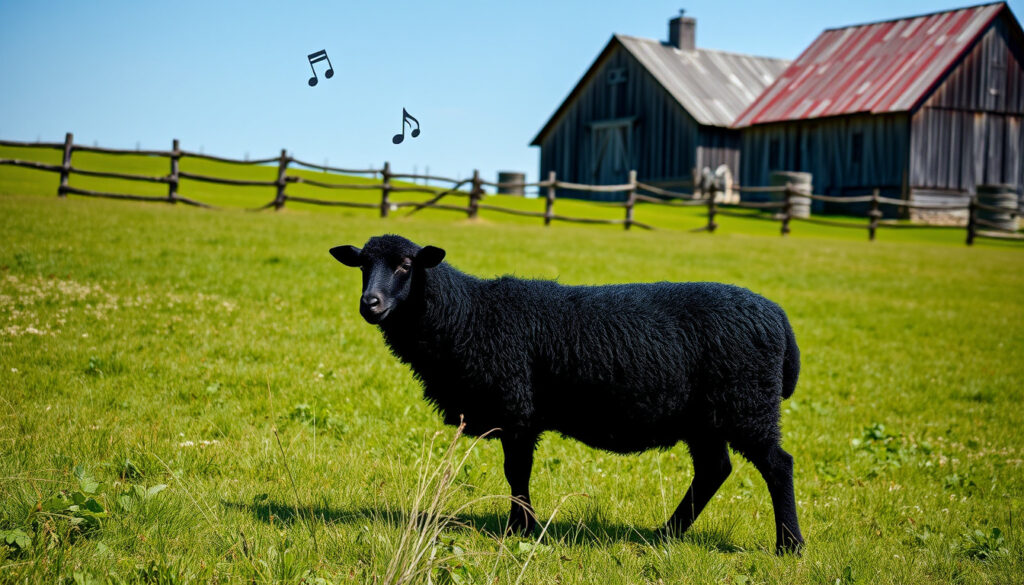
Baa Baa Black Sheep: History, Controversy, and Lyrics
You probably sang it as a kid without a second thought — a black sheep handing out bags of wool to a master, a dame, and a little boy. But behind that simple nursery rhyme lies a surprisingly tangled history, one that stretches from medieval tax collectors to modern debates about race.
Earliest known print: c. 1744 ·
Music origin: 18th-century French melody ‘Ah! vous dirai-je, Maman’ ·
Common tune also used for: Twinkle, Twinkle, Little Star ·
Number of bags of wool in rhyme: three ·
Controversy theme: alleged slavery reference ·
Modern adaptations: multicultural versions, e.g., ‘Baa Baa Rainbow Sheep’
| Fact | Detail |
|---|---|
| First published | c. 1744 in Tommy Thumb’s Pretty Song Book |
| Lyrics unchanged since | at least the 18th century |
| Famous melody | Ah! vous dirai-je, Maman (1761) |
| Wool tax rate (medieval) | one-third to one-half of fleece value |
| Controversy peak | 2006 (UK nurseries story) |
| Alternative version example | ‘Baa Baa Rainbow Sheep’ (2006) |
Quick snapshot
- First printed in 1744 in Tommy Thumb’s Pretty Song Book (Classic FM)
- Lyrics have stayed nearly identical for over 250 years (The Story Museum)
- Melody comes from the 1761 French tune ‘Ah! vous dirai-je, Maman’ (Wikipedia)
- Whether the rhyme originally referred to the medieval wool tax or the slave trade (All About History)
- The exact meaning of ‘three bags full’ remains debated (Dictionary.com)
- Whether the controversy will lead to permanent changes in how the rhyme is taught (American Songwriter)
- How much older the rhyme is than its first printed record (The Story Museum)
- Whether the black sheep’s color carried any racial connotation in the 18th century (inferred from public debate) (All About History)
- c. 1744: First known print in Tommy Thumb’s Pretty Song Book (Classic FM)
- 1761: ‘Ah! vous dirai-je, Maman’ melody published (Wikipedia)
- 2006: Media frenzy over UK nurseries switching to ‘Baa Baa Rainbow Sheep’ (BBC Teach)
- Both original and alternative versions continue to be used in classrooms (The Story Museum)
- Historians and educators increasingly advocate for providing historical context rather than banning the rhyme (Simple English Wikipedia)
A nursery rhyme sung by millions of children each week has become a litmus test for how society handles the collision of historical innocence and modern racial sensitivity. The stakes are not about the rhyme itself — they’re about who gets to decide what children learn.
What is the nursery rhyme ‘Baa Baa Black Sheep’?
Original lyrics and music
The rhyme goes like this: a black sheep has three bags of wool — one for the master, one for the dame, and one for the little boy who lives down the lane. That final line sometimes appears as “the little boy who cries down the lane” in older versions, according to The Story Museum. The lyrics have remained almost unchanged for centuries, a rare feat for an oral tradition.
The melody you likely hum is shared with two other famous tunes: “Twinkle, Twinkle, Little Star” and the “Alphabet Song.” All three draw from the 18th-century French melody “Ah! vous dirai-je, Maman,” first published in 1761, as Wikipedia notes. The rhyme itself is categorized as an English nursery rhyme.
Earliest printed version (c. 1744)
The earliest known printed version appears in Tommy Thumb’s Pretty Song Book, published around 1744. BBC Teach confirms this as the first documented source, though the rhyme is likely older than that — oral tradition means it could have circulated for decades or even centuries before being written down.
The implication: even a simple children’s song carries centuries of cultural weight, and knowing its origins helps separate fact from speculation.
What is the dark history behind Baa Baa Black Sheep?
Medieval wool tax theory
The most widely accepted explanation among historians is the medieval wool tax theory. Under King Edward I, England introduced the Great Custom in the late 13th century — a tax that took roughly one-third to one-half of a farmer’s fleece value, as The Story Museum explains. The “master” and “dame” in the rhyme likely represent the king and the church, who each received a share of the wool tax.
Katherine Elwes Thomas popularized this interpretation in her 1930 book The Real Personages of Mother Goose, according to Wikipedia. The tax itself lasted into the 15th century, meaning the rhyme could have originated during a period when wool was England’s most valuable export.
Slavery and racial interpretation
A later, more controversial theory emerged in the 1980s and 1990s: that the black sheep represented enslaved Africans, and the three bags of wool symbolized the slave trade. Wikipedia notes this interpretation has been described as lacking supporting historical evidence. The Story Museum also states the slavery claim has no historical evidence behind it.
The original context of the rhyme is likely economic, not racial. As All About History puts it, the rhyme’s meaning has been commonly discussed by historians as a comment on wool taxation, not as a direct reference to slavery. The black sheep’s color in the rhyme likely refers to the breed of sheep (black wool was common) rather than any human characteristic.
The slavery theory persists in public discourse despite lacking historical support, creating an odd paradox: a rhyme with no documented connection to the slave trade is now permanently associated with it because of the controversy itself.
The pattern: the rhyme’s innocuous past collides with modern sensitivities, and the battle over its meaning reflects deeper cultural tensions.
Is it racist to say Baa Baa Black Sheep?
Arguments for racist connotations
Critics argue that the word “black” in the rhyme associates blackness with negativity — a black sheep as something undesirable or lesser. In British public debate, the rhyme was challenged in the 1980s as possibly racially insensitive, reports American Songwriter. The concern is that young children internalize the pairing of “black” with the idea of being set apart or taxed.
Counterarguments from historical context
Scholars point out that the rhyme predates the peak of the transatlantic slave trade and originally referred simply to the color of sheep’s wool. Black wool was common and had practical significance — it was harder to dye consistently than white wool, as Nursery Rhymes Collections explains. The “black sheep” was a matter of commerce, not race.
Modern controversies and bans
In 2006, a media frenzy erupted when several UK nurseries announced they would replace “black” with “rainbow” in the lyrics, creating “Baa Baa Rainbow Sheep.” BBC Teach covered the story as part of broader discussions about the politics of language in children’s education. The decision sparked a polarized debate: critics said it was censorship, while supporters argued it was a small gesture toward inclusivity.
- Pro-change side: Altering the lyrics removes potential harm and teaches children that words matter. The Story Museum notes that alternative versions continue to be used in classrooms.
- Anti-change side: The rhyme is historically innocent, and changing it erases cultural heritage without solving any real problem. BBC Teach resources continue to present the original version.
The catch: even if the rhyme is historically innocent, its modern perception forces educators to weigh heritage against sensitivity.
Is it okay to sing Baa Baa Black Sheep?
Current consensus among educators
Most experts agree the rhyme is not inherently racist, but they recommend providing historical context when teaching it. Simple English Wikipedia notes that some summaries explain the rhyme as teaching sharing or giving to others — an educational interpretation rather than a historical one, but one that shows the rhyme’s ongoing value.
Parental and school guidelines
The decision to sing or modify the rhyme is generally left to individual families and schools. BBC Teach reports that the rhyme has been used in modern discussions of the politics of language and nursery-rhyme revision. Some schools have adopted alternative versions, but the original is still widely taught across the UK and the US.
“The rhyme’s original context is likely economic, not racial. The black sheep in the rhyme refers to the color of the wool, not a person’s skin.”
— All About History
What this means: the decision should be informed by historical facts, not fear, and context turns a potential landmine into a teachable moment.
What historians confirm vs. what remains unknown
Confirmed facts
- The rhyme was first printed in 1744 (Classic FM)
- The tune is from an 18th-century French melody (Wikipedia)
- The lyrics have remained almost unchanged for centuries (The Story Museum)
- The rhyme has been used in early childhood education for generations (Simple English Wikipedia)
What’s unclear
- Whether the rhyme originally referred to the medieval wool tax or the slave trade (All About History)
- The exact meaning of “three bags full” (Dictionary.com)
- Whether the controversy will lead to long-term changes in the rhyme’s use (American Songwriter)
- How much older the rhyme is than its first printed record (inferred from oral tradition)
- Whether the black sheep’s color carried any racial connotation in the 18th century (inferred from public debate)
Historians have a solid grasp on the rhyme’s print history and its medieval tax context. What they cannot settle is the emotional question: does a rhyme’s original intent matter more than its modern perception? That’s not a historical question — it’s a cultural one.
The implication: the unresolved questions keep the debate alive, but the confirmed facts provide a firm foundation for reasonable discussion.
Timeline: From medieval tax to modern controversy
The following timeline traces the key events that turned a simple tax complaint into a cultural flashpoint.
| Date or period | Event |
|---|---|
| Late 13th century | Great Custom wool tax introduced under Edward I (The Story Museum) |
| c.1744 | First known publication in Tommy Thumb’s Pretty Song Book (Classic FM) |
| 1761 | Publication of “Ah! vous dirai-je, Maman” melody (Wikipedia) |
| 19th century | Rhyme becomes widely circulated in nursery rhyme collections (The Story Museum) |
| 1930 | Katherine Elwes Thomas popularizes wool-tax theory (Wikipedia) |
| 1980s-1990s | Slavery interpretation emerges in public debate (Wikipedia) |
| 2006 | Media frenzy over “Baa Baa Rainbow Sheep” in UK nurseries (BBC Teach) |
| Present | Both versions coexist; historians continue to discuss origins (American Songwriter) |
The pattern is clear: a rhyme that went 200 years without controversy became a flashpoint in just two decades. The medieval tax theory has been around since the 1930s, but it took the racial sensitivity debates of the 1980s to turn the rhyme into a cultural battleground.
“Several modern sources say the slavery claim has no historical evidence behind it. The Great Custom interpretation remains the dominant scholarly explanation.”
— The Story Museum
The takeaway: the timeline shows how a rhyme’s meaning can be reshaped by the cultural moment, and how a few decades of controversy can eclipse centuries of quiet history.
grunge.com, singaporevoice.net, nurseryrhymes.info, sporcle.com, nurseryrhymescollections.com, wolverton-mountain.com
Frequently asked questions
What does ‘Baa Baa Black Sheep’ mean?
The most widely accepted explanation is that the rhyme refers to a medieval wool tax called the Great Custom. The “master” and “dame” represent the king and the church, who each received a share of the fleece value. The Story Museum describes this as the dominant scholarly interpretation.
Why is the sheep black in the nursery rhyme?
The black sheep’s color likely refers to the breed of sheep that had black wool, which was common in medieval England. Black wool was harder to dye consistently than white wool, as Nursery Rhymes Collections notes. The color is about sheep, not about race.
Is the rhyme about slavery?
Some have claimed the rhyme refers to the slave trade, but Wikipedia and The Story Museum both state this interpretation lacks supporting historical evidence. The rhyme likely predates the transatlantic slave trade’s peak by centuries.
Has ‘Baa Baa Black Sheep’ been banned anywhere?
No official ban has ever been enacted. However, BBC Teach reported that some UK nurseries in 2006 voluntarily switched to “Baa Baa Rainbow Sheep” to avoid potential offense, which sparked widespread media debate.
What is the original version of ‘Baa Baa Black Sheep’?
The earliest known version from 1744 reads: “Bah, Bah, a black Sheep / Have you any Wool? / Yes merry have I / Three Bags full.” Some older versions preserve a final line about “the little boy who cries down the lane,” according to The Story Museum.
Are there other nursery rhymes with controversial origins?
Yes. Many nursery rhymes have been reinterpreted over time. “Ring a Ring o’ Roses” has been linked to the plague, and “Three Blind Mice” to Queen Mary I. All About History covers the disturbing origins of several classic nursery rhymes.
How should I teach ‘Baa Baa Black Sheep’ to children?
Most educators recommend singing the original version but pairing it with a brief, age-appropriate explanation: the rhyme is about sharing and medieval wool taxes, and the “black” refers to the sheep’s wool color. Simple English Wikipedia suggests using it as a teaching moment about history.
What is the connection between ‘Baa Baa Black Sheep’ and ‘Twinkle, Twinkle, Little Star’?
Both rhymes share the same melody, which comes from the 1761 French tune “Ah! vous dirai-je, Maman.” Wikipedia notes that the “Alphabet Song” also uses this melody, making it one of the most recognizable tunes in children’s music.
The debate over ‘Baa Baa Black Sheep’ shows no sign of resolution, leaving parents and educators to make their own decisions based on context and intention.
Related reading: Baa Baa Black Sheep – History, Controversy, Meaning & Origins
More related posts
 ปั่นสล็อต pgroyal88: Verification Guide – What You Need to Know
 Singapore Dollar to Taka: Live SGD to BDT Conversion Rate
 The Clan Hotel Singapore: 5-Star Stay with Heritage Charm
 Things to Do in Vienna: Top Attractions, Tips & 3-Day Itinerary
 Eid al-Fitr 2026: Date, Meaning, and How to Celebrate
 Peking Chamber Singapore Review : Price , Menu & Location
 What Is a Notice Period? Guide for Irish Employees
 Samwoh Corporation Pte Ltd: Quiet Giant of Singapore Construction