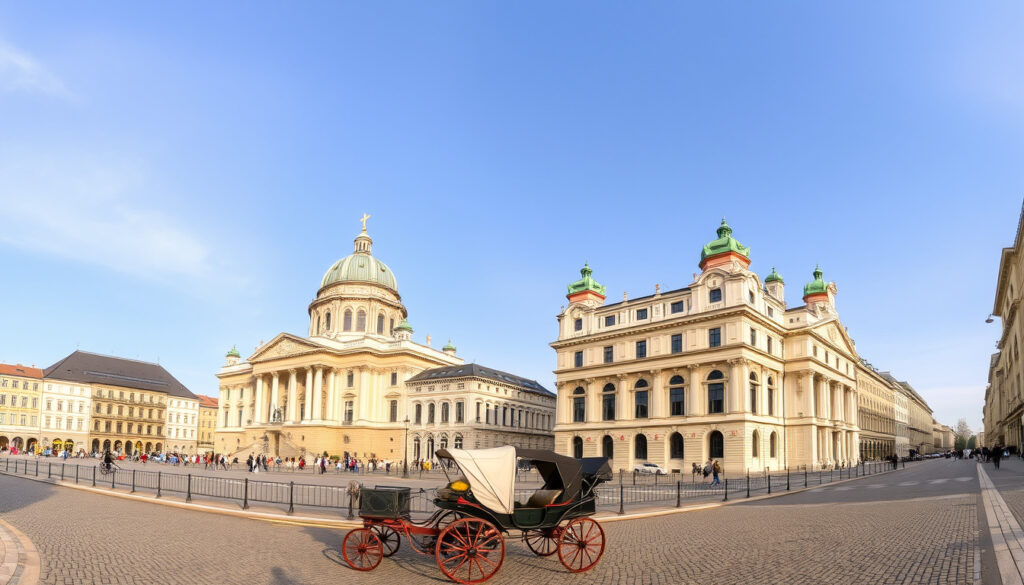
Things to Do in Vienna: Top Attractions, Tips & 3-Day Itinerary
There’s a moment when you step out of the U-Bahn at Stephansplatz, look up at the tiled roof of St. Stephen’s Cathedral, and realize the city’s grand plan is actually a compact one. If you’re trying to organize a first trip to Vienna, you’ve probably seen the same top-10 list five times.
Vienna ranked #1 city for quality of living: Mercer survey · Over 50 major museums: Vienna Tourism Board · Historic center is a UNESCO site: UNESCO · 95% of top attractions within Ringstraße: Visiting Vienna
Quick snapshot
- Vienna’s historic center is a UNESCO World Heritage site (UNESCO World Heritage Centre)
- Schönbrunn Palace is a UNESCO World Heritage site (UNESCO World Heritage Centre)
- Vienna ranks #1 globally for quality of living (Mercer 2024 Quality of Living Survey)
- Exact number of free attractions varies by source and season (Vienna Tourist Board (free activities))
- Whether 3 days is “too long” depends entirely on your travel style (Vienna Tourist Board (free activities))
- Peak visitor season is June–August; many museum hours extend through September
- Plan your itinerary by district to minimize transit time
What should you not miss in Vienna?
Must-see palaces and museums
Vienna’s imperial legacy is compressed into a handful of sites that cluster so tightly you can see three in a single morning walk. Schönbrunn Palace, the former summer residence of the Habsburgs, is a UNESCO World Heritage site that sits a short U4 subway ride from the center (UNESCO World Heritage Centre (Schönbrunn listing)). Belvedere Palace, another Habsburg residence, houses the world’s largest collection of Gustav Klimt paintings—including The Kiss (Belvedere Museum (Klimt collection)).
The Hofburg complex, the former imperial palace in the center, contains the Imperial Apartments, the Sisi Museum, and the Spanish Riding School. All three can be visited without walking long distances between them (Vienna Tourist Board (Hofburg overview)).
Schönbrunn and Belvedere alone account for two of Vienna’s three UNESCO-recognized palace sites. First-time visitors who want the full imperial hit should allocate one full morning for Schönbrunn and one afternoon for Belvedere—and use the U4 for the former.
Iconic landmarks: St. Stephen’s Cathedral, Schönbrunn
St. Stephen’s Cathedral has been the city’s spiritual anchor since 1147. Its 137-meter south tower and multicolored tile roof make it the most recognized landmark in Vienna (Vienna Tourist Board (St. Stephen’s Cathedral)). It sits at the very center of the pedestrianized old town, which means you’ll walk past it several times during any round of sightseeing.
Schönbrunn Palace, with 1,441 rooms, was built as the Habsburgs’ summer escape and has been open to the public since the 1950s (Vienna Tourist Board (Schönbrunn Palace)). The surrounding park and the Gloriette hill are free to enter, though the palace tours require paid tickets.
The pattern: the two absolute must-sees—St. Stephen’s and Schönbrunn—sit at opposite ends of the transit map. One anchors a walking day; the other anchors a subway morning.
The Prater and Giant Ferris Wheel
The Prater is a massive public park with a famous amusement section, including the Giant Ferris Wheel (Riesenrad) built in 1897 (Vienna Tourist Board (Giant Ferris Wheel)). It’s a popular half-day add-on when visitors want something lighter after a museum run. The U1 and U2 lines stop at Praterstern, making it a five-minute ride from the center.
Is 3 days enough time in Vienna?
The short answer: yes, if you plan by district. According to the Vienna Tourist Board (trip planning), average visitor stay is 3.2 days, and the compact footprint of the historic center means you can cover the highlights without rushing. The longer answer depends on how many museums you want to enter vs. how many facades you’re happy to admire from the sidewalk.
Suggested 3-day itinerary
A working three-day plan groups sights by geography to minimize backtracking.
- Day 1: Historic center — St. Stephen’s Cathedral, pedestrian streets, Hofburg exterior, the State Opera House exterior, and an evening at a traditional coffeehouse (Vienna Tourist Board (old town walking route)).
- Day 2: Palaces — Schönbrunn in the morning (U4 to Schönbrunn station), then Belvedere in the afternoon (tram D or U1 to Hauptbahnhof, then a 10-minute walk). Many first-time visitors pick one interior tour per palace to save time (Vienna Tourist Board (Schönbrunn transit note)).
- Day 3: Museums Quartier or Prater — The MuseumsQuartier houses the Leopold Museum, MUMOK, and Kunsthalle Wien in a single complex. Or swap for a half-day at the Prater and the Ferris Wheel (Vienna Tourist Board (Prater)).
Many museums in Vienna close on Mondays, including most of the MuseumsQuartier and the Belvedere. If your three-day window includes a Monday, the Vienna Tourist Board advises planning that day for outdoor landmarks or Schönbrunn’s free gardens (Vienna Tourist Board (opening hours)).
What you can reasonably see in 72 hours
Vienna’s public transport system—run by Wiener Linien (Vienna’s transit authority)—includes five U-Bahn lines, trams, and buses that connect the core districts in under 20 minutes. The Ringstraße is a 5.3 km loop around the historic center. Walking the full loop takes about 90 minutes, but its real value is the way it strings together the Opera, Hofburg, Parliament, and City Hall without needing a map.
In three days, you can comfortably see four to six paid attractions and an unlimited number of free exteriors and parks. The trade-off: you’ll skip the interior of some palaces unless you skip a museum.
What are the top five things to do in Vienna?
Schönbrunn Palace
The former imperial summer residence with 1,441 rooms, extensive gardens, and the Gloriette. The palace tour covers 40 rooms including the Great Gallery and the private apartments (Vienna Tourist Board (Schönbrunn Palace)). The gardens are free and open year-round.
Belvedere Palace
Two baroque palace buildings housing Austria’s art collection from the Middle Ages to the present. The Upper Belvedere features the Klimt collection, including The Kiss (Belvedere Museum (Klimt collection)).
St. Stephen’s Cathedral
The most visited site in Vienna. Free entry to the main nave, paid access to the catacombs and the south tower (343 steps to the top) (Vienna Tourist Board (St. Stephen’s Cathedral)).
The Hofburg
The former imperial palace now houses museums, the Spanish Riding School, the Austrian National Library, and the office of the Austrian Federal President (Vienna Tourist Board (Hofburg complex)).
Prater and the Giant Ferris Wheel
The 65-meter Ferris wheel has been a Vienna landmark since 1897. The surrounding Prater park is free, with walking paths, a planetarium, and the Liliputbahn miniature railway (Vienna Tourist Board (Giant Ferris Wheel)).
What this means: the top five are all imperial-era holdings or Habsburg legacies. If you’re not a palace person, swap one for the MuseumsQuartier or a Naschmarkt lunch.
Do and don’ts in Vienna?
Dos: tipping etiquette, public transport, café culture
- Tip 5–10% at restaurants and for taxi drivers. Round up at cafés (Austria.info (tipping guidelines)).
- Use public transport — the U-Bahn is punctual, clean, and runs every 3–5 minutes during peak hours (Wiener Linien (public transport)).
- Embrace café culture — order at the counter, then sit with your Melange or Einspänner for as long as you like. This is a UNESCO-recognized intangible cultural heritage practice (Vienna Tourist Board (coffeehouse culture)).
- Buy a Vienna City Card for unlimited transit and discounts at major attractions.
Don’ts: skipping reservations, ignoring opening hours
- Don’t skip advance bookings — Schönbrunn, Belvedere, and the Spanish Riding School sell out days ahead in summer (Schönbrunn Palace (ticket reservations)).
- Don’t assume all museums are open — many close on Mondays, including Belvedere and the MuseumsQuartier (Vienna Tourist Board (opening hours)).
- Don’t jaywalk — Vienna has strict pedestrian laws and fines.
- Don’t expect tap water served automatically — ask for Leitungswasser or order bottled.
Following the do’s saves you time and money. Skipping the don’ts costs you wasted hours at locked museum doors. The biggest single mistake first-time visitors make: arriving at a palace without a ticket and waiting 40 minutes at the box office when they could have booked a slot 48 hours earlier.
Is Vienna a walkable city?
Vienna’s historic center (Innere Stadt) is compact enough that many major sights can be combined into a walking route, according to the Vienna Tourist Board (old town walking guide). The pedestrianized streets around St. Stephen’s, the Graben, and Kohlmarkt make it possible to spend much of a day sightseeing with minimal car or taxi use (City of Vienna (transportation)).
Walking the Ringstraße
The Ringstraße is a 5.3 km grand boulevard that loops the historic center and passes the State Opera, the Hofburg, Parliament, City Hall, and the University (Vienna Tourist Board (Ringstraße)). Walking the full ring takes about 90 minutes. Walking the inner half (from the Opera to the City Hall) takes 30 minutes and covers the most photogenic stretch.
Public transport options when not walking
Vienna’s U-Bahn, trams, and buses fill the gaps for sites outside the center. The Wiener Linien (transit network) covers five U-Bahn lines and dozens of tram routes. For Schönbrunn, the U4 takes 12 minutes from Karlsplatz. For the Prater, the U1 or U2 take 5 minutes from Stephansplatz.
Why this matters: you can cover about 70% of Vienna’s top attractions on foot if you stay within the Ringstraße. The remaining 30% (Schönbrunn, Belvedere gardens, Prater) require one transit hop each. For travelers who dislike planning transit, Vienna’s walkability is as good as any European capital its size.
Related reading: Ferry Ticket to Bintan 2026: Prices, Booking & Tips
thatswhatshehad.com, abroadwithash.com, catsninelives.com, youtube.com, waywardblog.com, brightnomad.net, community.ricksteves.com
For visitors coming from Southeast Asia, flights from Singapore to Vienna offer a convenient direct connection, making it easy to start your Viennese adventure right after arrival.
Frequently asked questions
What is the best time of year to visit Vienna?
Spring (April–May) and early autumn (September–October) offer mild weather and fewer crowds. Summer is peak season with long museum hours but packed sidewalks (Vienna Tourist Board (seasons)).
How much does a typical trip to Vienna cost per day?
Budget around €100–€150 per day per adult for mid-range accommodation, meals, transport, and one paid attraction. A Vienna City Card (€17 for 24 hours) covers transit and gives 10–20% discounts at many museums (Vienna Tourist Board (Vienna City Card)).
Do I need to book tickets in advance for major attractions?
Yes, for Schönbrunn and Belvedere (especially during summer). The Spanish Riding School tickets sell out weeks ahead. Skip-the-line passes save 30–60 minutes per site (Schönbrunn Palace (ticket reservations)).
Is Vienna safe for solo travelers?
Vienna is one of the safest capitals in Europe, with low violent crime rates. The historic center is well-lit and patrolled. Solo travelers should watch for pickpockets in crowded tourist areas, as in any city (City of Vienna (safety)).
What is the best way to get from Vienna airport to the city center?
The City Airport Train (CAT) reaches Wien Mitte in 16 minutes (€16 single). The S7 suburban rail takes 25 minutes for €4.50 (City Airport Train; ÖBB (S7 airport service)).
Are there free things to do in Vienna?
Yes. St. Stephen’s Cathedral nave is free. Schönbrunn’s gardens and Gloriette hill are free. The Ringstraße loop, Naschmarkt (browsing), and many public parks cost nothing. The Vienna Tourist Board lists free activities on its website (Vienna Tourist Board (free activities)).
Can I drink tap water in Vienna?
Yes. Vienna’s tap water comes from mountain springs and is among the highest-quality drinking water in Europe (City of Vienna (drinking water)). It’s free and safe to drink from any tap.
More related posts
 HMS Prince of Wales Singapore: Docking at Marina Bay 2025
 Gold Price Per Gram Singapore: 24K, 22K & 916 Rates
 CapCut Template New Trend: How to Find and Use Them (2026 Guide)
 Cho Yeo-jeong: Career, Parasite Role & Personal Life
 Last Day of Hungry Ghost Festival 2025: Date & Guide
 Is Nicole Seah Still Married? Her Husband, Children & Timeline
 Happy Hour Near Me in Dublin: Best Deals & Iconic Pubs
 Best Budget Travel Destinations 2026: Cheap & Safe Places to Go