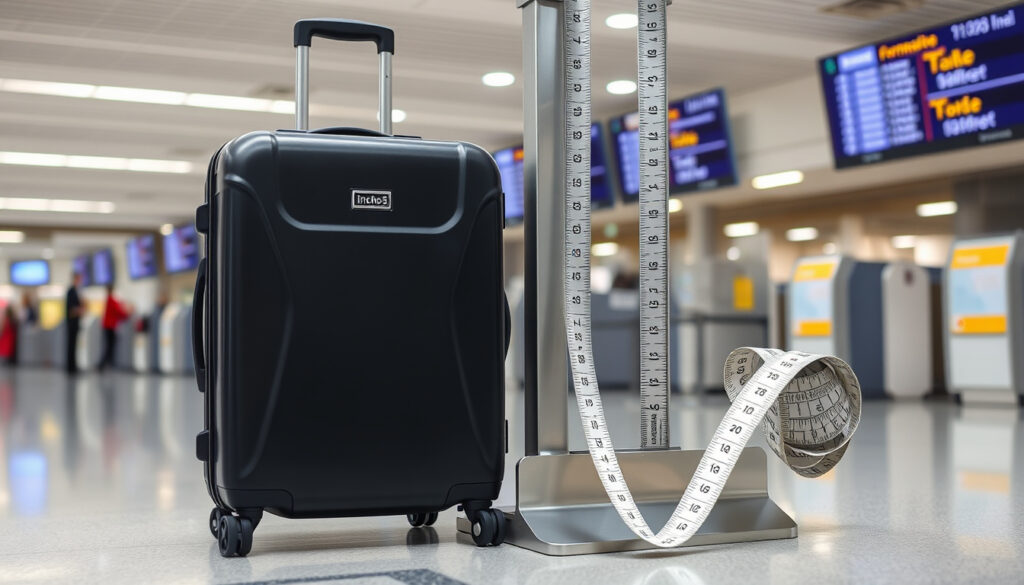
28 Inch Luggage Size: Dimensions, Weight & Airline Rules
Anyone who has tried to squeeze three weeks of belongings into a carry-on knows the feeling: it doesn’t fit. That’s when the search for a checked bag begins, and 28-inch luggage sits right at the practical ceiling for most travelers.
Typical external dimensions (H x W x D): 28 x 18 x 12 inches (71 x 46 x 30 cm) ·
Volume (liters): 90–110 L ·
Max recommended weight: 23 kg (50 lbs) for most airlines ·
Airline compliance: Accepted as checked baggage on most carriers ·
Common use case: Extended trips (2+ weeks)
Quick snapshot
- External dimensions: 28 x 18 x 12 in (71 x 46 x 30 cm) — Eminent Luggage (manufacturer size guide)
- Internal volume: 90–110 liters — Eminent Luggage
- Most airlines accept up to 62 linear inches — Travelpro (luggage brand size guide)
- Exact volume varies by manufacturer
- Some budget airlines enforce stricter size limits
- Whether all 28-inch models fit within 62 linear inches depends on width/depth
- Airlines are tightening weight limits, not size limits — Eminent Luggage
- Weight often matters more than dimensions — Eminent Luggage
- Budget carriers may adopt stricter linear-inch caps
- Expect more airlines to enforce 23 kg weight limit strictly
A typical 28-inch suitcase measures 28 x 18 x 12 inches (71 x 46 x 30 cm) according to Eminent Luggage (a manufacturer size guide), and falls within the 62-linear-inch limit that most major airlines set for checked baggage. Here is what those numbers actually mean when you are standing at the check-in counter.
Six key specifications, one takeaway: a 28-inch suitcase sits right at the boundary of what most airlines allow, making it the largest practical size for checked baggage.
| Parameter | Value |
|---|---|
| Height | 28 inches (71 cm) |
| Width | 18 inches (46 cm) |
| Depth | 12 inches (30 cm) |
| Volume | 90–110 liters |
| Max recommended weight | 23 kg (50 lbs) |
| Typical airlines accepting | American, Delta, United, Lufthansa, Emirates |
What is the size of a 28 inch suitcase?
External dimensions in inches and centimeters
- Height: 28 inches (71 cm) — the measurement that gives the bag its name
- Width: 18 inches (46 cm)
- Depth: 12 inches (30 cm)
- Total linear inches: 28 + 18 + 12 = 58 inches — under the 62-inch limit that Travelpro (a luggage brand’s size guide) confirms most airlines use
These dimensions come from Eminent Luggage (a manufacturer’s standard sizing chart), but not every brand’s “28-inch” bag measures exactly 28 inches tall. Some run closer to 30 inches when you include wheels and handles. The difference can push a bag past the 62-linear-inch ceiling even when the height alone sounds fine.
Internal vs external measurements
- Manufacturers list external dimensions, which include wheels, handles, and protrusions
- Internal space is typically 2–4 inches shorter in each direction
- Booking.com (a travel booking guide) recommends measuring your bag including wheels and handles when checking airline compliance
Why this matters: a bag that shows 28 inches on the tag might measure 30 inches with wheels. That extra 2 inches could push your linear total over 62, triggering an oversized-bag fee at the airport. Always measure your actual bag — not the label.
The “28 inch” label is a marketing shorthand, not a guarantee. A buyer who assumes the label is exact may end up with a bag that exceeds airline limits. Measure the actual height, width, and depth including every protrusion before you book.
The implication: 28 inches is the nominal ceiling for checked luggage, but the real constraint is the 62-linear-inch rule. A bag labeled 28 inches that has deep wheels or a thick handle can still fail.
Is 28 inch luggage too big for airlines?
Maximum checked baggage size limits by major airlines
- Most full-service carriers (Delta, United, American, British Airways, Lufthansa) allow checked bags up to 62 linear inches (158 cm) — Travelpro’s checked luggage size guide confirms this benchmark
- Safaribags (a luggage retailer’s size chart) lists British Airways checked baggage at 23 kg with maximum dimensions up to 90 x 75 x 43 cm
- Safaribags also lists Lufthansa at 23 kg with 62 linear inches (158 cm) maximum
- UpgradedPoints (a travel rewards resource) notes many airlines allow checked bags up to 62 linear inches and 50 pounds, with specific allowances varying by airline and cabin
A 28-inch suitcase at 28 x 18 x 12 inches equals 58 linear inches. That leaves 4 inches of slack before hitting the common limit. The risk? A bag with oversized wheels or a telescoping handle that adds 3 inches on each axis could hit 61 or 62 inches — cutting it close.
Airlines that accept 28 inch luggage without extra fees
- Delta Air Lines: checked bags up to 62 linear inches accepted as standard — no oversized fee
- United Airlines: same 62-inch limit, standard checked bag fee applies
- American Airlines: 62 linear inches, standard rates
- Lufthansa: 62 linear inches, 23 kg weight limit — Safaribags confirms this policy
- British Airways: up to 90 x 75 x 43 cm, which is more generous than 28-inch bags typically need — per Safaribags (luggage size chart data)
Budget airlines are a different story. Ryanair, for example, limits checked bags to 81 x 119 x 119 cm — dimensions that a 28-inch bag fits, but the weight allowance (20 kg) becomes the binding constraint.
How to measure your luggage correctly
- Use a tape measure — don’t trust the marketing label
- Measure height from floor to the top of the handle, width at the widest point, depth from front to back including wheels
- Booking.com (a travel booking platform) advises including handles and wheels in your measurement
- Add the three numbers together: if the total exceeds 62 inches (158 cm), your bag is oversized for most airlines
A 28-inch bag from one brand might be airline-compliant while an identically labeled bag from another brand triggers an oversized fee. The difference is in the real-world measurements, not the label.
What is the volume of a 28 inch luggage?
Volume in liters vs cubic inches
- Typical volume: 90–110 liters, depending on depth, wall thickness, and design
- In cubic inches: roughly 5,500 to 6,700 cubic inches
- Eminent Luggage (a manufacturer size guide) confirms that volume varies by brand and model even when the height label is the same
A 28-inch suitcase with a depth of 12 inches and a width of 18 inches yields about 6,048 cubic inches of external volume, but wall padding, fabric thickness, and internal organizers eat into usable space. Hard-shell models typically lose 10–15% of external volume to structural walls.
How volume affects packing capacity
- 90–110 liters accommodates roughly 2 to 3 weeks of clothing for one person
- Expandable models add 10–15 liters by unzipping an extra panel
- Travelpro (a luggage brand) notes that the volume-to-weight tradeoff is critical: a full 28-inch bag can easily exceed 23 kg if packed with dense items
The paradox: 100 liters of space sounds generous, but the 23-kg weight limit fills up faster than the volume. Pack jeans, shoes, and toiletries and you will hit the weight ceiling before the bag looks full. The volume becomes useful only if you pack lightweight items like t-shirts and sweaters.
For a traveler packing dense items (books, boots, electronics), a 28-inch bag’s volume is deceptive — weight, not space, becomes the constraint. For soft goods only, the full 100 liters is usable.
The pattern: volume determines what fits; weight determines what flies. A 28-inch bag gives you enough space for a long trip, but only if you manage the density of what goes inside.
Is 28 inch luggage good for 20kg?
Weight capacity of a 28 inch suitcase
- An empty 28-inch suitcase weighs between 3 kg and 5 kg depending on material — hard shells are heavier, soft shells lighter
- With a 20 kg allowance, that leaves 15–17 kg for actual contents
- Eminent Luggage (a manufacturer) states that airlines tend to prioritize the weight of the suitcase over its size, and exceeding weight limits may result in additional charges
A 20 kg limit is common on budget carriers like Ryanair, EasyJet, and many Asian airlines. A 28-inch bag paired with a 20 kg allowance is workable — the bag itself uses up 15–25% of the allowance before any clothes go in.
Balancing volume and weight limits
- A full 28-inch bag of clothing typically weighs 12–18 kg
- Dense items (shoes, books, toiletries, electronics) push weight up faster
- Booking.com (a travel booking guide) notes that economy/basic economy passengers may check up to 50 lb (23 kg) of luggage on domestic flights
The risk is overpacking: a 28-inch bag that is 90% full of dense items can hit 25 kg, triggering an overweight fee that often costs more than the bag itself. Travelers flying with a 20 kg limit should aim to leave the bag 20–30% empty by volume to stay under weight.
The catch: 28-inch luggage is structurally fine for 20 kg, but the margin for error is thin. A traveler who fills the bag to its volumetric capacity with mixed items will likely overshoot 20 kg. Pack light items at the bottom and reserve the top 30% for anything heavy you can afford to leave behind.
What size is a typical 23kg suitcase?
Comparison of 23kg luggage sizes
- A 23 kg allowance is the standard for most full-service airlines (Delta, United, American, Lufthansa)
- Airlines rarely specify an exact suitcase size for a 23 kg weight limit — they use linear inches
- UpgradedPoints (a travel rewards resource) notes that many airlines allow checked bags up to 62 linear inches and 50 pounds, but specific allowances vary by airline and cabin
A 28-inch suitcase is the most common choice for a 23 kg allowance because it balances volume and weight. You can fill it with enough clothing for 2–3 weeks without hitting 23 kg — as long as you avoid packing bricks.
28 inch vs 26 inch vs 30 inch for 23kg allowance
- 26-inch: smaller volume (70–85 L), harder to hit 23 kg unless packed with dense items
- 28-inch: sweet spot — 90–110 L volume pairs naturally with 23 kg
- 30-inch: larger volume (110–130 L), almost guarantees overpacking and exceeding 23 kg
Three sizes, one trade-off: smaller bags limit what you can bring, while larger bags tempt you to exceed the weight limit. The 28-inch size hits the practical equilibrium — enough volume for a long trip, but not so much that you routinely trigger overweight fees.
Here is how the three common checked-bag sizes compare across the dimensions that matter.
| Dimension | 26-inch | 28-inch | 30-inch |
|---|---|---|---|
| Height | 26 in (66 cm) | 28 in (71 cm) | 30 in (76 cm) |
| Width | 17 in (43 cm) | 18 in (46 cm) | 19 in (48 cm) |
| Depth | 11 in (28 cm) | 12 in (30 cm) | 13 in (33 cm) |
| Linear inches | 54 in (137 cm) | 58 in (147 cm) | 62 in (157 cm) |
| Volume | 70–85 L | 90–110 L | 110–130 L |
| Typical weight (empty) | 2.5–4 kg | 3–5 kg | 4–6 kg |
| Best for | 1–2 week trips | 2–3 week trips | 3+ week trips |
| Risk with 23 kg limit | Underweight (hard to fill) | Well-balanced | Overweight (easy to overpack) |
What this means: for a 23 kg allowance, 28-inch is the optimal size. A 26-inch bag leaves weight allowance unused; a 30-inch bag pushes you toward overweight fees. The 28-inch size lets you use the full weight allowance without constantly worrying about the scale.
Here are the detailed specifications of a standard 28-inch checked suitcase.
| Specification | Typical value |
|---|---|
| External height | 28 in (71 cm) |
| External width | 18 in (46 cm) |
| External depth | 12 in (30 cm) |
| Total linear inches | 58 in (147 cm) |
| Internal volume | 90–110 liters |
| Empty weight (soft shell) | 3–4 kg |
| Empty weight (hard shell) | 4–5 kg |
| Recommended max load | 23 kg (50 lbs) |
| Expandable volume (if featured) | +10–15 liters |
| Material types | Polycarbonate, ABS, nylon, polyester |
Upsides
- Accepted as checked baggage on most major airlines without oversize fees
- Spacious enough for 2–3 week trips (90–110 liters)
- Fits within 62-linear-inch limit (58 inches typical)
- Pairs well with standard 23 kg weight allowance
- Available in both hard-shell and soft-shell options
Downsides
- Too large for carry-on on any airline
- Empty weight (3–5 kg) eats into weight allowance
- Can exceed 23 kg if overpacked with dense items
- Budget airline restrictions may apply (weight or linear inches)
- Measurements vary by brand — not all “28 inch” bags are the same size
What we know and what remains unclear
Confirmed facts
- A 28-inch suitcase measured externally is approximately 28 x 18 x 12 inches (71 x 46 x 30 cm) — per Eminent Luggage (manufacturer size guide)
- Most full-service airlines accept checked bags up to 62 linear inches — confirmed by Travelpro (luggage size guide) and Booking.com (travel booking platform)
- Volume typically ranges from 90 to 110 liters
- Weight limits cluster around 23 kg (50 lbs) on most airlines — per Travelpro and Booking.com
- Airlines tend to prioritize weight over size when enforcing limits — per Eminent Luggage
What’s unclear
- Exact volume varies by manufacturer — no single standard governs how liters are calculated
- Some budget carriers may apply stricter size rules than the 62-inch benchmark
- Whether a specific 28-inch model exceeds 62 linear inches depends on its actual width and depth, which differ across brands
- Not all airlines publish exact linear-inch limits — enforcement is sometimes done by eye at the check-in counter
What the policies say
Standard checked baggage size allowance is 62 linear inches (158 cm).
— IATA official guidelines, as referenced by Eminent Luggage (manufacturer size guide)
Checked bags up to 62 linear inches are accepted without additional fee.
— Delta Air Lines baggage policy, cited by Travelpro (checked luggage size guide)
Checked bag size limit for 20kg allowance is 81 x 119 x 119 cm (approximately 32 x 47 x 47 in).
— Ryanair baggage policy, reported by Safaribags (luggage size chart)
Many airlines allow checked bags up to 62 linear inches and 50 pounds, but specific allowances vary by airline and cabin.
The 28-inch suitcase is the largest checked bag that reliably fits within airline size limits without triggering oversize fees. It gives a traveler 90 to 110 liters of packing space and pairs naturally with the 23 kg weight limit that most full-service carriers enforce. The catch is that the same volume tempts overpacking, and the difference between a compliant bag and an overweight one is often just one extra pair of shoes. For the traveler flying full-service airlines on trips longer than a week, the 28-inch size is the practical ceiling. For the budget carrier flyer on a 20 kg allowance, the same bag requires deliberate restraint — or a lighter packing strategy.
Related reading: Which Terminal is Jewel Connected To at Changi Airport? · Ferry Ticket to Bintan 2026: Prices, Booking & Tips
Frequently asked questions
Can 28 inch luggage be used as carry-on?
No. A 28-inch suitcase exceeds the carry-on size limit on every major airline. Standard carry-on size is approximately 22 x 14 x 9 inches (56 x 36 x 23 cm). A 28-inch bag must be checked.
What is the weight of an empty 28 inch suitcase?
An empty 28-inch suitcase typically weighs between 3 kg and 5 kg. Soft-shell models (nylon, polyester) are lighter at 3–4 kg. Hard-shell models (polycarbonate, ABS) range from 4–5 kg. The empty weight is subtracted from your airline’s weight allowance.
Is 28 inch luggage suitable for international travel?
Yes. Most international airlines on major routes accept 28-inch luggage as standard checked baggage, provided it stays within 62 linear inches and the airline’s weight limit (typically 23 kg). Budget international carriers may have tighter restrictions.
What is the difference between 28 inch and 30 inch luggage?
A 30-inch suitcase adds roughly 2 inches in height and 1 inch in width and depth, bumping volume from 90–110 liters to 110–130 liters. The bigger risk: a 30-inch bag often hits 62 linear inches or more, leaving no buffer for the airline’s limit. Most travelers overpack a 30-inch bag and exceed 23 kg.
How do I measure my 28 inch luggage correctly?
Place the suitcase on the floor. Use a tape measure to measure height from floor to the top of the handle, width at the widest side, and depth from the front face to the back including wheels. Add the three numbers to get total linear inches. Compare to your airline’s limit (usually 62 inches / 158 cm).
Does 28 inch luggage fit in a car trunk?
It depends on the car. A 28-inch suitcase at 28 x 18 x 12 inches fits in the trunk of most midsize sedans and larger vehicles. Compact cars and some hatchbacks may require folding down a rear seat. Measure your car’s trunk opening before purchasing if car transport is critical.
Are soft-side 28 inch suitcases lighter than hard shells?
Yes. Soft-side 28-inch suitcases made of nylon or polyester typically weigh 3–4 kg, while hard-shell models (polycarbonate, ABS) weigh 4–5 kg. The difference of 1–2 kg can be significant if you are flying with a strict 20 kg or 23 kg weight limit.
More related posts
 Food Court Near Me – Philadelphia Maps, Hours & Locations
 Unit Trust vs ETF: Which Is Better for You
 iPhone vs Samsung Comparison 2026: Which Is Better
 How to Make Tiramisu: Classic Italian Recipe
 The Beginning After the End Manga: 206+ Chapters, Status & Guide
 Translate English to Indonesian: Best Tools & Tips (2025)
 Citi Cash Back+ Card: 1.6% Unlimited Cash Back Review
 0939 HK Stock Price: China Construction Bank Analysis