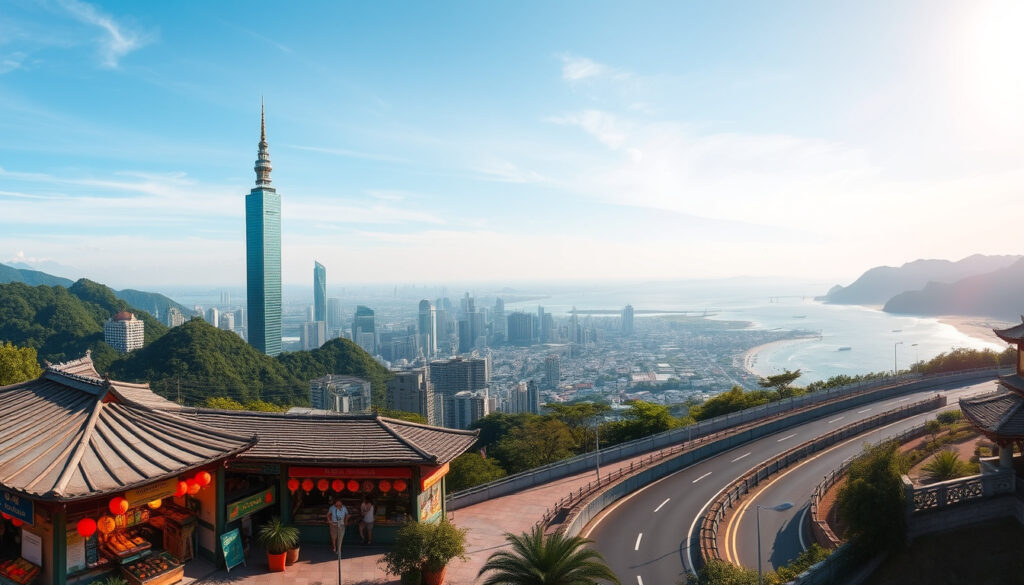
Things to Do in Taiwan: Top Attractions, Budget Tips & Travel Guide
Ask someone who lives in Taiwan how they’d spend a perfect day and the answer usually involves motion: up a mountain trail at dawn, into a night market when the neon flickers on. That mix is the island’s real draw, and it works especially well for travelers watching their budget — hiking trails cost almost nothing to enter, and public transit reaches most of them.
Night markets: over 30 ·
Street meal (NTD): 100–300 ·
International visitors (2019): 11.8 million ·
Taipei 101 height: 509 m ·
HSR top speed: 300 km/h
Quick snapshot
- Taroko National Park charges no entrance fee (Nomadic Matt’s budget travel guide)
- Night markets run year-round except for major holidays (Nomadic Matt)
- High-speed rail links the north and south of the island in about 90 minutes (Nomadic Matt)
- Permit rules vary by route: Yushan, Taroko, and Shuei-Pa sit mainly in restricted mountain areas (Hike Smart Taiwan Service (official hiking portal))
- The exact number of night markets shifts as new ones open and close (Lonely Planet)
- Whether a week costs more like Thailand or Japan depends on travel style and exchange rates (Lonely Planet)
- The government trail-status page lists routes as open, closed, special-condition application, or snow-season status (Hike Smart’s trail-status page)
- Typhoon season runs roughly June through October, when trail closures spike (Hike Smart’s trail-status page)
- Autumn (October–December) and spring (March–May) draw the most visitors (Lonely Planet)
- Check the official trail-status page before every mountain outing (Hike Smart’s trail-status page)
- Book permits through the one-stop Hike Smart Taiwan portal for restricted routes (Hike Smart permit portal)
- Use an EasyCard for transit, convenience stores, and market purchases (Hike Smart’s trail-status page)
Six facts, one pattern: Taiwan is compact enough to cover on a short trip, and its systems — transport, currency, sockets — are familiar to most international travelers.
| Fact | Detail |
|---|---|
| Capital city | Taipei |
| Official language | Mandarin Chinese |
| Currency | New Taiwan Dollar (NTD) |
| Population | 23.6 million (2023) |
| Time zone | UTC+8 |
| Electrical sockets | Type A/B (110V) |
What are the top 10 things to do in Taiwan?
Taiwan’s best first-trip itinerary is really a loop: a few days in Taipei, one big nature stop, and a food-and-temples detour in the south.
Must-see attractions: Taipei 101, Taroko Gorge, Sun Moon Lake
- Ride the high-speed rail from Taipei to Kaohsiung and back — the 300 km/h line is an attraction in itself
- Watch the city from the Taipei 101 observation deck
- Walk the Shakadang Trail and the marble canyons of Taroko Gorge
- Cycle the Sun Moon Lake lakeside loop
- Eat your way through Shilin, Raohe, or Fengchia night market
- Soak in the public hot springs of Beitou or Wulai
- Hike Yushan (Jade Mountain), Taiwan’s highest peak — with a permit and a serious pre-dawn start (Nomadic Matt’s budget travel guide)
- Explore Tainan’s historic temples and old alleys
- Ride the Maokong gondola and drink tea above the city
- Catch the northeast coast from Jiufen’s hillside old town
The thread connecting all ten is the high-speed rail: no matter which region you pick, you can base yourself in Taipei and still reach most of these sights as day trips or overnight loops.
Taroko is the one that deserves more than a rushed stop. Its marble gorges and turquoise river are the image most travelers carry home, and the east coast is best treated as its own chapter of the trip.
Night markets and street food tours
Night markets are Taiwan’s social currency: for well under NT$300 you can eat better than at many sit-down restaurants, from stinky tofu to beef noodle soup.
Shilin is Taipei’s most famous night market, but Raohe’s compact lanes and Fengchia’s creative stalls are where the queueing gets serious. Add Keelung or Donggang and the night market turns into a seafood market.
- Beef noodle soup
- Stinky tofu
- Bubble tea
- Fresh seafood at Keelung or Donggang harbor markets
A food tour or cooking class is the fastest way to learn what you’re actually eating, and both are easy to book from Taipei.
Outdoor activities: hiking, cycling, hot springs
- Hike Yushan, Taiwan’s highest peak
- Walk the trails of Taroko Gorge on the east coast
- Cycle the Sun Moon Lake loop
- Soak in the public hot springs of Beitou or Wulai
- Surf the breaks at Kenting or Jialeshui on the south coast
- Hike Yangmingshan’s volcanic ridges above Taipei
The National Park Service’s advice is blunt: choose a trail that matches your condition before entering the mountains, not after (Taiwan’s National Park Service (official guidance)). For high routes, factor in the permit process: certain high-mountain areas require a permit (Lonely Planet’s budget guide), and Taiwan’s one-stop Hike Smart portal centralizes route selection and applications.
The pattern: the best of Taiwan is accessible without overplanning, as long as you prioritize outdoor experiences and local food.
Is Taiwan good for tourists?
Short answer: yes — Taiwan is one of Asia’s most approachable destinations for first-time visitors, and the ease is a mix of infrastructure, safety, and simple etiquette.
Is English widely spoken in Taiwan?
- In Taipei, Kaohsiung, and Tainan, English is common in hotels, MRT stations, and tourist sights
- Metro and high-speed rail signage is bilingual, which simplifies navigation
- In rural and mountain areas, English drops off sharply; a translation app and a few Mandarin phrases go a long way
The practical takeaway: you don’t need Mandarin for a first trip, but you’ll travel further with it — and Taiwanese locals tend to be patient with travelers who try.
Can I wear red in Taiwan?
Red is the opposite of a warning sign in Taiwan: it’s the color of weddings, Lunar New Year luck, and temple festivals.
The confusion usually comes from other Asian cultures where red carries a different political or social weight. In Taiwan, you’ll see red everywhere — lanterns, envelopes, temple pillars — and wearing it raises no eyebrows.
If anything, red is the safe choice during festival seasons, when locals deliberately dress in brighter colors.
Is Taiwan safe for tourists?
- Crime rates are low, and solo travelers — including women — routinely describe Taiwan as one of Asia’s easiest countries to navigate
- Night markets stay busy until late, and the MRT runs close to midnight
- The bigger risks are environmental: heat, typhoons, and mountain terrain
Visa rules are part of the safety math: many nationalities currently enter visa-free for 30 to 90 days, but the list shifts, so confirm with Taiwan’s Bureau of Consular Affairs before booking.
For most visitors, though, “safe” misses the point: Taiwan is also orderly, which lowers the mental load of a first trip.
Taiwan’s safety record removes the usual anxiety, but it doesn’t remove the weather — summer typhoons and mountain trails still demand respect.
Is 5 days enough for Taiwan?
Five days is tight but workable, and the reason is the high-speed rail.
A realistic 5-day itinerary
- Day 1 — Taipei: Taipei 101, Yongkang Street, and Shilin Night Market
- Day 2 — North coast: Jiufen’s old streets, then Keelung’s seafood night market
- Day 3 — HSR to central Taiwan, then a connecting bus to Sun Moon Lake; cycle the lake loop before dark
- Day 4 — HSR to Tainan: temples, old alleys, and a dinner crawl
- Day 5 — Taipei: a Yangmingshan hike or Beitou hot springs, then one last night-market run
This itinerary deliberately skips Taroko Gorge; a proper Taroko visit needs two days once you count the journey across the island.
If Taroko is non-negotiable, drop Tainan and use the freed-up day for the east coast. The trade-off is losing the south’s food scene.
How the high-speed rail changes the math
HSR top speed: 300 km/h ·
Taipei → Kaohsiung: about 90 min ·
Taipei → Taichung (Sun Moon Lake gateway): about 50 min
The HSR is what makes five days viable: you can sleep in Taipei, ride 50 minutes to the Sun Moon Lake gateway, spend hours cycling the lake, and still return in time for a night-market dinner.
Book HSR tickets a day ahead for early-bird discounts, and keep an EasyCard loaded for MRT rides and convenience-store stops.
Combine the HSR with an EasyCard for MRT and buses, and you remove almost all friction from a short trip.
Best day trips from Taipei
- Jiufen — the hillside old town on the northeast coast, best visited after the day-tour crowds leave
- Yangmingshan National Park — volcano scenery, easy trails, and hot springs a short bus ride from the city
- Beitou — public hot springs in a forested valley, reachable by MRT
- Maokong — a gondola ride to tea houses with city views
All four work as half-day or full-day loops, which makes Taipei a strong base even for repeat visitors.
The implication: travelers with limited time should focus on depth over breadth, choosing one region beyond Taipei to explore fully.
Is Taiwan cheap for tourists?
For most travelers, yes — Taiwan undercuts Japan on nearly every line and keeps street food cheap enough to eat out three times a day.
How much money for 7 days in Taiwan?
- Backpacker: about NT$1,050 per day (≈ US$33), per Nomadic Matt’s Taiwan budget guide
- Mid-range: roughly NT$2,000–2,500 per day for private rooms, taxis, and nicer meals
- Comfort: NT$4,000+ per day for hotels, day tours, and smarter dining
A solo backpacker’s week lands at roughly NT$7,350 before flights, and couples sharing rooms shave the accommodation share noticeably.
The mid-range number is where most first-timers actually land, especially if they book one night at a hot-spring hotel.
The cheapest parts of Taiwan — street food and public transport — are also the most memorable. The expensive mistakes come from choosing the wrong season or over-scheduling.
How expensive is a meal in Taiwan?
- Night-market street meal: NT$100–300
- Local eatery or bento lunch: NT$150–250
- Sit-down restaurant dinner: NT$400–800 per person
- Bubble tea: usually well under NT$100
Lonely Planet’s budget guide sums up the pattern: Taiwan has abundant cheap food, inexpensive public transport, and plenty of free attractions.
The splurge is seafood or a hot-pot banquet, not the everyday dinner — which is why travelers can eat well for a week without a second thought.
Thailand vs Taiwan vs Japan: where your money goes
Thailand wins on raw prices, Japan wins on polish, Taiwan wins the middle: street-food prices, first-world trains, and a safety record that keeps first-timers relaxed.
Three destinations, one pattern: Taiwan sits between Thailand’s rock-bottom costs and Japan’s expense-account reality — closer to Thailand on food, closer to Japan on infrastructure.
| Budget line | Thailand | Taiwan | Japan |
|---|---|---|---|
| Street meal | ~฿60–100 | NT$100–300 | ~¥800–1,500 |
| Hostel dorm per night | ~฿300–500 | from ~NT$450 | ~¥3,500–5,000 |
| Local transport day | ~฿100–200 | NT$150–250 | ~¥1,000–1,500 |
| Backpacker daily budget | ~฿1,200–1,500 | ~NT$1,050 | ~¥7,000–9,000 |
The Taiwan figures are the current reality; the Thailand and Japan columns are typical ranges that move with exchange rates.
Upsides
- Street food is cheap enough to eat out three times a day
- Public transport is fast, clean, and well signed
- Most hiking and temple visits cost nothing
- Night markets give you free entertainment with dinner
Downsides
- Summer heat and typhoons can shut down outdoor plans
- Rural areas are harder to navigate without Mandarin
- Weekend accommodation in hotspots fills quickly
- Some of the best mountain routes require advance permits
The implication: the more your trip relies on walking, trains, and night-market dinners, the cheaper Taiwan gets — and the better the trip is.
When to not go to Taiwan?
Taiwan is rewarding in every season, but the weather and the holiday calendar can turn a dream trip into a draining one.
Which month to avoid Taipei?
- June to October — typhoon season: expect rain, wind, and disrupted trail days
- July and August — peak heat and humidity, with the highest storm risk
- December to February — cooler and often damp, but fine for cities and hot springs
- The sweet spots — March to May and October to December
The common advice is simple: if your schedule bends, aim for spring or autumn, when Taipei’s weather is at its most forgiving.
If you can only travel in summer, keep your outdoor plans flexible and your hotel booking refundable.
Typhoon season and its impact
A single typhoon can close national park trails for days. If your trip falls between June and October, treat every hiking day as provisional — and check the official trail-status page before heading out.
The government’s trail-status page is the ground truth: routes are flagged as open, closed, special-condition application, or snow-season status.
When a typhoon warning is active, the HSR slows or halts, mountain roads close, and local ferries cancel. Factor that into any non-refundable plan.
Peak tourist seasons and crowds
- Chinese New Year — the island’s biggest domestic travel surge; transport fills and many shops close
- Autumn (October–December) — the best weather and the heaviest tour-group presence
- Spring (March–May) — mild temperatures and strong weekend demand around popular sights
The pattern is a paradox: the best weather months are also the busiest, so the goal isn’t avoiding crowds entirely — it’s booking early.
Late autumn, after the October holiday push, is the quietest of the good-weather windows.
The implication: Taiwan doesn’t have a “wrong” season so much as a “wrong plan” — the travelers who suffer are the ones without flexibility, not the ones without luck.
What’s confirmed vs. what’s still unclear
Confirmed facts
- Taiwan’s public transport is fast, clean, and well connected — including the 300 km/h high-speed rail (Hike Smart Taiwan portal)
- Most hiking trails cost nothing to enter; permits are limited to certain high-mountain routes (Hike Smart notice)
- Night markets run year-round except for major holidays (Hike Smart permit portal)
What’s unclear
- The exact number of night markets keeps shifting as stalls open and close
- The “best” month depends on your tolerance for heat, rain, and crowds
- Taiwan vs. Thailand vs. Japan costs move with exchange rates and travel style
- Whether any given trail is open on your dates — always confirm on the official trail-status page
The pattern: the balance between known facts and uncertainties highlights the need for pre-trip verification, especially for mountain routes.
Voices from the park service and the guidebooks
Two voices sum up the gear shift between Taiwan’s easy urban side and its serious mountains.
Leave No Trace is the most important rule for mountain and forest activities.
— Taiwan’s National Park Service (official hiking safety guidance)
Some mountain areas may require both a Park Entry Permit and a Mountain Permit.
— Hike Smart Taiwan Service (official hiking portal)
Neither warning should scare you off; both are reasons the island’s trails stay in such good shape. The permit system is part of what makes Taiwan exceptional for outdoor travelers.
The takeaway
Taiwan is a destination that rewards planning — not the obsessive kind, but the kind that knows when the trains run, which trails need permits, and which months fight back. For the budget-conscious first-timer, the choice is clear: keep the itinerary flexible, spend the daylight hours outdoors, and let the night markets supply the rest — or spend a week in transit and crowds without really touching the island.
hike.taiwan.gov.tw, hike.taiwan.gov.tw, hike.taiwan.gov.tw, hike.taiwan.gov.tw, hike.taiwan.gov.tw, hike.taiwan.gov.tw, taiwan.nps.gov.tw
Frequently asked questions
Do I need a visa to visit Taiwan?
Many nationalities — including the US, Canada, the UK, Australia, and most of Europe — currently enter Taiwan visa-free for 30 to 90 days. Official rules change, so confirm with Taiwan’s Bureau of Consular Affairs before booking.
What is the best way to get around Taiwan?
Use the high-speed rail for long north–south hops, the MRT in Taipei, and local buses for mountain trailheads. An EasyCard works across trains, buses, and convenience stores.
Is Taiwan safe for solo female travelers?
Yes, by most measures: crime rates are low, public transport is reliable, and night markets stay busy late. Standard precautions apply, especially late at night in quieter streets.
What should I pack for a trip to Taiwan?
Light layers, a rain shell if you’re visiting June through October, sturdy shoes for hiking, and an adapter for Type A/B 110V sockets. Cards work widely, but carry cash for night markets.
Can I use credit cards everywhere in Taiwan?
Not everywhere. Night-market stalls and small eateries are cash-first; hotels, larger restaurants, and convenience stores accept cards.
Are there any health concerns like tap water or mosquitoes?
Tap water is technically safe, but most travelers drink bottled or boiled water. Mosquitoes are most active in summer, so use repellent in rural areas and near water.
What are the must-try dishes in Taiwan?
Beef noodle soup, stinky tofu, bubble tea, and whatever looks freshest at a night-market seafood stall. The short version: eat where locals queue.
Is renting a car recommended in Taiwan?
Not for a first visit — the HSR, MRT, and buses cover the main circuit. Rent a scooter or car only for rural areas like Kenting’s coast, and carry an International Driving Permit.
Related reading
- What to Do in Nara: Top Attractions & Day Trip Tips — another compact Japan city guide with the same trip-planning DNA.
- Best Time to Visit Hong Kong: Month-by-Month Guide — a practical companion for seasonal planning in East Asia.
More related posts
 Nagoya Hill Shopping Mall: Worth Visiting? Shops, Food & Tips
 Shangri-La Dialogue 2025: Dates, Venue, Attendees & News
 Tiong Bahru Bakery Singapore: Famous Croissants & Outlets
 Watch Anime Free Online: 7 Legal Streaming Sites That Work
 Brown Rice vs White Rice: Which Is Healthier? Comparison
 Hardest Language to Learn – FSI’s Top Challenges for English Speakers
 CCC Certified Power Bank: Brands, Verification & Travel Tips
 Hill Street Tai Hwa Pork Noodle: Menu, Price, Wait Times