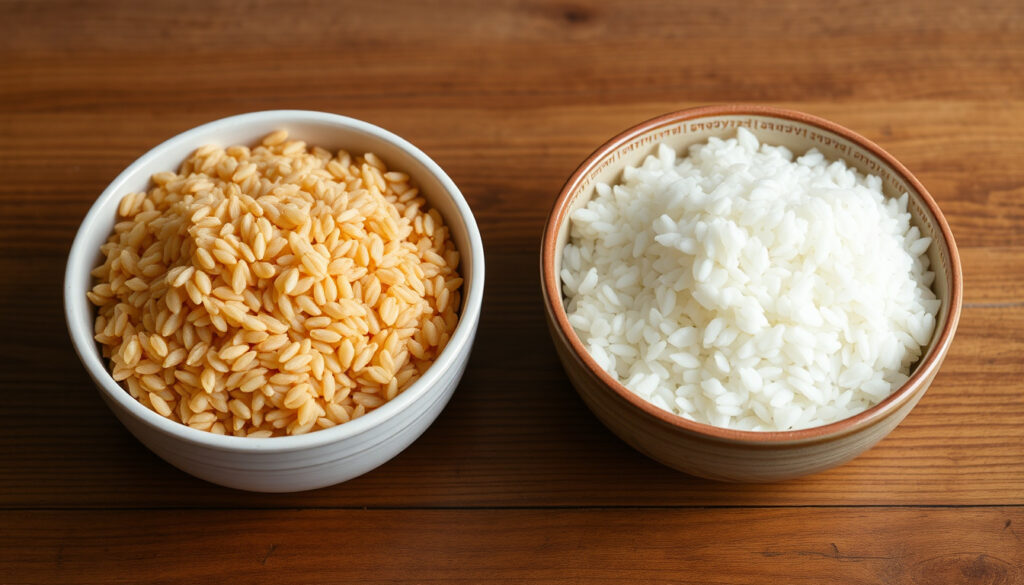
Brown Rice vs White Rice: Which Is Healthier? Comparison
Every health-conscious shopper standing in the rice aisle knows the familiar choice: brown or white — the brown camp promises more fiber and nutrients while the white camp offers speed and a soft texture you grew up with. But the better choice isn’t universal — it shifts depending on your health goals, cooking habits, and even how much arsenic you’re willing to accept.
Calories per 100g (cooked): Brown ~111 kcal · White ~130 kcal ·
Fiber per 100g (cooked): Brown 1.8 g · White 0.4 g ·
Glycemic index: Brown ~50 · White ~73 ·
Cooking time: Brown 45–50 min · White 15–20 min
Quick snapshot
- Brown rice has more fiber, magnesium, and B vitamins than white rice (Cleveland Clinic (health system))
- White rice has a higher glycemic index, averaging 73 vs 50 for brown (PubMed meta‑analysis (NIH database))
- Brown rice contains about 67% more inorganic arsenic than white rice per FDA data (U.S. FDA (regulatory agency))
- Whether brown rice is always better for weight loss — individual results vary (PubMed meta‑analysis (NIH database))
- The exact long‑term health impact of daily brown rice consumption, especially regarding arsenic exposure (PMC review (NIH open‑access database))
- Whether brown rice’s nutritional edge outweighs arsenic risk for children and pregnant women (Consumer Reports (independent testing organization))
- In 2016, the FDA set an action level of 100 ppb for inorganic arsenic in infant rice cereals — a regulatory milestone that still shapes advice for young children (U.S. FDA (regulatory guidance))
- Researchers are studying whether newer rice varieties or cooking methods can significantly lower arsenic levels while preserving nutrients (PMC review (NIH open‑access database))
- Growing consumer demand for whole grains may push more affordable brown rice options into mainstream U.S. supermarkets (Consumer Reports (independent testing organization))
Here is a side‑by‑side look at six key differences between the two rice types.
| Metric | Brown rice (cooked, 100g) | White rice (cooked, 100g) |
|---|---|---|
| Calories | ~111 kcal | ~130 kcal |
| Fiber | 1.8 g | 0.4 g |
| Glycemic index | ~50 | ~73 |
| Protein | ~2.6 g | ~2.4 g |
| Cooking time | 45–50 minutes | 15–20 minutes |
| Average cost per pound (US) | ~$1.50 | ~$1.00 |
Is brown rice actually better than white rice?
What gives brown rice a nutritional edge?
Brown rice is a whole grain — it still has the bran and germ layers that white rice loses during milling. That intact bran delivers more fiber, magnesium, potassium, iron, and several B vitamins. The Cleveland Clinic (health system) notes that a single serving of brown rice provides about 1.8 g of fiber compared to white rice’s 0.4 g. That difference matters for digestion and long-term heart health.
How do processing methods affect nutrient retention?
White rice is milled to remove the bran and germ, which strips away most of the fiber, magnesium, and healthy fats. The process leaves a starchier kernel that cooks quickly but has a higher glycemic impact. The U.S. FDA (regulatory agency) data shows white rice’s glycemic index averages 73 — well above brown rice’s 50 — meaning it raises blood sugar faster.
Does enrichment make white rice comparable?
Most white rice sold in the U.S. is enriched with iron, niacin, thiamin, and folic acid. That restores some B vitamins lost in milling, but it cannot replace fiber or magnesium. A PubMed meta‑analysis (NIH database) found that even enriched white rice still contains only 0.4 g of fiber per serving — one‑fifth of what brown rice provides. Enrichment narrows the nutrient gap but does not erase it.
If your main concern is fiber and steady blood sugar, brown rice clearly wins. But if you rely on enriched white rice for iron and folate, the difference shrinks — except for magnesium and glycemic control.
What is the downside of brown rice?
Does brown rice contain higher levels of arsenic?
Yes — and it’s significant. Arsenic accumulates in the rice grain’s outer layers, so brown rice typically has more than white rice. The U.S. FDA (regulatory agency) risk assessment reported average inorganic arsenic concentrations of 154 ppb in brown rice versus 92 ppb in white rice. Consumer Reports’ testing found similar patterns: brown rice averaged 113 ppb, white rice 72 ppb.
Does brown rice cause digestive discomfort?
The high fiber content — while beneficial overall — can cause bloating, gas, or cramping in people who aren’t used to it. The Cleveland Clinic (health system) advises introducing brown rice gradually and drinking plenty of water to help your digestive system adapt.
Is brown rice harder to cook and more expensive?
Brown rice takes 45–50 minutes to cook — about three times longer than white rice — and uses more water. It also costs roughly 50 cents more per pound on average in U.S. supermarkets, according to USDA pricing data. For families on a tight budget or short on time, that difference adds up.
The arsenic difference is not trivial: the FDA (regulatory agency) set a 100 ppb action level for infant rice cereals specifically because children are more vulnerable. Adults who eat brown rice daily may want to vary their grain sources.
Is brown rice ok for losing weight?
How does fiber affect satiety?
Fiber slows digestion and keeps you fuller longer. Brown rice’s 1.8 g of fiber per serving can help you eat fewer calories overall. A PubMed meta‑analysis (NIH database) found that participants who switched from white to brown rice lost an average of 1.63 kg (3.6 lbs) more body weight and reduced waist circumference by 2.56 cm.
How do glycemic responses differ?
A lower glycemic index means slower, steadier blood sugar rises — which reduces insulin spikes and subsequent hunger. Brown rice’s GI of 50 is considered low, while white rice’s 73 is high. The same meta‑analysis found that brown rice lowered fasting blood glucose by a modest but significant amount compared with white rice.
What do studies say about brown rice and weight management?
The meta‑analysis (NIH database) concluded that brown rice has “anti‑obesity effects” — but it did not find significant improvements in cholesterol or triglycerides. The effect is real but modest: about 0.58 kg/m² lower BMI. For weight loss, brown rice can help, but portion size still matters most.
Brown rice can support weight loss, but it’s not magic. Swapping white for brown while keeping the same portion size will likely help you lose a few extra pounds over several months, especially if you pair it with a calorie‑controlled diet.
Can I eat brown rice every day?
What are the risks of daily brown rice consumption?
The main concern is chronic inorganic arsenic exposure. The PMC review (NIH open‑access database) noted that no acute public health risks were found for the general U.S. population, but long‑term low‑level exposure has been linked to certain cancers and developmental issues. Repeated daily consumption of brown rice — especially from regions with higher soil arsenic — could push exposure above comfortable margins.
How to mitigate arsenic exposure from brown rice?
Rinsing raw rice thoroughly and cooking it in excess water (6 cups of water per 1 cup rice) can reduce arsenic levels by 40–60%, according to Consumer Reports (independent testing organization). Draining the cooking water afterward removes even more. This method works for both brown and white rice, but the starting arsenic load is higher in brown.
Is a varied grain diet recommended?
Health experts, including the Cleveland Clinic (health system), recommend rotating grains to minimize risk. Alternate brown rice with quinoa, oats, barley, millet, or even white rice in moderation. That way you get the nutritional benefits of whole grains without over‑exposure to any single contaminant.
For infants and toddlers, the FDA advises limiting rice-based cereals (including brown rice cereals) to no more than one serving per day. For adults, the same moderation principle applies: brown rice daily is likely safe, but varying your grains is a smarter long‑term strategy.
Why do Chinese eat white rice instead of brown?
What is the cultural history of white rice in China?
White rice has been a Chinese staple for centuries, prized for its soft, fluffy texture and mild flavor. Historically, brown rice was considered coarse — food for the poor or for times of famine. The NIH cultural‑history overview notes that by the 20th century, polished white rice became a symbol of status and refinement.
How does texture and taste influence preference?
The chewier, nuttier texture of brown rice can be a turn‑off for palates raised on soft white grains. In Chinese cooking, rice is often eaten as a base for flavorful stir‑fries and braises, so the rice itself is meant to be neutral and tender. Brown rice’s stronger flavor can compete.
Does tradition play a larger role than nutrition?
Absolutely. As Dr. Walter Willett of the Harvard T.H. Chan School of Public Health has pointed out, high white‑rice intake in Asian populations is linked to a higher risk of type 2 diabetes, yet cultural habits shift slowly. Brown rice is gaining ground in health‑conscious circles, but white rice remains the everyday choice for the majority.
The implication: cultural inertia around white rice is strong enough to override nutritional data in many Asian households, meaning dietary advice must account for tradition, not just nutrient profiles.
What is the unhealthiest rice to eat?
What makes a rice variety unhealthy?
The “unhealthiest” rice depends on what you’re trying to avoid. If you want the lowest nutrient density and highest glycemic impact, instant white rice generally tops the list. It’s parboiled and dried, which further reduces nutrients. The U.S. FDA (regulatory agency) data shows instant white rice can have a glycemic index above 80.
How do heavily processed rice products compare?
Rice cakes, puffed rice cereals, and crispy rice snacks are even more processed. They often have little fiber, extra sodium, and added sugars. A serving of puffed rice cereal (30 g) contains less than 0.5 g of fiber and spikes blood sugar quickly.
Are instant rice and enriched rice healthier options?
Enriched white rice is better than instant rice because it has added B vitamins and iron, but it still lacks fiber and magnesium. The Cleveland Clinic (health system) categorizes instant rice as a “refined grain” and recommends choosing whole grains most of the time.
Brown rice is nutritionally superior to white rice in most ways — and yet it also carries more arsenic. The “healthiest” choice isn’t brown vs white; it’s about moderation, preparation, and knowing your own health priorities.
Here is a condensed overview of how brown and white rice compare across six dimensions.
| Aspect | Brown rice | White rice |
|---|---|---|
| Nutrient density | Higher: fiber, Mg, K, B vitamins | Lower; enriched with Fe, niacin, thiamin, folate |
| Glycemic index | ~50 (low) | ~73 (high) |
| Weight loss evidence | −1.63 kg body weight, −0.58 kg/m² BMI | Neutral; portion control matters more |
| Arsenic concern | Higher (avg 154 ppb) | Lower (avg 92 ppb) |
| Cooking time | 45–50 min | 15–20 min |
| Cost per pound (US) | ~$1.50 | ~$1.00 |
Clarity check: what we know and what remains uncertain
Confirmed facts
- Brown rice has more fiber and several micronutrients than white rice.
- White rice has a higher glycemic index.
- Brown rice contains higher levels of inorganic arsenic.
What remains unclear
- Whether brown rice is always better for weight loss — individual results vary.
- The exact health impact of daily brown rice consumption due to arsenic.
- Whether the nutritional advantage of brown rice outweighs arsenic risk for all populations.
- Whether enrichment makes white rice a comparable nutritional choice, given that it cannot replace fiber or magnesium.
The pattern that emerges: the confirmed facts skew toward brown rice’s advantages, while the open questions cluster around whether those advantages hold for every individual and every life stage.
Expert voices on rice and health
Brown rice delivers more fiber, magnesium, potassium, iron, and certain B vitamins compared to white rice.
High intake of white rice is associated with increased risk of type 2 diabetes, especially in Asian populations.
Dr. Walter Willett, Harvard T.H. Chan School of Public Health
Brown rice contains approximately 1.8 g fiber per 100 g cooked, while white rice contains 0.4 g.
Pros and cons at a glance
Upsides
- Brown rice: more fiber, lower glycemic index, richer in magnesium and B vitamins.
- Brown rice: linked to modest weight loss and better satiety.
- White rice: faster cooking, cheaper, easier to digest, enriched with iron and folate.
Downsides
- Brown rice: higher arsenic levels, longer cooking, potential digestive discomfort, more expensive.
- White rice: higher glycemic index, lower fiber, less nutrient-dense without enrichment.
- Instant rice: even fewer nutrients and higher GI than regular white rice.
The takeaway: each rice type has a clear upside and a corresponding trade‑off, so the best choice depends on which dimension matters most to the individual.
What the choice comes down to
For most healthy adults in the U.S., brown rice offers a clear nutritional advantage — more fiber, steadier blood sugar, and a modest weight‑loss boost. But the arsenic gap is real, and daily eaters should rinse and cook in excess water or rotate with other grains. For someone managing diabetes or watching their waistline, the shift from white to brown rice is one of the simplest dietary swaps with measurable payoff. For the cook short on time or the parent feeding young children, the smarter move may be white rice in moderation, combined with a varied diet that doesn’t rely on rice alone. For the U.S. consumer, the choice is clear: prioritize whole grains when you can, but don’t demonize white rice — just pair it with vegetables and protein to blunt its glycemic punch.
pmc.ncbi.nlm.nih.gov, fda.gov, fda.gov, health.com, consumerreports.org, advocacy.consumerreports.org
When comparing brown rice and white rice, it is important to understand the health implications of white rice, as the nutritional differences often dictate dietary choices.
Frequently asked questions
Is brown rice better for diabetics?
Yes — because of its lower glycemic index (50 vs 73), brown rice causes a slower, smaller rise in blood sugar. A PubMed meta‑analysis (NIH database) found that swapping white for brown rice reduced markers of glycemic control.
Does white rice cause weight gain?
Not directly — portion size matters most. But white rice’s lower fiber and higher GI can lead to faster hunger and overeating. Brown rice is associated with slightly better weight outcomes.
How much arsenic is in brown rice and is it dangerous?
FDA data shows an average of 154 ppb (brown) vs 92 ppb (white). For most adults, eating brown rice a few times a week is not dangerous, but daily consumption warrants rinsing and cooking in excess water to reduce levels.
Can I mix brown and white rice?
Absolutely. Mixing them gives you a fiber boost from brown while keeping the softer texture of white. It’s a practical middle ground for families with different preferences.
What is the healthiest way to cook rice to reduce arsenic?
Rinse raw rice thoroughly, then cook in 6 cups of water per 1 cup of rice. Drain the excess water after cooking. This method can reduce arsenic by 40–60%.
Is jasmine rice brown or white?
Jasmine rice is traditionally a white long‑grain rice from Thailand. Brown jasmine rice is available but less common — it has a nuttier flavor and the same nutritional advantages as other brown rice.
Which rice has more protein, brown or white?
Brown rice has slightly more protein: ~2.6 g per 100 g cooked vs ~2.4 g for white rice. The difference is small, so both are modest protein sources.
How does brown rice affect blood sugar compared to white rice?
Brown rice produces a slower, lower blood sugar spike due to its lower glycemic index and higher fiber content. The PubMed meta‑analysis (NIH database) confirmed a modest improvement in fasting glucose for those who switched.
The reader leaving this page should walk away with a clear next step: assess your own priorities — glycemic control, arsenic sensitivity, cooking time, cost — and pick the rice that fits, not the one that wins on paper.
More related posts
 POSB Cheque Deposit Near Me: Locations, Fees & New Rules
 East Point Mall Food: Directory, Halal & Bubble Tea Guide
 Hwang Hee-chan: Height, Stats, Salary, and World Cup Goals
 Hand in Hand Beijing Restaurant: Menu, Reviews Singapore
 Hougang vs Young Lions: Head-to-Head, Predictions & Stream
 Best Soondubu Jjigae Near Me in Dublin: Top Korean Restaurants
 Africa Cup of Nations Games 2025: Schedule, Final Venue, TV
 Genshin Impact Tier List – Best Characters 6.6