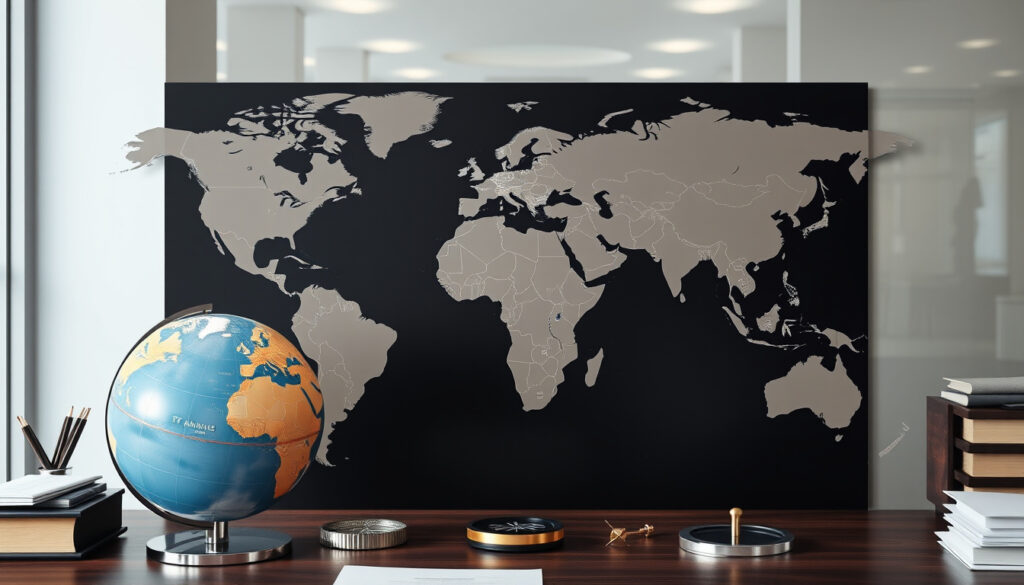
Biggest Country in the World: Top 10 by Area, Population & GDP
Ask most people to name the biggest country in the world, and they’ll say Russia — and they’d be right, at least by land area. But the country that sprawls across 11 time zones doesn’t lead in population or economic output, which raises a fair question: what does “biggest” really mean? This guide compares the world’s largest nations across three metrics — area, population, and GDP — to show how the rankings shift depending on how you measure size.
Total area of the largest country: 17,075,400 km² ·
Second largest country: Canada (9,984,670 km²) ·
Number of countries in the top 10 list: 10 ·
Smallest country in the world: Vatican City (0.44 km²)
Quick snapshot
- Russia is the largest country by total area (Encyclopaedia Britannica)
- Canada ranks second, USA third (Encyclopaedia Britannica)
- India leads in population, China second (Worldometer)
- Rankings vary when including disputed territories or water bodies
- Different sources use slightly different measurement methods
- Russia is 1.7× the size of Canada, yet ranks 9th by population (World Bank Open Data)
- USA ranks 3rd by area but 1st by GDP (World Bank Open Data)
- India’s population continues to grow, widening the gap with China
- GDP rankings shift as emerging economies expand
The table below shows the top 10 largest countries by total area, with Russia dominating the list.
| Metric | Value |
|---|---|
| Largest country | Russia (17.1 million km²) (Britannica) |
| Second largest | Canada (9.98 million km²) (Britannica) |
| Third largest | USA (9.83 million km²) (Britannica) |
| Fourth largest | China (9.6 million km²) (Britannica) |
| Fifth largest | Brazil (8.5 million km²) (Britannica) |
| Sixth largest | Australia (7.7 million km²) (Britannica) |
| Seventh largest | India (3.3 million km²) (Britannica) |
| Eighth largest | Kazakhstan (2.7 million km²) (Britannica) |
| Ninth largest | Argentina (2.8 million km²) (Britannica) |
| Tenth largest | Algeria (2.4 million km²) (Britannica) |
| Smallest country in the world | Vatican City (0.44 km²) |
| Most populous country | India (1.48 billion) (Worldometer) |
What are the top 10 biggest countries in the world?
Ranking by total area
Ten countries stand apart from the rest when measured by total land and water area. The list, drawn from Encyclopaedia Britannica (reference publisher), includes:
- Russia — 17,075,400 km²
- Canada — 9,984,670 km²
- USA — 9,833,517 km²
- China — 9,596,960 km²
- Brazil — 8,515,770 km²
- Australia — 7,692,024 km²
- India — 3,287,263 km²
- Argentina — 2,780,400 km²
- Kazakhstan — 2,724,900 km²
- Algeria — 2,381,741 km²
Five largest areas, one pattern: Russia is more than double the size of every other country on the list. The gap between #1 and #2 is roughly 7 million km² — equivalent to adding Australia to Canada.
Land area vs total area
Some rankings distinguish between total area (including inland water bodies) and land area alone. For most countries the difference is modest, but for Canada the Great Lakes contribute roughly 900,000 km² of water surface, making its land area noticeably smaller than its total area. Russia, by comparison, has relatively little inland water, so its land and total figures are nearly identical. This distinction matters when evaluating “biggest” for habitation or resource extraction.
The implication: Canada’s second-place ranking partly depends on including those lakes. On pure land area, the USA and China come closer to Canada than the headline numbers suggest.
What are the 3 largest countries in the world?
Russia: 17.1 million km²
Russia covers about 11% of the world’s landmass. Its territory spans from Eastern Europe across Siberia to the Pacific Ocean, encompassing 11 time zones. Encyclopaedia Britannica (geographic reference) records Russia’s total area as 17,075,400 km², making it nearly twice the size of Canada.
Canada: 9.98 million km²
Canada is the world’s second-largest country, with a total area of 9,984,670 km² according to Britannica (authoritative atlas data). Roughly 9% of Canada’s total area is fresh water — the highest proportion of any country in the top 10.
USA: 9.83 million km²
The United States ranks third at 9,833,517 km² total area. Its territory includes the 50 states plus the District of Columbia. Britannica (geographic data) notes that the USA and Canada are separated by just about 150,000 km² — a gap smaller than the state of Georgia.
The pattern: the top 3 are dominated by large, sparsely populated northern nations. Russia, Canada, and the US together account for roughly 25% of the world’s total land area.
Which are the 20 biggest countries in the world?
Top 11–20 countries
Moving beyond the top 10, the next tier of countries by area includes:
- 11. Democratic Republic of the Congo — 2.3 million km²
- 12. Saudi Arabia — 2.1 million km²
- 13. Mexico — 1.96 million km²
- 14. Indonesia — 1.9 million km²
- 15. Sudan — 1.86 million km²
- 16. Libya — 1.76 million km²
- 17. Iran — 1.65 million km²
- 18. Mongolia — 1.56 million km²
- 19. Peru — 1.29 million km²
- 20. Chad — 1.28 million km²
The 20th-largest country, Chad, covers about 1.28 million km². That is roughly 7.5% of Russia’s size — a reminder of just how dominant the top spot is.
Notable omissions and inclusions
Greenland is absent from the country list because it is an autonomous territory of Denmark, not a sovereign state. If counted as a country, it would rank 12th at 2.17 million km². France appears lower in the rankings because its overseas territories are not included in standard country-area tallies for metropolitan France. The takeaway: how you define “country” matters at the margins of the top 20.
Why this matters: nearly half of the top 20 countries are in Asia and Africa, reflecting the large continuous landmasses of those continents. Europe, by contrast, claims only Russia (partly) and none of the top 15.
What is the biggest country in the world by population?
India vs China
Shift the metric from area to people, and the ranking flips entirely. India is the world’s most populous country, with a 2026 population of 1,476,625,576 according to Worldometer (demographic data aggregator). China follows at 1,412,914,089, with the United States third at 349,035,494. Russia, the area champion, ranks ninth in population with roughly 144 million people.
India packs more people into 3.3 million km² than Russia does into 17.1 million km². The population density gap is roughly 50× — a fact that reshapes everything from infrastructure planning to environmental impact.
Population density of large countries
Density reveals the starkest contrast among the top area countries. Russia has about 8 people per km². Canada has 4. The USA has 36. India, by contrast, exceeds 460 people per km². Worldometer (population reference) shows that being large by area rarely means being large by population — the correlation is weak at best.
What this means: area rankings tell you about geography and political boundaries. Population rankings tell you about economic markets, resource demand, and human geography. They are almost different subjects.
How do the largest countries compare in economic output?
USA leads in GDP
Economic output adds a third dimension. The United States had a GDP (current US$) of 28.75 trillion in 2024, according to World Bank Open Data (international financial statistics). That represents roughly 26% of the global GDP of 110.98 trillion. China comes second at about 17.5 trillion, and Japan third at 4.2 trillion.
China second
China’s GDP has grown to roughly 17.5 trillion, making it the only other country in the same order of magnitude as the United States. Russia, despite being the largest by area, ranks 11th globally in GDP at about 2 trillion. The country that dominates the map produces less economic output than Canada, Italy, or Brazil.
GDP per capita differences
Per capita figures add further nuance. The USA’s GDP per capita exceeds $82,000. Russia’s is around $14,000. China’s is about $12,500. World Bank (economic data authority) data shows that large area does not predict wealth — in fact, sparsely populated large countries often have resource-driven economies with lower per capita output than smaller, more industrialized nations.
The trade-off: area, population, and GDP each tell a different story about “biggest.” Russia wins on land. India wins on people. The United States wins on economic output. The answer depends entirely on the question.
Five countries across three metrics, one pattern emerges: no single nation leads in all categories.
| Country | Area rank | Population rank | GDP rank |
|---|---|---|---|
| Russia | 1 | 9 | 11 |
| Canada | 2 | 38 | 9 |
| USA | 3 | 3 | 1 |
| China | 4 | 2 | 2 |
| India | 7 | 1 | 5 |
Six details across the top 5 area countries, one clear contrast: size in square kilometers is not a proxy for economic or demographic weight.
| Country | Continent | Capital | Population density | GDP (2024) |
|---|---|---|---|---|
| Russia | Europe/Asia | Moscow | 8/km² | ~$2.0 trillion |
| Canada | North America | Ottawa | 4/km² | ~$2.2 trillion |
| USA | North America | Washington, D.C. | 36/km² | $28.75 trillion |
| China | Asia | Beijing | 153/km² | ~$17.5 trillion |
| India | Asia | New Delhi | 464/km² | ~$3.5 trillion |
Confirmed facts
- Russia is the largest country by total area at 17,075,400 km² (Britannica)
- Canada is second at 9,984,670 km² (Britannica)
- USA is third at 9,833,517 km² (Britannica)
- India is the most populous country (Worldometer)
- USA has the largest GDP at $28.75 trillion (World Bank)
What’s unclear
- Ranking may vary depending on inclusion of disputed territories or water bodies
- Different measurement methods yield slightly different area figures across sources
- GDP rankings shift year to year with exchange rates and growth rates
Russia is the largest country in the world with a total area of 17,098,246 km².
With a total area of 6,592,846 square miles (17,075,400 square km), Russia is the world’s largest country.
— Encyclopaedia Britannica (reference publisher)
The United States economy is the largest in the world, with a GDP of 28.75 trillion current US$ in 2024.
— World Bank Open Data (financial statistics authority)
India is the most populous country, with a 2026 population exceeding 1.47 billion.
— Worldometer (demographic data aggregator)
The world’s largest country by area is Russia, but the story of “biggest” does not end with square kilometers. India packs more than a billion people into roughly one-fifth of Russia’s land. The United States produces more economic value than Russia, China, and India combined. For a traveler, investor, or policy maker, the relevant “biggest” depends on what they need: land, people, or money. For anyone comparing nations at a glance, the honest answer is that no single country claims all three crowns, and that makes the question more interesting than a one-number answer ever could.
Related reading: Best Budget Travel Destinations 2026 · Things to Do in Vienna
pwonlyias.com, worlddata.info, data.worldbank.org, worldpopulationreview.com, datatopics.worldbank.org, census.gov, en.wikipedia.org, data.worldbank.org, en.wikipedia.org
For a deeper look into how Russia compares by area, population, and GDP, read this detailed breakdown of the biggest country in the world.
Frequently asked questions
What is the 4th largest country in the world?
China is the fourth largest country by total area, covering approximately 9.6 million km² according to Encyclopaedia Britannica.
How does Australia compare in size?
Australia ranks sixth in the world by total area at 7.7 million km², roughly 45% the size of Russia. It is the only country that is also a continent.
What is the largest country in South America?
Brazil is the largest country in South America and the fifth largest in the world, with a total area of 8.5 million km². It covers nearly half of the continent’s landmass.
What is the largest country in Africa?
Algeria is the largest country in Africa by total area at 2.38 million km², ranking tenth globally. Nigeria is the most populous African country.
Which country has the most land area in Europe?
Russia is the largest country in Europe (and Asia), with most of its landmass in Asia but its political and population centers in Europe. If excluding Russia, Ukraine is the largest entirely European country.
Is Greenland considered a country?
Greenland is an autonomous territory of Denmark, not a sovereign state. If counted as a country, its 2.17 million km² would rank it 12th largest in the world.
How is country size measured: total area vs land area?
Total area includes inland water bodies such as lakes and rivers. Land area excludes them. Most standard rankings, including those from Britannica, use total area.
More related posts
 CATL HK Share Price (3750.HK): Latest News & Analysis
 Slot Gacor Mantap Mami188: Verified Info & Questions
 ERP Meaning: What Does ERP Stand For in Business and Therapy
 Tamil Hollywood Movie Download: Best Sites & Legal Streaming 2026
 Tanglin Cookhouse (Tanglin Mall) – 2025 Menu Prices Halal Guide
 The GUILD International College: Inclusive Learning for Ages 7-35
 Today Mustafa Gold Price in Singapore: 916 & 24K Rates
 25000 USD to SGD: Live Rate, Fees & Best Providers