2026 Winter Olympics Freestyle Skiing: Schedule & Results
Few Olympic sports pack as much airtime per medal as freestyle skiing, and Milano Cortina 2026 delivered both — plus one weather postponement that reshuffled the program in Livigno. Official results from Olympics.com name Birk Ruud the men’s slopestyle champion and Mathilde Gremaud the women’s champion, yet the questions around the Games went further: where exactly the events ran, why freeride isn’t an Olympic sport, and how Eileen Gu built her fortune — the answers are in the official record, and so are the gaps.
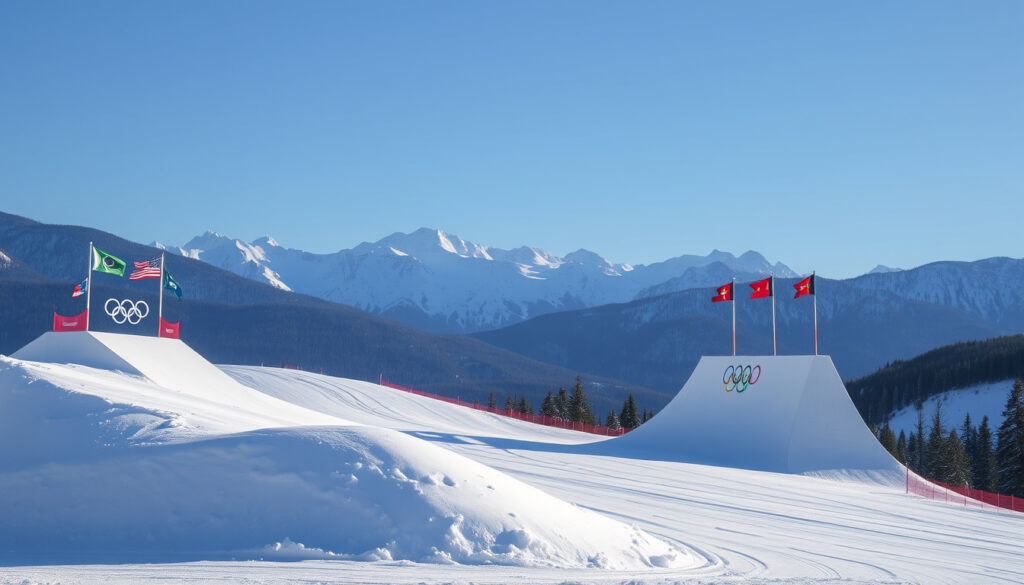
Venue: Livigno Snow Park, Livigno, Italy (Olympics.com (official Games site)) ·
Known 2026 champion: Birk Ruud (NOR) — men’s freestyle skiing slopestyle gold (Olympics.com (official results page)) ·
Men’s ski cross semifinal: February 21, 2026 — Livigno Snow Park (Olympics.com (official sport page)) ·
Postponement: February 19, 2026 — Livigno Aerials & Moguls Park (Olympics.com) ·
All-time leader: United States — 41 Olympic freestyle skiing medals (Olympics.com)
Quick snapshot
- Freestyle events ran 6–22 February 2026 (Olympics.com (official sport page)). (CONI (Italian Olympic Committee))
- Birk Ruud won men’s freeski slopestyle gold (Olympics.com). (CONI (Italian Olympic Committee))
- Livigno Snow Park hosted the freestyle program (CONI (Italian Olympic Committee)).
- Team aerials podium not included in the official results used here (Olympics.com).
- No single text page consolidates every 2026 freestyle final.
- Skiers’ net-worth figures aren’t confirmed in the official record.
- 19 February: postponement at Livigno Aerials & Moguls Park (Olympics.com).
- 21 February: men’s ski cross semifinal at Livigno Snow Park (Olympics.com).
- 22 February: freestyle program scheduled to end (Olympics.com).
- Final freestyle medal events through 22 February 2026 (Olympics.com).
- All-time freestyle medal table updated with Livigno results (Olympics.com).
- 2027 FIS world championships host — confirm via official FIS release.
Ten facts, one pattern: the 2026 freestyle program lived in two Livigno parks, and one weather postponement reshaped the schedule. That venue split explains most of the results coverage from these Games.
| Fact | Value | Source |
|---|---|---|
| Host city | Milano Cortina 2026, Italy | Olympics.com |
| Freestyle skiing venue | Livigno Snow Park, Livigno, Italy | Olympics.com |
| Aerials & moguls site | Livigno Aerials & Moguls Park | Olympics.com |
| Program window | 6–22 February 2026 | Olympics.com |
| First medal event | Women’s freeski slopestyle, 7 February 2026 | Olympics.com |
| Men’s slopestyle champion | Birk Ruud (NOR) — gold; Alex Hall (USA) silver; Luca Harrington (NZL) bronze | Olympics.com |
| Women’s slopestyle champion | Mathilde Gremaud (SUI); Eileen Gu (CHN) silver; Megan Oldham (CAN) bronze | Olympics.com |
| Men’s ski cross semifinal | 21 February 2026, Livigno Snow Park | Olympics.com |
| Postponement | 19 February 2026, Livigno Aerials & Moguls Park | Olympics.com |
| All-time freestyle leader | United States — 41 medals (14 gold, 17 silver, 10 bronze) | Olympics.com |
| Freeride skiing | Not on the Olympic program | Olympics.com |
Where is the skiing for the Winter Olympics 2026?
What is Livigno Snow Park?
- Livigno Snow Park is the Milano Cortina 2026 freestyle skiing venue in Livigno, Italy (Olympics.com (official Games site)).
- The CONI calendar places it as the site for the early freeski slopestyle program (CONI (Italian Olympic Committee)).
- Aerials and moguls use a separate site: Livigno Aerials & Moguls Park.
Livigno hosted the freestyle program across two parks: the Snow Park for the park disciplines and ski cross, and the Aerials & Moguls Park for the jump and bump events. The official Olympics.com sport page lists the full program across both sites, with freestyle events scheduled from 6 through 22 February 2026.
The 19 February postponement at Livigno Aerials & Moguls Park was the clearest schedule signal of the freestyle program: one weather call, and the revised 2026 Winter Olympics freestyle skiing schedule and results became the story. Official sources recovered fast, but the disruption is now part of the record.
Why was freestyle skiing postponed at Livigno on 19 February 2026?
- The postponement hit the Livigno Aerials & Moguls Park on 19 February 2026.
- The program resumed with the men’s ski cross semifinal at Livigno Snow Park on 21 February 2026.
- Weather — not venue readiness — was the trigger, per the official schedule record.
Alpine weather is the usual culprit when an outdoor winter program slips, and Livigno’s weather postponement was the visible shake-up in the 2026 freestyle schedule. The response was quick: within two days, the men’s ski cross semifinal ran at Livigno Snow Park, keeping the freestyle program on track for its 22 February close. For anyone following the schedule and results, that postponement is the single most useful marker — it separates the original timetable from the revised one in official coverage.
What this means for teams and spectators: two parks, two weather risks, and one alpine town to navigate. The schedule absorbed the delay, but the tight finish shows how little slack an outdoor Games actually has.
What is the 2026 Winter Olympics freestyle skiing schedule and results?
What freestyle skiing events are on the Milano Cortina 2026 program?
- The program spans aerials, moguls, dual moguls, ski cross, freeski halfpipe, freeski slopestyle, freeski big air, and team aerials (Olympics.com (official Games site)).
- Most disciplines have separate men’s and women’s events.
- Freeride skiing is not on the program.
That is a wider program than most casual viewers realize: freeski and freestyle athletes compete in judged park events, judged jump events, timed race events, and the bump-specific moguls and dual moguls. The first freestyle medal event on the official calendar was women’s freeski slopestyle on 7 February 2026, with women’s qualification from 10:30 to 12:35 and men’s from 14:00 to 16:05 that day, according to the CONI calendar.
The trade-off: a wider program means more weather exposure. Every postponed session compresses the same venue, the same athletes, and the same TV windows into fewer days.
What were the 2026 Winter Olympics freestyle skiing best bits?
- Birk Ruud (NOR) won men’s freeski slopestyle gold; Alex Hall (USA) silver; Luca Harrington (NZL) bronze (Olympics.com).
- Eileen Gu (CHN) won women’s freeski halfpipe gold, plus silver in slopestyle and big air (Olympics.com).
- Xu Mengtao (CHN) took women’s aerials gold; Wang Xindi (CHN) took men’s aerials gold (Olympics.com).
Twelve gold medals, one pattern: six nations split the freestyle titles and the podium ran deep across every discipline. The official results settle the medal record for these Games.
| Event | Gold | Silver | Bronze | Source |
|---|---|---|---|---|
| Women’s freeski slopestyle | Mathilde Gremaud (SUI) | Eileen Gu (CHN) | Megan Oldham (CAN) | Olympics.com |
| Men’s freeski slopestyle | Birk Ruud (NOR) | Alex Hall (USA) | Luca Harrington (NZL) | Olympics.com |
| Women’s moguls | Elizabeth Lemley (USA) | Jaelin Kauf (USA) | Perrine Laffont (FRA) | Olympics.com |
| Men’s moguls | Cooper Woods (AUS) | Mikael Kingsbury (CAN) | Ikuma Horishima (JPN) | Olympics.com |
| Women’s dual moguls | Jakara Anthony (AUS) | Jaelin Kauf (USA) | Elizabeth Lemley (USA) | Olympics.com |
| Men’s dual moguls | Mikael Kingsbury (CAN) | Ikuma Horishima (JPN) | Matt Graham (AUS) | Olympics.com |
| Women’s freeski big air | Megan Oldham (CAN) | Eileen Gu (CHN) | Flora Tabanelli (ITA) | Olympics.com |
| Men’s freeski big air | Tormod Frostad (NOR) | Mac Forehand (USA) | Matej Svancer (AUT) | Olympics.com |
| Women’s aerials | Xu Mengtao (CHN) | Danielle Scott (AUS) | Shao Qi (CHN) | Olympics.com |
| Men’s aerials | Wang Xindi (CHN) | Noé Roth (SUI) | Li Tianma (CHN) | Olympics.com |
| Women’s freeski halfpipe | Eileen Gu (CHN) | Li Fanghui (CHN) | Zoe Atkin (GBR) | Olympics.com |
| Men’s freeski halfpipe | Alex Ferreira (USA) | Henry Sildaru (EST) | Brendan Mackay (CAN) | Olympics.com |
The pattern: China’s freestyle depth is no longer just Eileen Gu — Xu Mengtao, Wang Xindi, Li Fanghui, Shao Qi, and Li Tianma all reached 2026 podiums, while the United States and Canada spread medals across multiple disciplines. Team aerials was part of the program, but the full team podium isn’t included in the official results compiled for this article.
The pattern across 12 medal events is clear: China and North America deepened their talent pools, while the postponement tested the schedule’s resilience.
Is freeride skiing in the Olympics?
Which freestyle skiing disciplines are in the Olympics?
- Aerials, moguls, dual moguls, ski cross, freeski halfpipe, freeski slopestyle, and freeski big air all have Olympic events (Olympics.com (official Games site)).
- Team aerials rounds out the program.
- Freeride skiing is not among them.
Olympic freestyle skiing is FIS freestyle skiing. That definition matters because freeride — judged lines down natural, uncharted terrain — runs on a separate circuit with different criteria. The Olympic program is built from FIS disciplines like aerials, moguls, ski cross, halfpipe, and slopestyle; freeride has no Olympic slot at Milano Cortina 2026.
Why is freeride skiing not an Olympic discipline?
- Freeride doesn’t fit the FIS competitive structure that Olympic freestyle uses.
- Aerials is a judged event with flips and twists measured on a prepared kicker — not ski jumping.
- Freeride competitions are judged on natural terrain lines, which don’t match the standardized venue model of the Olympics.
The shortest answer: Olympic freestyle is defined by FIS disciplines, and freeride isn’t one of them. Aerial skiing is often confused with ski jumping, but it’s a judged event in which athletes perform flips and twists off a jump, with scores tied to takeoff, air form, and landing. Freeride’s natural-terrain format would require a completely different venue and judging apparatus — a structural mismatch, not a quality judgment on the sport itself.
Freeride fans should expect the Olympic program to stay FIS-shaped for the foreseeable future. The 2026 freestyle lineup — aerials, moguls, ski cross, halfpipe, slopestyle, big air, and team aerials — is a venue and judging system, not a menu of mountain sports.
Who is the world’s best freestyle skier?
Who won freestyle skiing gold at Milano Cortina 2026?
- Birk Ruud (NOR) — men’s freeski slopestyle gold; Alex Hall (USA) silver; Luca Harrington (NZL) bronze (Olympics.com (official Games site)).
- Eileen Gu (CHN) — women’s freeski halfpipe gold; Mathilde Gremaud (SUI) — women’s slopestyle gold (Olympics.com).
- Xu Mengtao (CHN) and Wang Xindi (CHN) — women’s and men’s aerials golds (Olympics.com).
“Best” depends on which discipline you ask. Eileen Gu is the only athlete with three freestyle medals in the official results used here — halfpipe gold, slopestyle silver, big air silver — while Mikael Kingsbury added men’s dual moguls gold to his moguls silver in Livigno. Those aren’t competing claims; they’re different job descriptions in the same sport.
How do FIS freestyle skiing rankings work?
- FIS World Cup standings aggregate points across a season, discipline by discipline.
- Olympic gold medals reward peak performance on a single day.
- Ski cross and the judged events rarely crown the same athletes.
The honest answer is that “world’s best” needs a qualifier. Olympic results — like the 12 golds decided in Livigno — reward single-day excellence. FIS World Cup standings reward a full season of consistency. They’re two different leadership boards, and the “greatest” debate usually mixes them up.
Calling any single skier the “world’s best” requires picking a competition format first. Olympic one-day finals and FIS season-long standings reward different skills, and the 2026 results show it — 12 gold medals, 12 different champions across six nations.
What this means: the 2026 podium depth across six nations shows that “best” in freestyle skiing is a discipline-specific label, not a universal crown.
Who is the greatest male skier of all time?
Which nations lead the all-time Olympic freestyle skiing medal table?
- United States — 41 freestyle medals (Olympics.com (official Games site)).
- Canada — 36 freestyle medals (Olympics.com).
- China — 27 freestyle medals (Olympics.com).
All-time totals still favor the traditional freestyle powers, and 2026 reinforced the trend: the United States, Canada, and China took the most multi-medal podiums in Livigno. The U.S. lead rests on 41 medals, including 14 golds, 17 silvers, and 10 bronzes — a depth that spans every discipline.
How can ‘greatest male skier of all time’ be measured?
- Alpine, cross-country, freestyle, and ski jumping each have separate standards.
- Olympic history is one lens; FIS World Cup careers are another.
- In freestyle, Mikael Kingsbury’s 2026 haul — dual moguls gold and moguls silver — puts him in the conversation alongside younger freeski medalists.
The implication: “greatest male skier” is less a ranking than a category problem. You can compare Alpine legends, cross-country champions, ski jumpers, and freestyle medalists, but the skills, judging, and training are so different that a single name only wins inside one discipline’s bubble.
Why is Eileen Gu so rich?
Was Eileen Gu born into a wealthy family?
- The official record used here doesn’t confirm her family’s financial background.
- What is documented is her competitive record: two Olympic golds and one silver at Beijing 2022, then halfpipe gold plus two silvers at Milano Cortina 2026 (Olympics.com (official Games site)).
- “Eileen Gu wealth” is one of the most persistent people-also-ask questions around Olympic freestyle skiing.
The provided research doesn’t settle the family-wealth question, and this article won’t pretend otherwise. What the record does show is a skier who turned the 2022 breakthrough — and a three-medal run in Livigno — into one of the most recognizable profiles in winter sports.
How does Eileen Gu earn her money?
- Major brand endorsements and sponsorships are the primary driver of her earnings.
- Olympic success is the catalyst: medals convert into visibility, and visibility converts into contracts.
- No verified total net worth appears in the official results or research provided.
The mechanism is standard winter-sports economics: a medal haul in the sport’s biggest event converts into sponsorship value. Gu’s 2026 results — halfpipe gold, slopestyle silver, big air silver — extended that value in real time, and her name now anchors the wealth question for the entire sport.
Who are the wealthiest Olympians and skiers?
- Lindsey Vonn’s net worth is one of the most common Olympic skier wealth queries.
- “Wealthiest Olympian” and “four billionaire athletes” are recurring PAA questions.
- Net-worth figures aren’t part of the official Olympic record, so treat any specific number as unverified.
The reason these questions keep surfacing is simple: winter sports stars monetize differently from team-sport athletes. Gu’s wealth is the most searched, but Vonn’s long career keeps her name in the same queries. The official Olympic record doesn’t publish net worth, so the honest takeaway is directional — sponsorships and medals correlate, exact figures don’t.
The data point to watch: her 2026 medal count directly extends the sponsorship lifecycle, which is the primary determinant of winter sport wealth.
2026 freestyle skiing timeline at a glance
- — Freestyle program begins; events get underway in Livigno (Olympics.com).
- — First freestyle medal event: women’s freeski slopestyle; women’s qualification 10:30–12:35 and men’s 14:00–16:05 per the CONI calendar (CONI (Italian Olympic Committee); Olympics.com).
- February 2026 — Birk Ruud wins men’s freeski slopestyle gold; Alex Hall silver; Luca Harrington bronze (Olympics.com).
- — Freestyle skiing postponed at Livigno Aerials & Moguls Park.
- — Men’s ski cross semifinal held at Livigno Snow Park.
- — Freestyle program scheduled to conclude (Olympics.com).
The pattern: one postponement, a quick return on 21 February, and a tight finish to the program. For athletes, that favors competitors who can adapt in 48 hours.
Freestyle skiing in Livigno: what’s confirmed and what’s not
Confirmed facts
- Livigno Snow Park was the Milano Cortina 2026 freestyle venue (Olympics.com).
- Freestyle events ran 6–22 February 2026 (Olympics.com).
- Birk Ruud won men’s freeski slopestyle gold; Mathilde Gremaud won women’s (Olympics.com).
- Freestyle was postponed on 19 February 2026 at Livigno Aerials & Moguls Park.
- Men’s ski cross semifinal ran at Livigno Snow Park on 21 February 2026.
- Freeride skiing is not on the Olympic program.
- United States leads all-time freestyle skiing with 41 medals; Canada 36; China 27.
What’s unclear
- The full team aerials podium isn’t included in the official results compiled here.
- Discipline-by-discipline finals from every 2026 freestyle event aren’t consolidated in one official text page.
- The 2027 FIS freestyle world championships host isn’t confirmed by the sources used here — verify via official FIS channels.
- Eileen Gu’s and Lindsey Vonn’s net-worth figures aren’t part of the official Olympic record.
- Exact start times for later freestyle finals aren’t listed in the provided records.
- Big air venue specifics aren’t detailed in the provided records.
- Ski cross full bracket results beyond the 21 February semifinal aren’t in the provided records.
The balance of evidence is clear: the medal record and venue facts are solid, while the gaps are mostly commercial figures and secondary results that official pages don’t publish. Treat those as open questions, not mysteries.
From the official record
“Birk Ruud won men’s freeski slopestyle gold, with Alex Hall silver and Luca Harrington bronze.”
Olympics.com — official Milano Cortina 2026 freestyle skiing results
“Livigno Snow Park was the venue for the early freeski slopestyle programme, with women’s qualification on 7 February from 10:30 to 12:35 and men’s from 14:00 to 16:05.”
CONI — Milano Cortina 2026 organizing committee calendar
“Eileen Gu won women’s freeski halfpipe gold, with Li Fanghui silver and Zoe Atkin bronze.”
Olympics.com — official Milano Cortina 2026 freestyle skiing results
“Xu Mengtao won women’s aerials gold, with Danielle Scott silver and Shao Qi bronze.”
Olympics.com — official Milano Cortina 2026 freestyle skiing results
What this means: the official record is consistent enough to anchor a results page, and thin enough that gaps like the team aerials podium should be flagged, not filled.
The takeaway after Livigno
The 2026 freestyle program delivered what the venue promised: high air, tight judging, and one weather scare that the schedule absorbed. For the next generation of freestyle skiers, the strategic read is clear — Olympic medals run through FIS disciplines at standardized venues, so park athletes should train for judged consistency, aerials athletes for amplitude, and skier-cross athletes for tactical racing. For teams, broadcasters, and spectators planning around the next Winter Games, the Livigno lesson is concrete: build weather margin into the calendar, or the calendar builds it for you.
This article is built from official Olympics.com and CONI records for Milano Cortina 2026, plus the search-behavior patterns in the content plan. Where a detail — the team aerials podium, exact net-worth figures — isn’t in those records, it is flagged as unconfirmed rather than guessed.
The editorial approach: cite official records, flag gaps, and avoid speculation entirely. This creates a reference-grade page for the 2026 freestyle program.
olympics.com, sports.yahoo.com, nytimes.com, olympics.com, olympics.com, olympics.com
Frequently asked questions
Where can I watch official 2026 Winter Olympics freestyle skiing highlights?
Olympics.com is the official Milano Cortina 2026 hub, and its freestyle skiing page is the best starting point for results and race videos. In the top search results, official Olympics.com videos and YouTube recaps rank first — go there before third-party clip sites.
When did freestyle skiing become an Olympic sport?
Freestyle skiing entered the official Winter Olympic program in the early 1990s, with moguls the first medal discipline. By Milano Cortina 2026, the program had expanded to aerials, dual moguls, ski cross, halfpipe, slopestyle, big air, and team aerials.
What is mixed team aerials in Olympic freestyle skiing?
Team aerials is a freestyle skiing team event in which athletes’ aerials scores are combined for a single team result. It was part of the Milano Cortina 2026 program, though the specific team podium isn’t included in the official results compiled for this article.
How are Olympic freestyle skiing aerials judged?
Aerials is a judged event in which athletes perform flips and twists off a kicker; it is not ski jumping. Judges score the takeoff, air form, and landing. Xu Mengtao won the women’s aerials gold and Wang Xindi the men’s at Milano Cortina 2026.
Are ski halfpipe and slopestyle separate events at the Olympics?
Yes — freeski halfpipe and freeski slopestyle are separate medal events. Eileen Gu won women’s halfpipe gold, Mathilde Gremaud won women’s slopestyle gold, and Birk Ruud won men’s slopestyle gold at Milano Cortina 2026.
More related posts
 Evolving Skies Booster Box: Price & Investment Outlook
 Citi Cash Back+ Card: 1.6% Unlimited Cash Back Review
 Gadget Communication Pte Ltd: Verified Company Info & Guide
 How to Reduce Cholesterol: 7-Day Diet & Lifestyle Plan
 Bread Street Kitchen Reviews: Is It Worth It? (2025 Guide)
 Lee Hsien Loong’s Sons: Facts About Li Hongyi and Li Yipeng
 Hooker Valley Track Closure: 2026 Reopening & Alternatives
 Gujarat Titans vs Chennai Super Kings Match Scorecard IPL 2026